
Blog

Researching old Wills – Part One

As you travel further back into your ancestors past and into the realms of parish records you will stumble upon wills. Millions of these old documents are now available on sites such as Ancestry and at county and national archive record sites.

Bequests in early wills often included bed linen, a bed, silver spoons and brassware, these were items of great value. Terms used such as cousin, stepson or daughter-in-law did not have the same meaning as they do now, so modern interpretations of old wills can be tricky. They are a good source of discovering other members of the family not previously know about.

The handwriting will vary greatly, from fine quilled scripted writing, to Latin and incomprehensible scribble, suggesting they were hastily written up by candlelight in the dying persons bed chamber. But the more you train your eye to read these documents the easier it will become. Much of these documents will mention at great length ‘duty to god’ which will sometimes be laid down in Latin: the effect of Christianity upon the will was very marked. In England and Wales until 1858 the Church ran probate courts to ensure the terms of a will were followed. Members of the clergy often drew up parishioners’ wills if they could not afford a lawyer, or by choice.
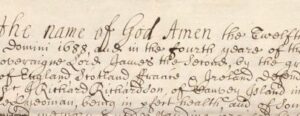
Wills written in the 19th century tend to follow a general pattern, usually beginning with the words, ‘In the name of God Amen’. The testator then states his mental competence. Often, will writing only took place when death was imminent, and wills usually contained instructions about the disposal of the body and what form the memorial took. Gifts for mourners, favoured servants and local residents also featured in many wills, then the list of bequests. Wills usually ended with the date and the point that all former wills were revoked. Then, the testator and two witnesses signed the document. It can be exciting to see an ancestor’s signature (often by shaky hand) on a sixteenth century will.

In 1858, the authorities established the Principal Probate Registry where a copy of every will provided was kept, as well as letters of administration. When the registry was established, district probate registries were created around the country.

However, it must be remembered that in the mid-19th century, the bulk of people did not leave wills thanks to the vast differences between the rich and poor. However, I have come across poor cottagers’ wills, leaving only a few pieces of furniture to a son or daughter being written up by the local curate.

Also, to be encouraged, before embarking on a long sea voyage or taking part in military campaigns was often for people (men) to leave wills. We must remember that in the not so distant past sudden deaths happened frequently, and often family members were forced to apply for letters of administration when a person who held substantial assets died intestate.
We can learn from history…

circ 1350

‘Alas when our relatives and neighbours came to welcome us,

 whole we were embracing them and in the midst of our kisses,

 we, who carried the arrows of death were constrained to give them the poison,

 so that when they returned home,

 soon whole families were infected and in less than three days succumbed to the attacks’.

Ref: Gabriel de Mussis. Reprinted in Geschichte der Medicin und Epidemische Krauheneiten, Jean. 1882. As cited in C.E. Boucher. “The Black Death in Bristol”. 1938. Bristol and Gloucestershire Archaeological Society. Vol. 60, pp.31-46.

The Bills of Mortality and The Great Plague of London

The London death toll during the great plagues of the seventeenth century.

“Bring out your Dead”

Today we listen to the media or check Twitter to discover the latest death and infection rates for the Covid pandemic and it often makes for grim news. We check our apps to find out the infection rate in our local area, scan ourselves into cafes, libraries, pubs, and schools so we can be aware for our own safety and that of others. Government and private sector developed apps to provide test track and trace interventions. We have the advantage because we understand how coronaviruses spread from human to human, and we also know that we have modern medical science on our side. But in the past people had little to no understanding of how plague was rapidly spreading from house to house, killing as many as 100,000 people in the City of London during the years 1665-66, about one quarter of the population of London.[1] The Great Plague of London, lasting from 1665 to 1666, was the last major epidemic of the bubonic plague to occur in England. It happened within the centuries-long Second Pandemic.

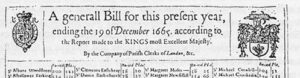
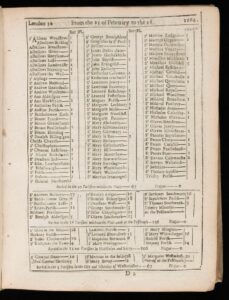
People would eagerly read, or as was more likely were read, the weekly Bill of Mortality double sided sheets informing citizens of the weekly death toll in all of the 130 parishes in London.

“the Bill of Mortality is of very great use…it giveth a general notice of the Plague, and a particular Accompt of the places which are therewith infected, to the end such places may be shunned and avoided.” [2]

Those that died from known illness would be recorded and in which parish they were buried. But for those who died of plague they were to become a disheartening numerical statistic at the bottom of the printed Bills, offering an early example of local public health initiative in an attempt to try and track the progress of the disease.

The Bills were particularly produced by the parishes of the City of London during outbreaks of plague. The first Bill is believed to date from November 1532 [3] and published on 21 December 1592 continuing until 18 December 1595. The practice was abandoned and then revived on 21 December 1603 when plague once again was in town. In 1611 the duty to produce weekly Bills each Thursday, was obligatory and the responsibility of the members of the Worshipful Company of Parish Clerks by a charter granted by James I. Annual returns were also printed each year on 21 December (the feast of St Thomas). New charters were granted by Charles I in 1636 and 1639. As London grew the Bills eventually covered 129 parishes at the granting of the 1639 charter. By 1570 the Bills included baptisms and in 1629 the cause of death was given. The Bills were published by the Worshipful Company of Parish Clerks in London, on a single double sided sheet of paper.

In the last week of July 1665, the London Bill of Mortality showed 3,014 deaths, of which 2,020 had died from the plague.

Corpses were buried quickly, often after being dropped out of upstairs windows or forcibly collected from their boarded-up houses, then to be placed unceremoniously into a mass grave pit such as the one hastily dug at Aldgate near the churchyard being 50 feet long and 20 feet wide. It is recorded that while labourers were still digging at one end dead-carts were tipping corpses in at the other end. When finally covered over 1,114 people were interned at this one site alone.

Such was the mental distress being caused to the people that it was ordered for dead-carts to only collect the bodies after dark. But eventually there were just too many victims and too few drivers that bodies were being stacked up along the sides of the very narrow streets. Daytime collection was resumed with the collector’s famously calling out around the city’s narrow streets “bring out your dead”.[4]

Usually there would be no member of the clergy to pray for the dead and oversee the burials; the clergy, along with the wealthy, had mostly fled to the countryside. Dignity in death for victims of the plague had all but vanished.

Continue reading “The Bills of Mortality and The Great Plague of London” →

BRITISH BLACK HISTORY MONTH 2020: Why is it so difficult to trace Black British ancestors?

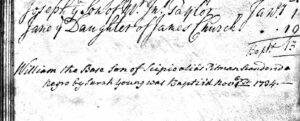
‘William the bastard son of Scipio alias Pitman Seandered(l?) a negro by Sarah Young was Baptised Nov 1st (4th?) 1724. -‘ 

Why is it so difficult to trace Black British ancestors?

Today while researching in the Bristol Archives and browsing the church records of Holy Trinity Church, Westbury on Trym, I came across an entry that highlights two of the many stigmas that our ancestors may have faced: Racism, illegitimacy, poverty, class, physical ailments and religious bigotry.

A baptism entry was deliberately singled out on a page in the church register, the baptism was of little William Seandered(l)-Young. The entry declares that William was the bastard child of Scipio, alias Pitman Seandered(l), and Sally Young. His baptism took place on November 1st or 4th, 1724. (Authors translation of script).

What do we know of his parents? Extraordinarily little. Young, being a common name, means that there were quite a few Sally Young’s residing in the region at this time who were single or married of childbearing age.

Scipio, or Pitman Seandered(l) is noted in the entry as being a negro, thereby deliberately marking him and his child as being ‘different’. There is no mention of the physical features of any of the other children in the records. Scipio was probably a Christian convert because if a servant he would have been baptised once landed in England. Yet his colour and what would have been considered his race was so important that it was deemed necessary to add to his baby’s baptism record. When plantation owners, or sea captains, purchased Black servants, they often had them baptised as adults, usually taking place upon arrival in England. However, these baptisms do not provide any information on their ancestral history. In fact the baptisms were often used purely as a tool to provide a new name and state their relationship to their master. Due to discrimination few questions would have been asked by the minister, and in many cases Black migrants simply did not know the family details of their past.

A good example is Scipio Africanus (the name of a Roman general), was given to a young African servant buried in Henbury, Bristol, in 1720. Despite the very grand gravestone erected by his master, the Earl of Suffolk and Brandon, there is no record of his burial in the church register. Could this be the answer as to why there appears to be no further mention in the records of Scipio Pitman Seandered(l)?

There are no other records of a man called Scipio Pitman Seandered(l) in the country at this time, not even a burial record.  It might be that Scipio was a servant and staying in the town briefly with his master before sailing abroad again, or perhaps he was a sailor visiting the port of Bristol, we will never know. This is all circumspection and he probably was not in attendance at the religious ceremony and perhaps neither was Sarah the mother.

Unfortunately, we must only imagine the circumstances of how the parents continued with their lives and what became of little William.  There are no further entries in the parish record book for Westbury on Trym, and therefore he and his mother did not stay in Westbury on Trym.  However, a record has since been found in the Church Register Book for Stroud, Gloucestershire of a Mary Soanderal’s baptism on 10 August 1764. Her parents are recorded as being a William Soanderel and Hannah his wife. Could this be William thirty years on in his life? Very possibly, and also an example of how the spelling of names would change, particularly if William was illiterate which was extremely common.

Continue reading “BRITISH BLACK HISTORY MONTH 2020: Why is it so difficult to trace Black British ancestors?” →

You need patience to research parish records

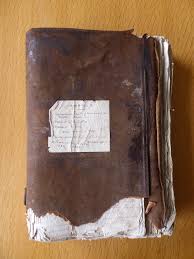
Parish Records, or the registers, were the accounts and vital records collected about the lives of local people living in parishes across the U.K. Although the records consist of tax and rate collections, leases, and even the chimney taxation returns they often have names of the people in connection to the event.

But immediately important for us it is the church record books, the registers, where our families ‘rights of passage’ are recorded. Baptisms, Marriages and Burials with dates names will be found in these books. Most are available online through various web sites, but sometimes it will still be necessary to visit the local record office to find our ancestors within these records. The digital church books are amazing to browse through. Make sure you turn the pages as you will probably find other members of the family within the same book. The further you dwell back in time unfortunately the harder the hand writing becomes to read.

It is a time consuming exercise and patience will be required so set aside a quiet time and be sure to do a thorough search. Do not be tempted to skip a page or two. If the sound of this chore bores the pants off of you perhaps your Heritage Found might be able to assist you.

Why ordering copy certificates is important and when you might need to go down this road

Once you have gone back 4 generations life for the family history researcher often becomes more difficult.  One reason is because with common names it can be quite difficult to determine from the registration evidence which person is the correct one.  A clear way forward is to order copy certificates to clarify the evidence that will be listed on the certificate at the time of issue.

For example, John Smith born Birmingham in 1888. We discover online that there were in fact 4 John Smith’s having a birth registration during that year in Birmingham.  By ordering either the one you suspect could be yours, or even several you will discover the names of the parents and, also importantly, the occupation of the father. When cross checked with other pieces of information you have about the family it is relatively easy to decipher which is your John Smith.  If you know that your John Smith from the 1911 census worked as a labourer a cotton factory but on the certificate it states his father was a lawyer then it is very probable that you can eliminate this person because it was very rare for a person at this time to have class and economic mobility.

To order certificates in the U.K. and just go the the GRO website. For Scotland its Scotlands People and for other countries search online to find out which government department holds vital records for order.

A BIG thank you to my learners!

Over the summer I have been offering my courses and talks online for the first time ever.  For me this proved to be an enjoyable experience and I hope for my learners too!

Learners, who participated over the internet have been very supportive and kind, and here is a sample of feedback emails I have received.  Thank you very much, your comments are very much appreciated and help me to improve delivery of courses and talks ‘In the Time of Covid’.

         Many thanks Rosemary- excellent lecture as always- I’ve already signed up for  the Hannah Wiltshire                 and Black Death lectures in the autumn so look forward to joining you again then! S.S. Aug. 2020
        Thank you to or SUCH an interesting talk this afternoon. I really enjoyed it. June 2020 M.C.
Firstly, thank you very much for running the course – I found it very interesting and very helpful.  When the lockdown first came in, I assumed that the course wouldn’t be running, so it was a pleasant surprise (and very good timing from the point of view of my own research) to hear that it would be.  We all seem to be doing everything by Zoom nowadays, so thank you for getting to grips with the process and making it work so well. Your presentations came over fine on the screen.  My only comment would be that it might be an idea to break them up a bit more, maybe pause every 20 minutes or so and do a short Q&A session or something before resuming.  G.P.
Thanks so much for the Family History classes. I’ve really enjoyed them and found them very useful. I appreciate all the work you have done to put the classes online – from my supply-teaching experience I know it can’t have been easy. J.
Thanks again Rosemary for great content, entertaining delivery and incredible patience with the technology.  I’m so glad you persevered and will look forward to more.  J.P.
This is a very belated e mail to say thank you very much for all of the very interesting material regarding the workhouses P.D.
Many thanks for the attached. It was a very interesting talk particularly as you concentrated on the Bristol area. When I was thinking about the talk I was reminded that up until the 60’s if a girl became pregnant outside wedlock in Bristol she could be sent to the local mental home to have her baby without anyone knowing. There was a home in Stoke Bishop as well where the babies were prepared to fostering and adoption. A.E

Family History Courses NOW WORLD WIDE!

If you are getting bored, and as the nights will be drawing in, in the northern hemisphere soon you might consider discovering your family history. Some will have already undertaken quite a lot of fabulous research but there is always so much more to explore.

With my courses you could spend the dark evenings improving your knowledge and scope.  You could light some candles, warm the room and fire up your laptop with a group of like minded people. Better than a classroom?

Courses Available 

(Note all times are British time)

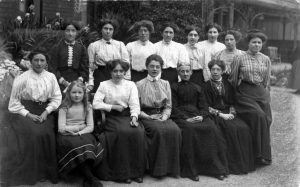
Women domestic workers

Courses Autumn 2020

Family History Course – Stage 1

Stage 1: 5 week course runs on Thursdays. Dates for autumn term 2020:

Thursdays 1.30 – 4pm Rosemary Caldicott BA MSc

  • Start Date: 24 September 2020

This beginners course offers a gentle introduction on how to access and navigate your family history records. An easy to follow guide on genealogy digital record searching is taught to assist you to find your ancestors. Each week has a different theme that supported by a lecture on the subject matter of that week. An understanding is explored of why and how records were taken, and also how to search and access the records you need. To book:

heritage_found@yahoo.co.uk

or book online here Book 

Family History Course – Stage 2

Stage 2:  5 week course runs on Thursdays

Thursdays 1.30 – 4pm. Tutor Rosemary Caldicott BA MSc

  • 5  sessions 5 November 2020
  • An ideal course for those who have already attended Stage 1, or have some experience researching their family history. Social history is explored in more depth through a series of lectures to consider the context of how our ancestors lived. Digital searching will be comprehensively taught to expand your  knowledge base and explained in-depth.
  • To book email: heritage_found@yahoo.co.uk
  • or book online here Book

TASTER EVE IS BACK!

Want to find out if researching your family history is really for you?

Tuesday evening on 22 September 2020

Short introductory 2 hour course. (7-9 pm).  A chance to explore your family history and to discover how to view, and most importantly, how to make sense of your online family records.

Email: heritage_found@yahoo.co.uk

Or book online: Book

NEW! Intensive Research Day                                                   

Designed to advance your ancestral research development.  

Saturday 10 – 2 pm Rosemary Caldicott BA MSc

  • 1 session  5th December 2020

To book email: heritage_found@yahoo.co.uk

Or book online here Book

Individual lessons and courses are also available with an expert through Heritage Found

Private tuition courses are available at very reasonable fees, by the hour or a course. You will be amazed what you will discover about your ancestral heritage, it is unique and special. Inquire


    Lecture – 9th December @ 2-4pm 

    ‘From Workhouse to Welfare: Women surviving a Bristol Workhouse’

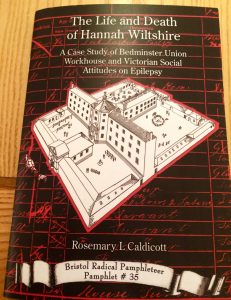
    The Life and Death of Hannah Wiltshire
    by Rosemary L Caldicott
    The 2 hour talk will focus on the draconian workhouse system that pre-dates the modern welfare state. For the vulnerable poor the workhouse often became their only means of support. Unemployment, sickness, old age, death of a parent and, for women in particular, the workhouse institution typically caused great hardship and even death in some cases. The lecture will examine the history and reality of the workhouse institution using illustrated documented examples taken from inmates’ experiences.  Those who fought for change are recalled, along with examples of modern day memorialisation for the people that lived and died in our workhouses.

    Book here

    Or email: Heritage_found@yahoo.co.uk

    1841 Census – pit falls

    The 1841 census is the first census that was undertaken to cover England and Wales to include family names, street names, occupation and if born in the county or not.

    A key feature to be considered when searching back through British census records is that the 1841 census rounded down adult ages to the nearest 5 years. For example, 53 becomes 50 and 28 becomes 25.  This can easily throw us off course when looking for similar names in a small geographical area, a common problem my learners come across!  However, matching up occupation can help us have some confidence that we have in fact found the correct people.  Luckily though children’s ages up to 14 are given their exact age even down to the day of a newborn which I find rather touching.

    You will not find house or flat numbers under the address column, only a street name, or less.  In 1841 the state in the U.K. did not consider it necessary to know such facts. Also, it must be remembered that postage was hardly used at this time and that government were simply not interested to know precisely where each person lived. Most homes did not have a number with the feature only being developed as urbanization grew larger across the country. However, by the coming of the 1851 census dwelling numbers were beginning to be added to the census schedules.

    Due to popular demand my virtual talk ‘Life in the Times of the Black Death Pandemic in Bristol’ running again on 17th June.

    Due to popular demand my virtual talk is offered again! – 17th October and 2nd November, AD 2020
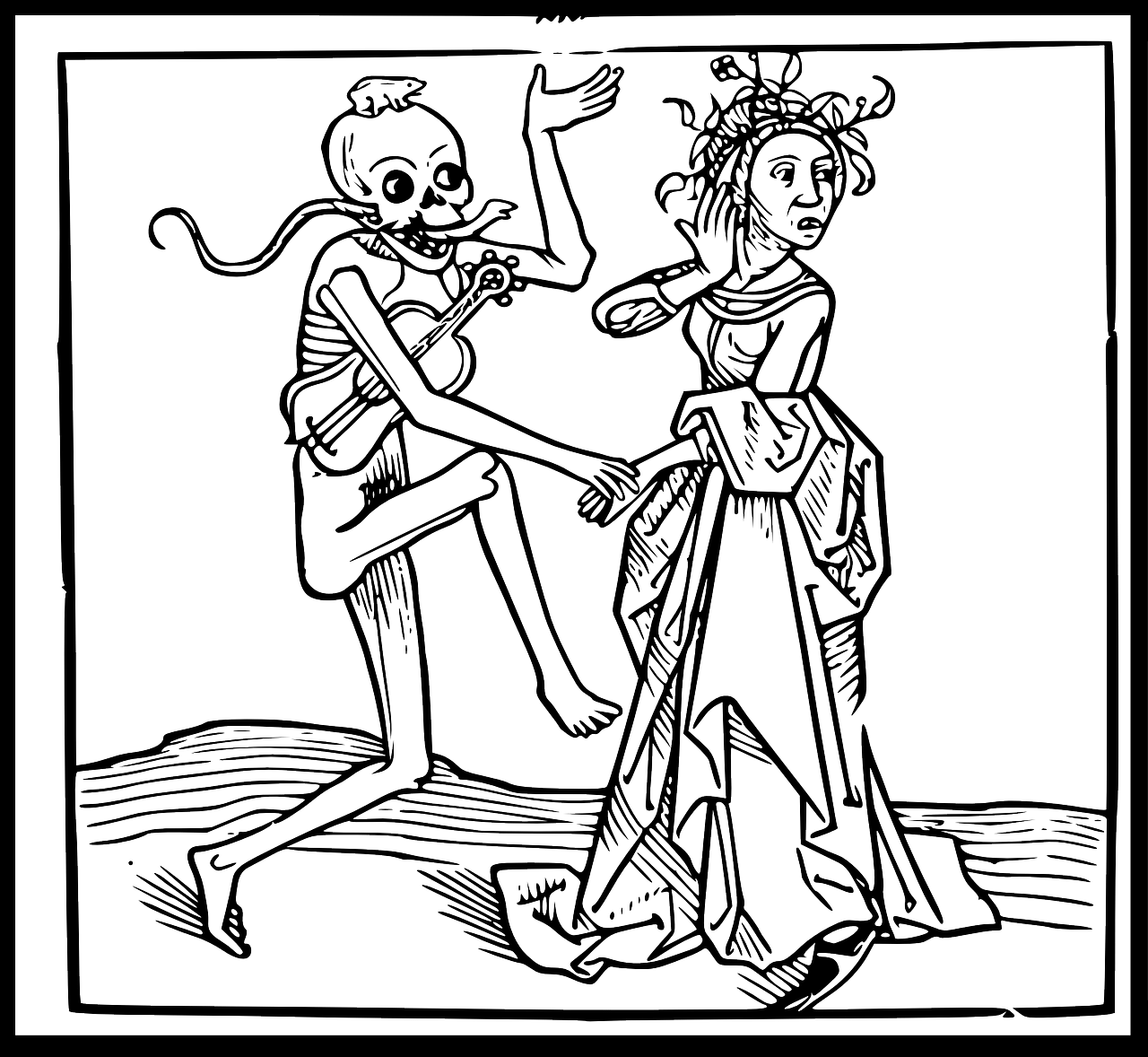
    Dance of Death

    Life in the Times of the Black Death Pandemic in Bristol, England 1348-1349

    I will be giving a one off on-line history talk about the Black Death pandemic in Bristol during the years 1348 and 1349.

    In the year 1348 the Black Death pandemic arrived in Bristol resulting in catastrophic economic consequences for the elite and manufacturing classes of Bristol.

    Rosemary Caldicott will discuss how the local population reacted to the seismic changes that swept through Bristol: Did the immediate years that followed become the ‘golden age’ of English peasantry? Can we draw any parallels with today?

    The talk will be delivered via zoom, with discussion time at the end.

    The talk will take place on Monday 2 November 2-4pm

    Enrol online or by phone HERE