
“They Hanged My Ancestor”: Discovering a Transported or Executed Forebear in the 17th or 18th Century

Genealogy can offer thrilling discoveries: noble connections (rarely), forgotten family fortunes (rarely), or ancestors who served in a war. But what happens when you stumble across a darker thread in your family history — an ancestor who was transported across the globe as punishment or even executed for their crime? The 17th and 18th centuries were periods of enormous social, legal, and political upheaval, and thousands of people, many of who poor, voiceless, and desperate, found themselves facing the harsh elitist class-made early modern justice.

Discovering that an ancestor was transported or hanged can stir complex emotions: surprise, shame, curiosity, even pride. But these stories are also rich with historical insight and can offer a powerful glimpse into the struggles and injustices of the past.

In this article, I will explore:

  • How such discoveries are made in family history research;

  • The legal systems and punishments of the 17th and 18th centuries;

  • Common crimes and sentencing;

  • The experience of transportation and execution;

  • How these histories can enrich our understanding of our ancestors.

Many family historians come across an unexpected criminal ancestor while searching court records, assize reports, old newspaper reports, or transportation lists. It might begin with a cryptic note in a parish burial register: “Executed for theft.” Or a name in a convict register bound for Virginia or later, Australia. Perhaps it’s a court record from the Old Bailey detailing a trial and sentence.

Records that can yield this information include:

  • Assize court records: Regional courts that tried serious criminal offences.

  • Old Bailey Proceedings: Transcriptions of trials at London’s central criminal court from the late 17th century onward.

  • Gaol delivery rolls: Records of those tried and held in jail.

  • Transportation registers: Lists of those sent to the American colonies or later to Australia.

  • Calendars of prisoners: Often included details of prisoners awaiting trial or execution.

  • Newspapers and pamphlets: Public executions were widely reported and names often mentioned.

You might even find personal details — a description of your ancestor’s age, trade, or physical features. Occasionally, letters of appeal or petitions survive, especially if the case attracted local sympathy.

A Harsh and Unequal System

Law and Justice in the 17th and 18th Centuries

The English legal system of the early modern period was complex, deeply hierarchical, and often arbitrary. There was no single “police force” in the modern sense. Crimes were usually reported by victims, investigated by local constables, and tried by Justices of the Peace or Assize judges travelling on circuit which was very common.

The system was underpinned by a strong emphasis on property, and many punishments — particularly the death penalty — were directed at crimes against wealth and land, rather than violence. The legal framework was shaped by class. Wealthy offenders might be fined or pardoned, while the poor could face death for what today would be considered minor theft.

The Bloody Code

By the late 17th century, and especially into the 18th century, England’s legal system had developed what historians now call the “Bloody Code.” By 1815, over 200 offences were technically punishable by death. These included:

  • Stealing goods worth more than 1 shilling (5p);

  • Cutting down a young tree;

  • Being out at night with a blackened face (seen as a sign of intent to rob);

  • Stealing from a shipwreck;

  • Writing a threatening letter.

The aim was deterrence by using harsh punishment to maintain order, especially in a society where wealth and power were unequally distributed. But this also meant that the poor, desperate and often illiterate, were more likely to fall foul of the law.

Crime and Punishment

Common Offences

If your ancestor was executed or transported in this era, the most likely offences include:

  • Theft and burglary: The most common offences; stealing food, clothing, livestock, or money.

  • Poaching: Seen as theft from landowners and harshly punished.

  • Coin clipping or forgery: Considered treason and often led to execution.

  • Political rebellion: In times of unrest (such as the 1685 Monmouth Rebellion or the Jacobite risings), thousands were sentenced to death or transportation.

  • Infanticide: Desperate single mothers sometimes concealed pregnancies or disposed of infants — a capital offence.

  • Arson, highway robbery, and assault with intent to rob: These were capital offences.

Transportation: A Living Death?

From the early 17th century, transportation became a key form of punishment. England’s prisons were overcrowded, and rather than hang everyone, many were sent across the Atlantic to serve terms of hard labour in the colonies.

  • To the Americas (1615–1775): Convicts were sent to Virginia, Maryland, and the Caribbean.

  • To Australia (1787–1868): After the American War of Independence, transportation shifted to Botany Bay and Van Diemen’s Land (Tasmania).

Transported convicts could be sentenced to 7 years, 14 years, or life, and they often endured horrific sea journeys lasting months. Many died en route. Once there, they were sold or assigned to work on plantations, farms, or infrastructure projects. A few rose in status and even became free settlers; most endured hard labour and harsh conditions.

Transportation was sometimes commuted from a death sentence — so a record showing a person sentenced to death may also indicate a later reprieve. Many petitions for mercy survive in the National Archives, especially if local communities supported the prisoner.

Execution as Spectacle

If your ancestor was executed, their final moments were likely public and ritualised. Public executions were seen as a moral lesson — a deterrent — and could draw thousands of spectators. These events were held outside city gates, at crossroads, or in prominent public places such as Tyburn in London. The condemned might be paraded in a cart, allowed to speak or pray, and then hanged before the crowd. The body was sometimes left to hang as a warning, or in later years, sent for dissection under the Murder Act of 1752. Children were occasionally among the executed. For instance, 14-year-olds were hanged for theft, and younger children could be imprisoned or whipped.

Yet executions could also provoke sympathy. Some condemned prisoners were seen as victims of harsh justice — especially young women or first-time offenders. Popular ballads, pamphlets, and broadsides sometimes told their stories, creating folk heroes of the condemned.

Stories Behind the Names

To find your ancestor in these contexts is to uncover a story — not of shame, but of survival, desperation, and resistance in a brutal system. Here are just a few examples from historical records:

The Case of Mary Siddon, 1776

Mary, a 22-year-old servant, was convicted at the Old Bailey for stealing a handkerchief. The court sentenced her to death, but her sentence was later commuted to transportation for seven years to America. She was described as “a sober and industrious girl” and had no prior convictions. Her trial transcript survives, offering insight into her words and demeanour in court.

Thomas Hill, Executed 1723

Thomas, a farm labourer from Wiltshire, was caught poaching a deer on an aristocrat’s estate. As a repeat offender, he was sentenced to death. His execution at Salisbury was attended by hundreds. A local pamphlet described him as a “bold man with a disdain for cruel laws.” His story became part of local folklore.
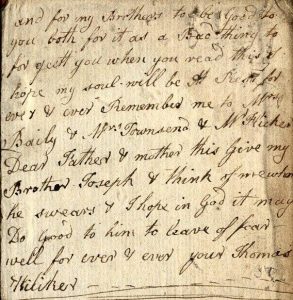
Thomas’ letter written the night before his execution.https://www.salisburyjournal.co.uk/news/24097277.bygone-salisbury-thomas-helliker-last-words/

Thomas Helliker, Executed 1803

Thomas was a shearman who was hanged at Fisherton Gaol, Salisbury, on March 22, 1803. He was nineteen years old at the time of his execution. He was convicted for his alleged involvement in the destruction of a mill by fire and for shearing frames. His case is notable for the public outrage surrounding his execution, despite his claims of innocence and an alibi. 

John Walsh, Irish Rebel

After the 1798 Irish Rebellion, many participants were captured and sentenced by British courts. John Walsh, a Catholic tenant farmer, was transported to New South Wales in 1800 for his involvement in a seditious meeting. He left behind a wife and children. His descendants still live in Australia.

Genealogical Tips: Researching Criminal Ancestors

If you suspect an ancestor may have been executed or transported, here is how to trace them:

Search Court and Criminal Records

  • Old Bailey Online (for London): https://www.oldbaileyonline.org

  • British Newspaper Archive: Reports of executions and crimes.

  • Ancestry and Findmypast: Both have convict registers and transportation records.

  • National Archives (UK): Particularly HO (Home Office) series, for criminal petitions, transportation orders, and execution records.

Check Parish Registers

Sometimes the local clergy noted executions or transportations in burial or baptismal entries.

Explore Colonial Records

If your ancestor was transported, look for:

  • Convict musters and assignment records.

  • Pardons and tickets of leave (for early release).

  • Marriage or burial records in the colonies.

Interpreting Their Story

What should you make of an ancestor executed for theft or transported for rebellion? These are not just “criminals” but people shaped by their times: by poverty, injustice, and the immense inequalities of early modern Britain. Their stories are worth telling, not hiding. They reveal the lived experience of the lower classes, the operation of a harsh legal system, and the resilience of individuals who endured punishments unimaginable today.

Your ancestor might have stolen to feed a starving family, or rebelled against landlord injustice, or fallen foul of a system rigged against the poor. These are not tales of shame, but of history — and by exploring them, you can reclaim your family’s past with greater understanding and empathy.

Conclusion: From Stigma to Storytelling

Discovering a transported or executed ancestor opens a compelling window into the realities of the 17th and 18th centuries. These were times of repression, resistance, and of transformation. Ordinary people, your ancestors, bore the brunt of a brutal legal system designed to maintain the status quo. In telling their stories, we honour their struggles and shine a light on the injustices of the past. In doing so, we ensure their voices are not lost, that they, too, take their rightful place in the ever-evolving story of our families.

The Remarkable Lives of British Ancestors: The Agricultural Revolution

The Agricultural Revolution, the Working Classes, and the Landless Labourer.

In the annals of British history, the majority of the population can trace their lineage back to ancestors who toiled as agricultural laborers, also known on the UK census as Ag. Lab. Their existence, while seemingly simple, was a tapestry woven with intriguing stories and customs. They predominantly resided in tied cottages, homes that belonged to their employers and were rented to them. An unusual twist of fate bound them to their workplace; if they left their job, they might find themselves without a roof over their heads. It was a peculiar form of attachment where employment and housing were intimately entwined.

Life in these tied cottages unfolded through both prosperous and challenging times, anchored by the enduring traditions and timeless festivals that had been celebrated for generations. These customs served as a constant thread connecting them to their roots and heritage.

Then change arrived in the form of the Agricultural and Industrial Revolutions. These revolutions, while pivotal in shaping the modern world, often upended the lives of Agricultural workers. The transition from agrarian to industrial economies brought about profound shifts in employment, technology, and society. For many, it meant bidding farewell to the familiar rhythms of rural life and embracing a new, industrialised era.

As we delve into the history of these remarkable individuals, we uncover a rich tapestry of stories that not only illuminate the past but also provide valuable insights into the human capacity to persevere and evolve in the face of transformation. Our British Agricultural ancestors were witnesses to history.

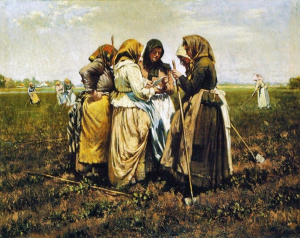
Women Turnip Hoeing
Turnip Hoeing

An examination of the radical consequences of the eighteenth century Agricultural Revolution upon the population of rural England.  Women were particularly affected by the upheavals to a static way of life in the countryside. Often forced into factories away from their traditional support networks within their communities never to return. How did women (and their children) adapt to their new environments, and did the mass migrations into our towns benefit or hold women back?

This talk is now full. If you are interested in a repeat talk please contact Heritage Found

South Bristol History Festival – October through November 2023

South Bristol History Festival is back! Organised by Bristol Radical History Group

An exciting and engage programme has been arranged.

Bristol Radical History Group (BRHG) are putting on a series of events over the autumn of 2023 uncovering hidden histories of south Bristol.

The Bedminster-Southville history festival in October features history talks, a walk and an exhibition exploring the radical face of Bedminster before and after WW1, hidden histories of Ashton Court Estate and West Street, the storming of the New Gaol in 1831, women prisoners from Bedminster transported to Australia and strikes by British Army units at the White City.

In November we move further south to investigate the Knowle Wester who tried to kill fascist leader Oswald Mosely, launch Paul Smith’s book Hartcliffe Betrayed on the design of the estate and explore the history of some of its activists.

All the events are free as our libraries, the Tobacco factory, St Paul’s Church, United Reform Church, and community centres are offering their spaces for no cost.

Venue Date Session (pm) Title Speakers
Tobacco Factory Thurs 5th October 6.30-7.30 Haunting Ashton Court LIVE Elinor Lower, Jack Young
Tobacco Factory Thurs 12th October 6.30-7.30 The Dean Lane Pit disaster of 1886 Tony Dyer
Bedminster Library Tues 17th October 2.00-3.00 Trouble on the trams Bob Whitfield
Tobacco Factory Thurs 19th October 6.30-7.30 Trouble at the White City – strikes in the British armed forces in 1919 Roger Ball
Bedminster Library Tues 24th October 2.00-3.00 ACTA’s historical plays Ingrid Jones
Tobacco Factory Thurs 26th October 6.30-7.30 The rise and fall of Edward Colston – the real story Countering Colston
Walk: Ropewalk Pub Bedminster Parade Sun 29th October 2.00-4.00 The radical face of Bedminster in the early 20th Century. Trevor Houghton
Bedminster Library Tues 31st October 2.00-3.00 From Bedminster to Van Diemen’s Land Sheila Hannon
United Reform Church Tues 31st October 11.00-1.00 Soup and stories Jackie Smith
St Pauls’ Church Thurs 2nd November 2.00-3.30 The 1831 Bristol reform riot – a view from the Southbank Steve Poole, Roger Ball
United Reform Church Sat 4th November 1.00-5.00 West Street Stories Way Out West


“Nautical women-women sailors and the women of sailortowns: A forgotten diaspora c 1693-1902”

BOOK HERE

Tuesday, 29 November 2022, 14:00 – 15:30. 

Portishead Library 24 Harbour Road Portishead BS20 7AL

North Somerset Libraries are excited to host a series of talks by Bristol Radical History pamphleteers. Visit www.brh.org.uk to find out more about their publications and events. The talks are informal and accessible and would appeal to adults and older teens. Some Bristol Radical History pamphlets will also be available to purchase with cash.
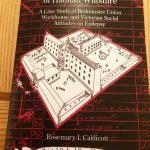
In our third talk, Rosemary Caldicott brings to life Pamphlet number 43 which will be of particular interest to locals.

Nautical Women book cover
‘Nautical Women’, by Rosemary L Caldicott

The book explores the stories of women whose lives were inextricably linked to the sea. These include the women of sailortowns struggling to keep out of the dreaded workhouse and resisting the prowling press gangs; and of the courageous and skilful cross-dressing women sailors, some of Bristol, who went to extraordinary lengths to hide their gender. The stories of these women challenge our stereotypes of women in earlier societies and reveal the courage of those who ‘ran away to sea’ by exposing their struggles against poverty. Rosemary will discuss these women’s motivation as well as their adventures and inevitable exposure.

About the venue

Portishead Library is accessible, including a disabled toilet and baby change. The talk will be in the meeting room which will be set out in theatre style. Get in touch with us if you have additional support needs so that we can help you enjoy the event. Call us on 01934 426040 email us on portishead.library@n-somerset.gov.uk or pop in and see us Tuesday to Friday 9.30-5 and Saturday 9.30-1pm

Who can come?

Numbers are limited so we ask that you book a place via Eventbrite or by contacting Portishead Library. As we have limited spaces do let us know if your plans change. It is easy to cancel via Eventbrite.

More about the speaker

Rosemary Caldicott is a teacher of social history working in adult education, a writer of books and articles about working class women in history.

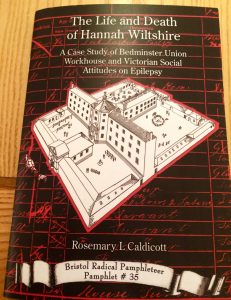
Rosemary is secretary of BRHG and has published several works for the group: The Life and Death of Hannah Wiltshire: A Case Study of Bedminster Union Workhouse and Victorian Social Attitudes on Epilepsy (2016); Lady Blackshirts: The Perils of Perception – suffragettes who became fascists (2017); Nautical Women. Women sailors and the Women of Sailortowns: A Forgotten Diaspora. c.1693 – 1902 (2019).

Talk – Thursday 24 November, 7.00-8.30pm. Life and Death in Bedminster Workhouse

BOOK HERE ON EVENTBRITE

North Somerset Libraries are excited to host a series of talks by Bristol Radical History pamphleteers. Visit www.brh.org.uk to find out more about their publications and events. The talks are informal and accessible and would appeal to adults and older teens. Some Bristol Radical History pamphlets will also be available to purchase with cash.
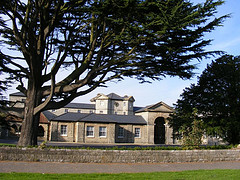
In our second talk, Rosemary Caldicott brings to life Pamphlet number 35 which will be of particular interest to locals.

During the year of 1855 rumours of murder and cover up were circulating in the small north Somerset

The Life and Death of Hannah Wiltshire
by Rosemary L Caldicott

village of Walton-in-Gordano. An epileptic destitute country girl had died in the local institution known as the Bedminster Union Workhouse. Her death caused public outrage after letters were written to the local newspapers. The Board of Guardians were suspected of concealing the true magnitude of neglect at the workhouse, leading to accusations of medical negligence. In this pamphlet, Victorian social attitudes on epilepsy are investigated within the context of how the draconian workhouse system typically caused particular hardship to people who suffered with epilepsy and other mental health issues.

The Life and Death of Hannah Wiltshire illustrates the treatment imposed upon the vulnerable poor living in rural England during the mid-nineteenth century and how a campaign for transparency, accountability and social justice was fought for by the local community.

About the venue

Pill Library and Children’s Centre is accessible, including a disabled toilet and baby change. The talk will be in the main library which will be set out in theatre style. Get in touch with us if you have additional support needs.

South Bristol Festival – Bedminster Union Workhouse

SOUTH BRISTOL HISTORY FESTIVAL!

Rosemary Caldicott will be giving a talk about Bedminster Union Workhouse

Tuesday, 20 September 2022 at 2pm-3pm

To be held at Bedminster Library, 4 Bedminster Parade, Bedminster, Bristol BS3 4AQ

In 1855 rumours of murder and a cover up were circulating in the small north Somerset village of Walton-in-Gordano.  An epileptic destitute country girl, Hannah Wiltshire, had died in the Bedminster Union Workhouse at Flax Bourton.

This talk illustrates the treatment imposed upon the vulnerable poor living in England during the mid-nineteenth century and how a campaign for transparency, accountability and social justice was fought for by the local community. The talk will include newly discovered letters of complaint written to the Poor Law Board by Sir Arthur Elton of Clevedon.

This talk is one of a series of talks about working class history in South Bristol and has been organised by Bristol Radical History Group as part of the South Bristol History Festival. For more information and to view the full program of talks click HERE


This weekend 11/12 June Clevedon Literary Festival!

A warm welcome is waiting visitors to the Clevedon Literary Festival this year.

The Celebration of the Book is taking place on Saturday 11 June at St Andrew’s Church Centre, Old Church Road, Clevedon, BS21 7UE.

I have attached the Festival leaflet for the Celebration of the Book and here’s a link to it online:  Clevedon Literary Festival

At 12.15 Rosemary Caldicott will be talking about a local scandal that took place in 1855  – ‘The Life and Death of Hannah Wiltshire: A Case study of Bedminster Union Workhouse and Victorian Social Attitudes on Epilepsy.‘

The Board of Guardians of Bedminster Workhouse were suspected of concealing the true magnitude of neglect at the workhouse during 1855, leading to accusations of medical negligence that caused the death of a local woman from Walton in Gordano. This talk includes newly discovered letters of complaint written to the Poor Law Board in London by Sir Arthur Elton of Clevedon. Rosemary’s book covering this subject will be on sale at the book stall.

The Life and Death of Hannah Wiltshire
by Rosemary L Caldicott

There are quite a few venues and attractions in other parts of Clevedon during the day. Walking is probably the best way to get around but there will be a vintage bus (in the spirit of Doris Hatt’s ‘communist coach’) touring around the Festival venues, including St Andrew’s. The Festival also has the use of an electric car, sponsored by the Mazda garage here – you may book this (as passengers) at the Festival Desk.


Bristol Radical History Festival – Saturday 14 May 2022

BRH festival is back with its renowned history festival after having to postpone for the last 2 years due to the pandemic.

This years themes are State Surveillance 1792-2022 and Post-War Britain 1945-1951

Talks, films, exhibitions, stalls and much more will be running all day at the M Shed, Harbourside, Bristol.

Talks range from:

The 1949 Dockers’ strike in Avonmouth.

Surveillance and the suppression of radical politics in Bristol, 1792-1820.

The fall of Colston – the true story.

This is just a small example of what will be presented. Please go to this link for the full programme of speakers and events, LINK 14th May


New course week 2: Birth, Marriage and Death

This week my class investigated searching for birth, marriage and death registrations. As our research progresses it is very rewarding to send off for copy certificates. I have sent off for a further two death certificates of ancestors or mine today. During the 19th century, and with couples usually having large families, it is sadly only too common to discover that several children had died during childhood within one household.  I personally find it fascinating to find out what had caused these children’s early demise. Unfortunately I discovered one child had drowned in a pond, but many others died of contagious infections which we no longer fear, such as whopping cough.

These tragedies would have affected the family very deeply, and this was perhaps one reason why people tended not to talk about their grief – because of the fear that life was very precarious for their children.

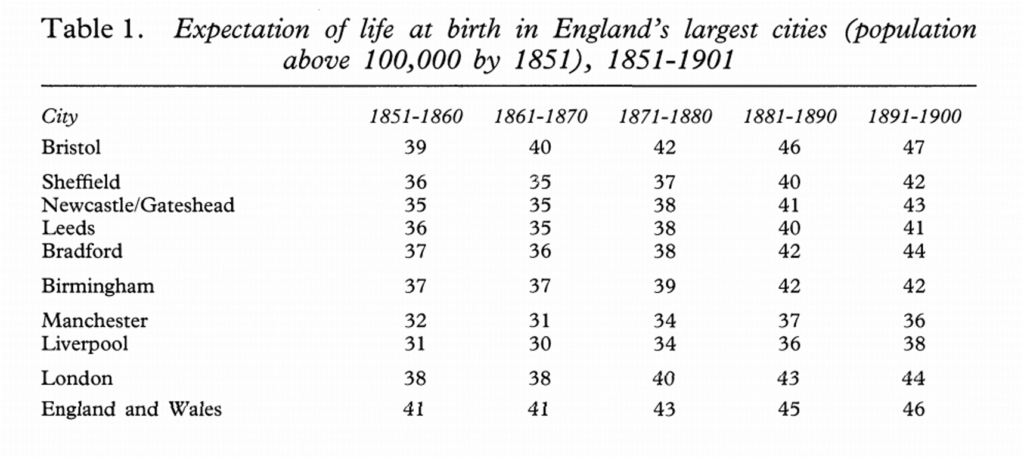
Life expectancy was low compared to today. One of the reasons was the death of infants and children from disease. However, poor housing, pollution, and lack of sanitation also resulted in causing early deaths in all ages.

To send off for a copy certificate is easy. As use the GRO web site as they are the cheapest option and the quickest. Send off HERE