
The Birth of Civil Registration: Unveiling the Early Years (1837-1875)

When researching family history, there is an often overlooked era that played a crucial role in shaping how we trace our roots: the period of early civil registration in England and Wales, spanning from 1837 to 1875. While these dates might seem unassuming, they mark the onset of a significant transformation in record-keeping, which eventually led to a more streamlined and accessible way of documenting vital life events, such as births, marriages, and deaths.

When you begin your journey into genealogy in England and Wales, you typically start with birth, marriage, and death certificates. These documents are your initial gateway to uncovering your family’s past. As you delve deeper into census data, parish records, and historical documents, it’s easy to get caught up in the thrill of the hunt without pausing to reflect on the origins and intricacies of the records you’re using.

In 1832, a bill proposing the registration of births was introduced but failed to pass into law. Subsequent attempts in 1834 and 1836 were met with numerous amendments. The 1836 legislation, although imperfect, managed to navigate the legislative hurdles, primarily because the alternative was to abandon the change to the system. The background to BM&D registration was to establish a secular, neutral system of registering vital events – a concept already implemented in other countries like France, thanks to Napoleon’s efficient civil registration system.

Notably, the proponents of civil registration were often non-conformists and liberals. Before civil registration, the Church of England held a de facto monopoly on vital records, granting their registers a special legal status. Even other religious groups, despite maintaining meticulous records, did not enjoy the same legal recognition. As more people from diverse religious backgrounds emerged, the Church of England’s grip began to loosen.

The Church’s resistance to civil registration was rooted in a combination of ideological beliefs and financial interests. The Church had a financial stake in the process, which included probate, poor relief, and registration. Over time, these functions shifted from religious authorities to secular institutions, resulting in the Church losing substantial revenue.

The battle over civil registration played out in politics. The House of Lords was a stronghold for the Church of England, populated by bishops and a conservative Tory majority. In contrast, the House of Commons oscillated between Whigs and Tories, which led to vigorous debates throughout the 1830s. Legislation required approval from both houses, and with many alterations, the 1836 bill finally passed, albeit with several ambiguities.

Civil registration utilised existing poor law unions established in 1834, which became registration districts, creating a seamless system. However, the lords introduced some significant changes. Originally, all marriages were to occur by certificate, regardless of religious affiliation. The lords reinstated banns for church marriages, and for civil or non-Church of England ceremonies, they mandated the reading of notices in public places.

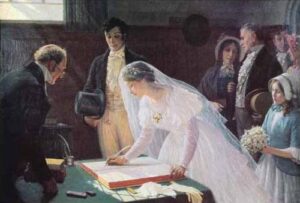
The birth of civil registration ushered in a new era, replacing the church-based system and offering secular registration. In those early years, civil marriage ceremonies were infrequent; the primary role of civil registrars was to oversee marriages conducted in various religious denominations, from Catholic churches to Baptist congregations. Pure civil marriages were exceedingly rare in the 19th century.

The General Register Office initially focused on record-keeping and financial aspects, evolving over time to incorporate a statistical role. However, the statistics were not the primary concern in the earliest years of civil registration. The GRO was divided into departments, each with a specific function: records, accounts, and correspondence. The statistical branch emerged later, reflecting the changing priorities of the office and governance.
Civil registration records were used to validate existing knowledge rather than uncover new information. The certification requirement, which still prevails in England and Wales, was essential to provide official documentation of birth, marriage, or death, ensuring its legal recognition. The cost of certification reflects the rigorous security measures involved in producing certified copies, including special secure paper and meticulous record-keeping.

While the Church of England played a significant role in opposing civil registration, it was not the sole adversary with some members of the clergy resisted registration efforts.

Civil registration was not without its challenges and opposition, but it was a milestone in the quest for a secular, neutral system to record vital life events. The birth of civil registration in 1837 marked a significant shift away from church-based records and toward a more inclusive and standardised method of recording life’s most crucial events. As we explore our family history, let’s not forget the stories and struggles behind the records we so often take for granted. Civil registration’s journey is a testament to the enduring importance of preserving and accessing our family heritage.

Researched from The National Archives.
Back to Basics – What is a UK Birth Certificate? and What can it tell us about our Ancestors?

What is a UK Birth Certificate?

A UK birth certificate is an official document issued by the General Register Office (GRO) or a local registration office. It records essential information about an individual’s birth, including their full name, date and place of birth, parents’ names, and registration details. It is considered a primary source of evidence for establishing identity and citizenship in the UK.

  1. Information Included on a UK Birth Certificate

a. Child’s Details:

  • Full name of the child: This is the name given to the child at birth and appears as the first entry on the certificate.
  • Date of birth: The exact date when the child was born.
  • Place of birth: The city or town and the country where the birth occurred.

b. Parents’ Details:

  • Full names of both parents: The names of the biological parents, including the mother’s maiden name.
  • Occupation of parents: This section may include the parents’ occupations at the time of the child’s birth but often the mothers occupation if she was married was not recorded..
  • Date of parents’ marriage/civil partnership: If applicable, the date of marriage or civil partnership between the child’s parents.

c. Registration Details:

  • Registration district and sub-district: The geographical area where the birth was registered.
  • Registration date: The date when the birth was officially registered.
  1. Types of UK Birth Certificates

There are two main types of UK birth certificates:

a. Short/Abbreviated Certificate:

  • This type of certificate includes only the child’s details (name, date, and place of birth) and the registration details.
  • The short certificate does not include the parents’ information, making it unsuitable for legal and official purposes.

b. Full/Long Certificate:

  • The full certificate contains all the information present on the short certificate, along with the names and details of both parents.
  • This certificate is required for various legal purposes, such as obtaining a passport, opening a bank account, and applying for certain benefits.
  1. Obtaining a UK Birth Certificate

If you need a copy of a UK birth certificate, there are several ways to obtain one:

a. Online Application: The General Register Office offers an online service where you can order a copy of a birth certificate for a fee.

b. In-Person: You can visit the local registration office where the birth was registered and request a copy in person.

c. Do not apply via ‘tracing your ancestors web-sites’ as they will charge you a lot more than the GRO and Heritage Found!

d. Contact Heritage_Found@yahoo.co.uk and we will take care of your orders for only a modest fee.

Conclusion

A UK birth certificate is an indispensable document that provides vital information about an individual’s birth and parentage. Understanding its contents and types can be crucial for various life events, official procedures and confirmation that you have found the right person to confirm your research is correct.

New course week 2: Birth, Marriage and Death

This week my class investigated searching for birth, marriage and death registrations. As our research progresses it is very rewarding to send off for copy certificates. I have sent off for a further two death certificates of ancestors or mine today. During the 19th century, and with couples usually having large families, it is sadly only too common to discover that several children had died during childhood within one household.  I personally find it fascinating to find out what had caused these children’s early demise. Unfortunately I discovered one child had drowned in a pond, but many others died of contagious infections which we no longer fear, such as whopping cough.

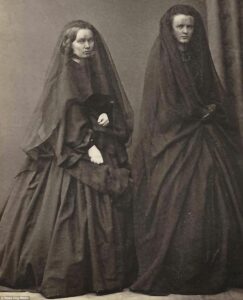
These tragedies would have affected the family very deeply, and this was perhaps one reason why people tended not to talk about their grief – because of the fear that life was very precarious for their children.

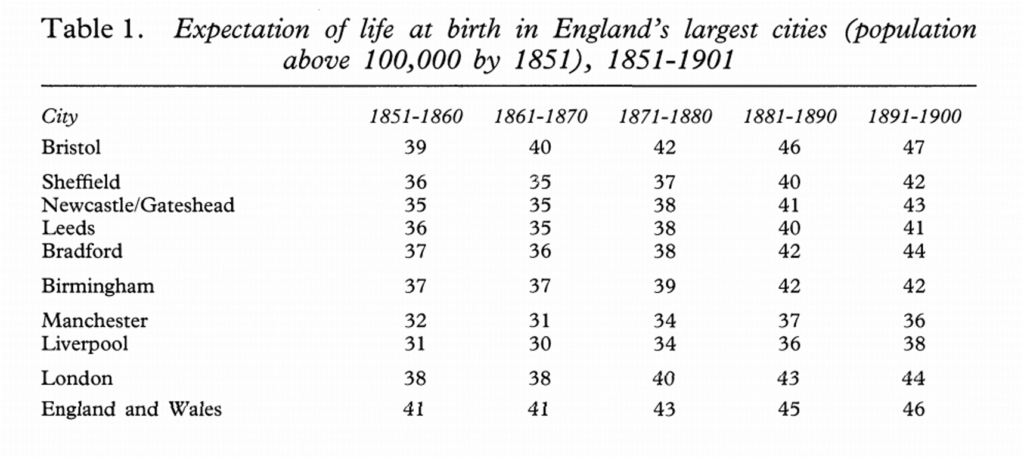
Life expectancy was low compared to today. One of the reasons was the death of infants and children from disease. However, poor housing, pollution, and lack of sanitation also resulted in causing early deaths in all ages.

To send off for a copy certificate is easy. As use the GRO web site as they are the cheapest option and the quickest. Send off HERE

New course: Researching you Family History – Part 2

Discover your Family History –  Introduction to Researching your Family History

Part 2 – Discover your Family History and so much more!

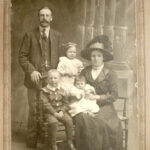
An exploration of Family History. This course will be delivered at Stoke Lodge but will move online if necessary using ZOOM.Heritage Found black and white image of family

Course code FHR2C.  Begins Thursday 10 March 2022 for 5 weeks. 14:00-16:00

A practical easy learning technique to learn how to research and record family history with confidence. A fun approach, in a safe, inclusive environment with other learners. Correct interpretation of vital records, including Parish Records, and tips on how to improve research techniques. Learners should be able to produce at least a 6-generation family tree by week 5. A fun approach, in a safe, inclusive environment with other learners. A mixture of lectures and practical work.

Join award winning tutor Rosemary Caldicott to better understand how to discover your ancestors.

FOR MORE INFORMATION ON ENROLMENT AND TO BOOK HERE

NEW COURSES FOR THE AUTUMN TERM!

Discover your Family History –  Introduction to Researching your Family History

Part One       

A practical stepped learning technique to begin learning family history research with confidence. A fun approach, in a safe, inclusive environment with other learners. 

Correct interpretation of vital records and how to understand simple research techniques.  This course will be delivered at Stoke Lodge but will move online if necessary using ZOOM 

5 weeks. Begins Thursday 23 September 2pm to 4pm   With award winning tutor Rosemary Caldicott

(This course is sold out, but you can go on a wait list)

BOOK HERE

Part 2 – Discover your Family History and so much more!

Places still available.

A further exploration of Family History. This course will be delivered at Stoke Lodge but will move online if necessary using ZOOM.Heritage Found black and white image of family

Course code FHR2B.  Begins Thursday 11 November 2021 for 5 weeks. 14:00-16:00

A practical easy learning technique to begin learning family history research with confidence. A fun approach, in a safe, inclusive environment with other learners. Correct interpretation of vital records and how to understand simple research techniques. Be able to produce at least a 4-generation family tree by week 5. Practical learning for those who have already undertaken some family history research. A fun approach, in a safe, inclusive environment with other learners. Parish records, wills and social history explored. A mixture of lectures and practical work.

Join award winning tutor Rosemary Caldicott to better understand how to discover your ancestors.

FOR MORE INFORMATION ON ENROLMENT AND TO BOOK HERE

They are back! My ever popular Family History Research Talks!

A new series of talks that are designed to meet the needs of family history researchers whatever your level of experience. A chance to share your knowledge with other passionate researchers!  Tutor led direction that will enhance learners’ knowledge.

The first talk is :-

1. Understanding the UK Census   

Do you find census records confusing? Then this is a talk for you! The census records offer us a lot more information than is often realised.Heritage Found Family History Research short course This special session will be a detailed look at the census records. A comprehensive examination of the errors in the records and how to improve our searches.
Also, how to cross reference the years through a deeper understand of the census records.
Where to find lost census records. Keeping records.

This is a one off talk about reading a census document correctly. This course will be delivered online  using ZOOM 

Wednesday 6.30pm to 8.30pm. Rosemary Caldicott 

1 session on 20 October  

FOR MORE INFORMATION ON ENROLMENT AND TO BOOK HERE

2. Understanding the value of birth, marriage and death certificates to enhance your research. 

Often over-looked, but invaluable to further your research.  A detailed talk on how to order and interpret birth, marriage and death certificates. This course will be delivered online  using ZOOM 

We will take a look at birth, marriage and death (BMD) certificates are an invaluable resource for the family history researcher. These records offer us a lot more information than is often realised.  You will learn how to order copies, how to examine the documents correctly, how to cross-reference the information and how to record your evidence.

1 session to be held on Wednesday, 10 November 6.30pm to 8.30pm.

FOR MORE INFORMATION ON ENROLMENT AND TO BOOK HERE

Why ordering copy certificates is important and when you might need to go down this road

Once you have gone back 4 generations life for the family history researcher often becomes more difficult.  One reason is because with common names it can be quite difficult to determine from the registration evidence which person is the correct one.  A clear way forward is to order copy certificates to clarify the evidence that will be listed on the certificate at the time of issue.

For example, John Smith born Birmingham in 1888. We discover online that there were in fact 4 John Smith’s having a birth registration during that year in Birmingham.  By ordering either the one you suspect could be yours, or even several you will discover the names of the parents and, also importantly, the occupation of the father. When cross checked with other pieces of information you have about the family it is relatively easy to decipher which is your John Smith.  If you know that your John Smith from the 1911 census worked as a labourer a cotton factory but on the certificate it states his father was a lawyer then it is very probable that you can eliminate this person because it was very rare for a person at this time to have class and economic mobility.

To order certificates in the U.K. and just go the the GRO website. For Scotland its Scotlands People and for other countries search online to find out which government department holds vital records for order.

English and Welsh Death Certificates – a valuable resource often overlooked.

Death certificates are a very under valued family research source.

On the one hand they do give less information than a birth and marriage certificate, but death certificates offer us an understanding of the end of a life.  They also give us links with wills, burial, newspaper reports, workhouse infirmary reports and an deeper connection with people.

A death certificate will give you the full name of the deceased, their sex, age (post 1866), occupation, cause of death, where the person died, address of the informant, the date of registration and finally the signature of the registrar.

Be aware when searching though the vital indexes (required to send off for a copy death certificate) that before 1866 the persons date of birth and age was not included. This means that, especially with common names, that it can be difficult to track down the correct person.

Unbelievably it was only from April 1969 that the deceased date and place of birth are given, and the maiden name of married and widowed women.

As you go back in time, especially before mass vaccination being introduced in the early 1940s, it is shocking to see how many children were lost to contagious diseases. One family living in London I researched sadly lost four young children, one each year between 1865 to 1870 to whooping cough. Also, you will discover many people dying from infections easily treatable today with antibiotics. Certainly a stark glimpse into our ancestors precarious lives.

Second Life Marketplace - CLEARANCE - 90% OFF! Montagne Noire ...