Understanding Surname Changes

A material surname change refers to a significant alteration in a family’s last name, often stemming from various factors such as cultural assimilation, marriage, or legal mandates. These changes can make it challenging to trace your ancestors through historical records, as they might have gone by different surnames at various points in their lives.

Common Causes of Surname Changes

  1. Cultural and Linguistic Shifts: Immigrants arriving in a new country may anglicise or adapt their surnames to fit their new surroundings. For instance, “Schmidt” could become “Smith.”
  2. Marriage: Traditionally, women often took their husband’s surname upon marriage. This practice still exists today, though it is becoming less common.
  3. Legal Changes: Legal mandates, like name changes for citizenship or other reasons, can result in surname alterations. Individuals might change their names to avoid persecution, discrimination, or to simply start fresh.

Navigating Material Surname Changes in Your Research

  1. Record Every Variation: As you uncover historical records, keep meticulous records of all surname variations. Note any aliases, nicknames, or alternate spellings you come across. These notations will prove invaluable in your research.
  2. Document Events Surrounding Changes: Look for historical context that may explain a surname change. Marriage certificates, naturalization papers, or personal letters might provide clues.
  3. Explore Alternate Records: When you encounter a dead end with one surname, try searching for the family using other possible variations. Remember, genealogical research can be a puzzle, and you may need to piece it together from different angles. I have discovered a ‘K’ being written as n ‘R’ on the census records = think out of the box.

Conclusion

Material surname changes can at times pose challenges. However, they also offer a deeper understanding of your family’s history, reflecting the ever-evolving nature of individuals and society. By documenting variations, understanding the reasons behind these changes, and using different research strategies, you can navigate the complexities and unearth the fascinating stories hidden within your family’s name changes.

New course: Researching you Family History – Part 2

Discover your Family History –  Introduction to Researching your Family History

Part 2 – Discover your Family History and so much more!

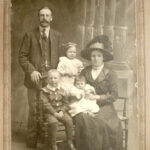
An exploration of Family History. This course will be delivered at Stoke Lodge but will move online if necessary using ZOOM.Heritage Found black and white image of family

Course code FHR2C.  Begins Thursday 10 March 2022 for 5 weeks. 14:00-16:00

A practical easy learning technique to learn how to research and record family history with confidence. A fun approach, in a safe, inclusive environment with other learners. Correct interpretation of vital records, including Parish Records, and tips on how to improve research techniques. Learners should be able to produce at least a 6-generation family tree by week 5. A fun approach, in a safe, inclusive environment with other learners. A mixture of lectures and practical work.

Join award winning tutor Rosemary Caldicott to better understand how to discover your ancestors.

FOR MORE INFORMATION ON ENROLMENT AND TO BOOK HERE

The U.K. 1921 Census will be released on 6 January 2022

What is the 1921 Census of England and Wales?

The 1921 Census gives us the names, ages, occupations and addresses of 38 million people living in the U.K. and are available online from 6 January 2022

The 1921 Census is very important due to the fact that the 1931 Census was destroyed in a fire. Then, the 1941 Census was cancelled due to the Second World War. Therefore the 1921 Census is the only record to become available for the next 30 years other than the 1939 registration war time mini-census.

It’s also the most documented record set up to that time because it was the first census to recognise divorce. For the first time we have documents that will reveal family secrets and surprises that this interwar census brings. These documents will also sadly reveal the many widows and children now living without husbands and fathers due to WWI.

The 1921 Census can be viewed at  findmypast.co.uk from 6 January 2022. The National Archives, Kew have worked with Find my Past to digitalise the documents.

For help to discover you family history contact Heritage Found!

NEW COURSES FOR THE AUTUMN TERM!

Discover your Family History –  Introduction to Researching your Family History

Part One       

A practical stepped learning technique to begin learning family history research with confidence. A fun approach, in a safe, inclusive environment with other learners. 

Correct interpretation of vital records and how to understand simple research techniques.  This course will be delivered at Stoke Lodge but will move online if necessary using ZOOM 

5 weeks. Begins Thursday 23 September 2pm to 4pm   With award winning tutor Rosemary Caldicott

(This course is sold out, but you can go on a wait list)

BOOK HERE

Part 2 – Discover your Family History and so much more!

Places still available.

A further exploration of Family History. This course will be delivered at Stoke Lodge but will move online if necessary using ZOOM.Heritage Found black and white image of family

Course code FHR2B.  Begins Thursday 11 November 2021 for 5 weeks. 14:00-16:00

A practical easy learning technique to begin learning family history research with confidence. A fun approach, in a safe, inclusive environment with other learners. Correct interpretation of vital records and how to understand simple research techniques. Be able to produce at least a 4-generation family tree by week 5. Practical learning for those who have already undertaken some family history research. A fun approach, in a safe, inclusive environment with other learners. Parish records, wills and social history explored. A mixture of lectures and practical work.

Join award winning tutor Rosemary Caldicott to better understand how to discover your ancestors.

FOR MORE INFORMATION ON ENROLMENT AND TO BOOK HERE

They are back! My ever popular Family History Research Talks!

A new series of talks that are designed to meet the needs of family history researchers whatever your level of experience. A chance to share your knowledge with other passionate researchers!  Tutor led direction that will enhance learners’ knowledge.

The first talk is :-

1. Understanding the UK Census   

Do you find census records confusing? Then this is a talk for you! The census records offer us a lot more information than is often realised.Heritage Found Family History Research short course This special session will be a detailed look at the census records. A comprehensive examination of the errors in the records and how to improve our searches.

Also, how to cross reference the years through a deeper understand of the census records.
Where to find lost census records. Keeping records.

This is a one off talk about reading a census document correctly. This course will be delivered online  using ZOOM 

Wednesday 6.30pm to 8.30pm. Rosemary Caldicott 

1 session on 20 October  

FOR MORE INFORMATION ON ENROLMENT AND TO BOOK HERE

2. Understanding the value of birth, marriage and death certificates to enhance your research. 

Often over-looked, but invaluable to further your research.  A detailed talk on how to order and interpret birth, marriage and death certificates. This course will be delivered online  using ZOOM 

We will take a look at birth, marriage and death (BMD) certificates are an invaluable resource for the family history researcher. These records offer us a lot more information than is often realised.  You will learn how to order copies, how to examine the documents correctly, how to cross-reference the information and how to record your evidence.

1 session to be held on Wednesday, 10 November 6.30pm to 8.30pm.

FOR MORE INFORMATION ON ENROLMENT AND TO BOOK HERE

International Women’s Day – Our Ancestors and Divorce

Occasionally we come across an old divorce petition, a legal document that will bare all.  These documents make incredibly sad reading, but at the same time offer us a fascinating insight into the lives of our ancestors. They can be a deeply private and intimate glimpse into a couple’s marriage; heart wrenching to read, with each person’s account laid bare in blunt legal descriptions, leaving us to judge which side is telling the truth.

Divorce cases were heard in public in open court during the 19th century and a legal separation or divorce was only for the very wealthy. A married woman’s property automatically became her husband’s, and upon divorce the children remained the property of their father which was of course used as a means to control women residing in unhappy marriages. Mothers who left a marriage risked being prevented from seeing their children following a divorce or separation.

Things begin change a little after the 1857 Matrimonial Causes Act, but the law was still stacked in favour of the man. Under the new law, women divorcing on the grounds of adultery not only had to prove that their husbands had been unfaithful, but also had to prove additional faults, which included cruelty, rape and incest. Men, of course, just had to prove their wives had been unfaithful and in an age before cameras, videos and smartphones, this was often a tricky task! Before 1857, divorce was mainly open only to men, and had to be granted by an Act of Parliament.

In 1858 the handling of the legal process for divorce was transferred from the ecclesiastical courts to a newly established civil court, the Court for Divorce and Matrimonial Causes. In 1873 responsibility was passed to a division of the new Supreme Court. All divorce cases took place in London, yet again restricting divorce to wealthier couples only.
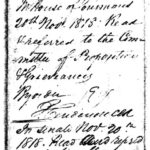
Recently, while researching a family tree I came across a divorce petition document dated 1875 which is stored at the National Archives in London. The couple were a moderate middle class farming couple who had been married for 25 years and were childless. This is a surprising case not only because of the financial implications for particularly the woman involved, but also because in the 19th century, divorce was extremely rare, and generally considered unthinkable for social, financial, and religious reasons. Unhappy couples would often separate but not legally get divorced as can be seen in family history archives. The petitioner in this case was the husband. I have changed the names and addresses in the following reproduction due to the sensitive nature of some of the central claims in the original legal document.
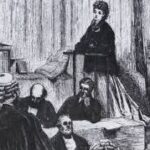
Victorian woman in divorce courtWe begin with the wife’s petition in this divorce case, dated February 1875 and claiming that her husband:

  • ‘the she denies that she was guilty of adultery as alleged.’
  • ‘That in or about the year 1865 the petitioner beat, assaulted and otherwise illtreated her threaten to kill her and greatly terrified her and on two occasions turned his wife out the house and kept her locked out all night refusing to allow her to enter’.
  • ‘That the petitioner on the 13th day of 1872 in ……….. Road, ……… swore at and threatened the wife and took from her her watch and guard wedding ring earrings cloak fur bag umbrella and other articles and insulted and swore at her on the public road in the presence of divers [others] persons strangers.’
  • ‘That on the 13th December 1872 at the house he refused her entry and has thrice hitherto refused to allow her to reside at or enter his said house and thence hitherto has wilfully separated himself from his wife without reasonable excuse and has deserted her.’
  • That in 1873 E.B. [servant] went to reside at the house with her husband that lived and cohabited and committed adultery with the said. E.B was delivered of a male child in said house on the 18th of January 1875 and the husband was the father.’
  • The respondent therefore humbly pray that your Lordship’s will be pleased to reject the pray of the said petitioner and to decree that the said marriage between the petitioner and his respondent be dissolved and that this respondent have such further and other relief in the premises as to your Lordships may [? ].

Her husband responds.

  • ‘That I am informed and verily believe that at divers [many] times …..that the aforesaid committed adultery with Thomas G the younger a butcher.’
  • ‘That I am informed and verily believe that on the 18th of July 1871, at Bath also committed adultery with the said Thomas G the younger.’
  • ‘That I am informed and verily believe that on the 5th day of July 1871 at Reading also committed adultery with the said Thomas G the younger.’
  • ‘That I am informed and verily believe that on the 5th day of January 1873 my wife in a lane call Gypsy Lane in the county of Somerset also committed adultery with the said Thomas G the younger.’
  • ‘That I am informed and verily believe that on the 14th day of April 1873 my wife at Cadbury Hill also committed adultery with the said Thomas G the younger’.
  • ‘That I am informed and verily believe that on a Sunday in the month of May 1873 my wife in a lane leading to the said Cadbury Hill also committed adultery with the said Thomas G the younger’.
  • ‘That I am informed and verily believe that on the 25th day of August 1873 my wife in a field at Hamstead also committed adultery with Thomas G the younger’.
  • ‘That I am informed and verily believe that on the 6th day of April 1874 my wife at Cadbury Hill also committed adultery with the said Thomas G the younger’.
  • ‘that there is no collusion or connivance between me and my wife in any way whatever’.

Thomas G, the butcher swore in his statement presented to the court that he denied any involvement or adultery with the wife.

The above 1875 petition document reveals the fees paid to take this case to court was a staggering £34,000 in today’s money. Unfortunately, the outcome and settlement of this case is not shown but it is doubtful if the wife in this case at this time had any claim over the family house, lands or other effects.

Divorce did not really open up for all classes until the 1920s with the provision of some local courts. In the 1920s and 1930s, English law did not allow for divorce by mutual consent, but rather required proof of adultery, or violence by one party; misconduct by both parties could lead to the divorce being refused. A further hurdle for a couple to obtain a divorce was that the law strictly prohibited “collusion” by the parties, and this is why in the above example the couple had to swear that they had not colluded.  A private members’ bill in 1923 made it easier for women to petition for divorce for adultery – but it still had to be proved.

The Matrimonial Causes Act 1937 changed the law to make divorce easier to access, particularly for women, who until then could not get a divorce merely on the grounds of adultery because a woman needed to show more causes than adultery, such as on the grounds of incest, sodomy, drunkenness, insanity, desertion, or cruelty. The need for the reforms was illustrated in the best-selling satirical novel Holy Deadlock by A E Herbert and published in 1934 which influenced a changing attitude towards a reform to English divorce law. However, there was a bar on petitions for the first three years of the marriage. In the late 1960s divorce was taken over by the county courts and most divorces now take place at county courts.

Finally, in 1969 the Divorce Reform Act was passed, allowing couples to divorce after they had been separated for two years (or five years if only one of them wanted a divorce, however this has proved controversial for some). A marriage could be ended if it had irretrievably broken down, and neither partner no longer had to prove “fault”.

What of our unhappy couple?

The 1881 census discloses that the ex-wife was now living in a neighbouring town with a Richard Pike who was a carpenter, and she is a recorded as a general servant, a term commonly used when a man and woman who were not married co-habited together. Interestingly she also says that her condition was being as married, perhaps meaning that a divorce was not granted in this case, and that Richard Pike was a widower.

The baby born in February 1875 was baptised with the father’s full name and with the mother’s maiden name appearing in the church register because she was an unmarried mother. The couple probably planned to be married once the divorce was finalised, but very sadly the mother (E.B.) died just four months following the child’s birth. The child remained at the family home and was brought up by another woman following the mother’s tragic death. The new couple lived together for over 35 years until the father finally died in 1908. They never married.


New talk on census records for beginners 2 February 2021 at 7pm

New talk online!
During the session learners will be given examples of how to undertake family history correctly, therefore saving you time so mistakes are not made. The U.K. Census records will be examined using examples with potential pitfalls explained in an easy to understand way. The talk is focused on U.K. records and visual images will be used to offer examples. Join me and learn lots of tips!
The talk is perfect for beginners and those that have had problems researching family history.
The session is presented live by award winning family history tutor.

To sign up click HERE

What you will learn:

  • How to read a census document correctly
  • How to understand the key elements of the documents
  • How to manage difficult handwriting and marks
  • How to usefully interpret the information
  • How to work through the document logically

A handy list of census abbreviations

The census undertaken in the past in the U,K. included the use of abbreviations to describe professions. Here are some examples of the more common abbreviations that you will come across.

Ag. Lab – Agricultural labourer

Ap. – Apprentice

Army – Member of HM land forces of whatever rank

Cl. – Clerk

FS. – Female servant

H.P. – Members of HM armed forces on half-pay

Ind. – Independent – people living on their own means

J. – Journeyman

M. – Manufacturer

m. – Maker e.g. Boot m.

MS. – Male servant

Navy – Member of HM naval forces of whatever rank including marines

N.S. – Not Stated

P. – Pensioners of HM armed forces

Sh. – Shop man

1851
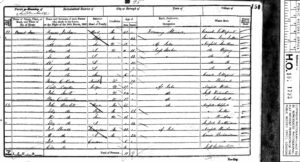
1851 census. England and Wales

Announcing 4 new Family History Courses – Starting January 2021

Heritage Found black and white image of familyA Beginners Introduction to Family History Research – Taster class

A two hour class, delivered online via Zoom, by award winning tutor. Learners will be given examples of how to undertake family history correctly. The census records will be examined and the many potential pitfalls will explained. Designed for complete beginners.

Thursday 12 January. 2pm – 4pm.

Book Here

Heritage Found Family History course Stage 1 Family History Course starts January 2021Family History Stage 1

A five week online course  to learn with ease the correct interpretation of vital records and how to understand simple research techniques. The course aims for learners to be able to produce at least a 4- generation family tree by week 5. Delivered via zoom and open for anyone.

Thursday 14 January.1.30pm to 4pm 

Book Here

Heritage Found Family History Research short courseFamily History Intensive Research Afternoon

For the novice or experienced genealogist!  Designed to advance your ancestral research development, to explore areas of your research that have been neglected or to assist you to begin a new search. Delivered online via zoom.

Tuesday 23 February 2pm to 4.30pm 

Book Here

Heritage Found Stage 2 5 week Family History research course
A monument to all those that were buried at Eastville workhouse Bristol.

Family History Stage 2

A practical, 5 week, stepped learning technique for those have already undertaken some family history research. A fun approach, in a safe, inclusive environment with other learners. Parish records, wills and social history are just some of the topics to be explored and explained.

Correct interpretation of vital records and how to understand simple research techniques. Aspects of social history will be investigated too. The course aims for learners to be able to produce at least a 6-generation family tree by week 5.

Thursday 25 February. 1.30pm to 4pm

Book Here

1841 Census – pit falls

The 1841 census is the first census that was undertaken to cover England and Wales to include family names, street names, occupation and if born in the county or not.

A key feature to be considered when searching back through British census records is that the 1841 census rounded down adult ages to the nearest 5 years. For example, 53 becomes 50 and 28 becomes 25.  This can easily throw us off course when looking for similar names in a small geographical area, a common problem my learners come across!  However, matching up occupation can help us have some confidence that we have in fact found the correct people.  Luckily though children’s ages up to 14 are given their exact age even down to the day of a newborn which I find rather touching.

You will not find house or flat numbers under the address column, only a street name, or less.  In 1841 the state in the U.K. did not consider it necessary to know such facts. Also, it must be remembered that postage was hardly used at this time and that government were simply not interested to know precisely where each person lived. Most homes did not have a number with the feature only being developed as urbanization grew larger across the country. However, by the coming of the 1851 census dwelling numbers were beginning to be added to the census schedules.

New Family History course starts on-line Thursday 23 April 2020

Dear Bristol Learners

Thank you for your support whilst we have been converting our courses to a virtual format. 

My courses will run on zoom, with lecture notes, lectures, Q&A time and discussion.

To book my Family History courses just visit the Bristol Adult Learning page here 

Family History Stage One begins on Thursday 23 April at 1.30 pm.  

We will create an invigorating and supportive e-teaching space. This is a great way to pass the time, and discover your amazing family history.