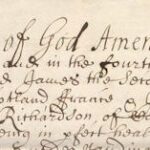
 As you travel further back into your ancestors past and into the realms of parish records you will stumble upon wills. Millions of these old documents are now available on sites such as Ancestry and at county and national archive record sites.
Bequests in early wills often included bed linen, a bed, silver spoons and brassware, these were items of great value. Terms used such as cousin, stepson or daughter-in-law did not have the same meaning as they do now, so modern interpretations of old wills can be tricky. They are a good source of discovering other members of the family not previously know about.
The handwriting will vary greatly, from fine quilled scripted writing, to Latin and incomprehensible scribble, suggesting they were hastily written up by candlelight in the dying persons bed chamber. But the more you train your eye to read these documents the easier it will become. Much of these documents will mention at great length ‘duty to god’ which will sometimes be laid down in Latin: the effect of Christianity upon the will was very marked. In England and Wales until 1858 the Church ran probate courts to ensure the terms of a will were followed. Members of the clergy often drew up parishioners’ wills if they could not afford a lawyer, or by choice.
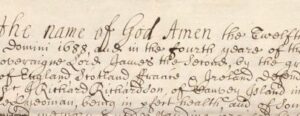 Wills written in the 19th century tend to follow a general pattern, usually beginning with the words, ‘In the name of God Amen’. The testator then states his mental competence. Often, will writing only took place when death was imminent, and wills usually contained instructions about the disposal of the body and what form the memorial took. Gifts for mourners, favoured servants and local residents also featured in many wills, then the list of bequests. Wills usually ended with the date and the point that all former wills were revoked. Then, the testator and two witnesses signed the document. It can be exciting to see an ancestor’s signature (often by shaky hand) on a sixteenth century will.
In 1858, the authorities established the Principal Probate Registry where a copy of every will provided was kept, as well as letters of administration. When the registry was established, district probate registries were created around the country.
However, it must be remembered that in the mid-19th century, the bulk of people did not leave wills thanks to the vast differences between the rich and poor. However, I have come across poor cottagers’ wills, leaving only a few pieces of furniture to a son or daughter being written up by the local curate.
Also, to be encouraged, before embarking on a long sea voyage or taking part in military campaigns was often for people (men) to leave wills. We must remember that in the not so distant past sudden deaths happened frequently, and often family members were forced to apply for letters of administration when a person who held substantial assets died intestate.


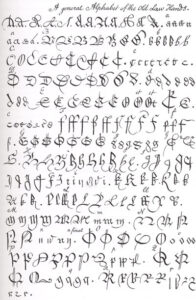 Family history is all about finding and reading documents, whether you look at scanned images on line or hunt for the originals in record offices. As you work your way back from recent certificates to older wills and parish registers, the writing on older documents becomes tricky. The words and their meanings—and even the shapes of the letters themselves—have changed over time. Understanding these documents correctly is time consuming but be the key to comprehending your ancestors’ lives.