

Genealogy can offer thrilling discoveries: noble connections (rarely), forgotten family fortunes (rarely), or ancestors who served in a war. But what happens when you stumble across a darker thread in your family history — an ancestor who was transported across the globe as punishment or even executed for their crime? The 17th and 18th centuries were periods of enormous social, legal, and political upheaval, and thousands of people, many of who poor, voiceless, and desperate, found themselves facing the harsh elitist class-made early modern justice.
Discovering that an ancestor was transported or hanged can stir complex emotions: surprise, shame, curiosity, even pride. But these stories are also rich with historical insight and can offer a powerful glimpse into the struggles and injustices of the past.
In this article, I will explore:
-
How such discoveries are made in family history research;
-
The legal systems and punishments of the 17th and 18th centuries;
-
Common crimes and sentencing;
-
The experience of transportation and execution;
-
How these histories can enrich our understanding of our ancestors.
Many family historians come across an unexpected criminal ancestor while searching court records, assize reports, old newspaper reports, or transportation lists. It might begin with a cryptic note in a parish burial register: “Executed for theft.” Or a name in a convict register bound for Virginia or later, Australia. Perhaps it’s a court record from the Old Bailey detailing a trial and sentence.
Records that can yield this information include:
-
Assize court records: Regional courts that tried serious criminal offences.
-
Old Bailey Proceedings: Transcriptions of trials at London’s central criminal court from the late 17th century onward.
-
Gaol delivery rolls: Records of those tried and held in jail.
-
Transportation registers: Lists of those sent to the American colonies or later to Australia.
-
Calendars of prisoners: Often included details of prisoners awaiting trial or execution.
-
Newspapers and pamphlets: Public executions were widely reported and names often mentioned.
You might even find personal details — a description of your ancestor’s age, trade, or physical features. Occasionally, letters of appeal or petitions survive, especially if the case attracted local sympathy.
A Harsh and Unequal System
Law and Justice in the 17th and 18th Centuries
The English legal system of the early modern period was complex, deeply hierarchical, and often arbitrary. There was no single “police force” in the modern sense. Crimes were usually reported by victims, investigated by local constables, and tried by Justices of the Peace or Assize judges travelling on circuit which was very common.
The system was underpinned by a strong emphasis on property, and many punishments — particularly the death penalty — were directed at crimes against wealth and land, rather than violence. The legal framework was shaped by class. Wealthy offenders might be fined or pardoned, while the poor could face death for what today would be considered minor theft.
The Bloody Code
By the late 17th century, and especially into the 18th century, England’s legal system had developed what historians now call the “Bloody Code.” By 1815, over 200 offences were technically punishable by death. These included:
-
Stealing goods worth more than 1 shilling (5p);
-
Cutting down a young tree;
-
Being out at night with a blackened face (seen as a sign of intent to rob);
-
Stealing from a shipwreck;
-
Writing a threatening letter.
The aim was deterrence by using harsh punishment to maintain order, especially in a society where wealth and power were unequally distributed. But this also meant that the poor, desperate and often illiterate, were more likely to fall foul of the law.
Crime and Punishment
Common Offences
If your ancestor was executed or transported in this era, the most likely offences include:
-
Theft and burglary: The most common offences; stealing food, clothing, livestock, or money.
-
Poaching: Seen as theft from landowners and harshly punished.
-
Coin clipping or forgery: Considered treason and often led to execution.
-
Political rebellion: In times of unrest (such as the 1685 Monmouth Rebellion or the Jacobite risings), thousands were sentenced to death or transportation.
-
Infanticide: Desperate single mothers sometimes concealed pregnancies or disposed of infants — a capital offence.
-
Arson, highway robbery, and assault with intent to rob: These were capital offences.
Transportation: A Living Death?
From the early 17th century, transportation became a key form of punishment. England’s prisons were overcrowded, and rather than hang everyone, many were sent across the Atlantic to serve terms of hard labour in the colonies.
-
To the Americas (1615–1775): Convicts were sent to Virginia, Maryland, and the Caribbean.
-
To Australia (1787–1868): After the American War of Independence, transportation shifted to Botany Bay and Van Diemen’s Land (Tasmania).
Transported convicts could be sentenced to 7 years, 14 years, or life, and they often endured horrific sea journeys lasting months. Many died en route. Once there, they were sold or assigned to work on plantations, farms, or infrastructure projects. A few rose in status and even became free settlers; most endured hard labour and harsh conditions.
Transportation was sometimes commuted from a death sentence — so a record showing a person sentenced to death may also indicate a later reprieve. Many petitions for mercy survive in the National Archives, especially if local communities supported the prisoner.
Execution as Spectacle
If your ancestor was executed, their final moments were likely public and ritualised. Public executions were seen as a moral lesson — a deterrent — and could draw thousands of spectators. These events were held outside city gates, at crossroads, or in prominent public places such as Tyburn in London. The condemned might be paraded in a cart, allowed to speak or pray, and then hanged before the crowd. The body was sometimes left to hang as a warning, or in later years, sent for dissection under the Murder Act of 1752. Children were occasionally among the executed. For instance, 14-year-olds were hanged for theft, and younger children could be imprisoned or whipped.
Yet executions could also provoke sympathy. Some condemned prisoners were seen as victims of harsh justice — especially young women or first-time offenders. Popular ballads, pamphlets, and broadsides sometimes told their stories, creating folk heroes of the condemned.
Stories Behind the Names
To find your ancestor in these contexts is to uncover a story — not of shame, but of survival, desperation, and resistance in a brutal system. Here are just a few examples from historical records:
The Case of Mary Siddon, 1776
Mary, a 22-year-old servant, was convicted at the Old Bailey for stealing a handkerchief. The court sentenced her to death, but her sentence was later commuted to transportation for seven years to America. She was described as “a sober and industrious girl” and had no prior convictions. Her trial transcript survives, offering insight into her words and demeanour in court.
Thomas Hill, Executed 1723
Thomas, a farm labourer from Wiltshire, was caught poaching a deer on an aristocrat’s estate. As a repeat offender, he was sentenced to death. His execution at Salisbury was attended by hundreds. A local pamphlet described him as a “bold man with a disdain for cruel laws.” His story became part of local folklore.
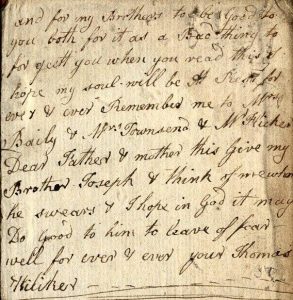
Thomas Helliker, Executed 1803
Thomas was a shearman who was hanged at Fisherton Gaol, Salisbury, on March 22, 1803. He was nineteen years old at the time of his execution. He was convicted for his alleged involvement in the destruction of a mill by fire and for shearing frames. His case is notable for the public outrage surrounding his execution, despite his claims of innocence and an alibi.
John Walsh, Irish Rebel
After the 1798 Irish Rebellion, many participants were captured and sentenced by British courts. John Walsh, a Catholic tenant farmer, was transported to New South Wales in 1800 for his involvement in a seditious meeting. He left behind a wife and children. His descendants still live in Australia.
Genealogical Tips: Researching Criminal Ancestors
If you suspect an ancestor may have been executed or transported, here is how to trace them:
Search Court and Criminal Records
-
Old Bailey Online (for London): https://www.oldbaileyonline.org
-
British Newspaper Archive: Reports of executions and crimes.
-
Ancestry and Findmypast: Both have convict registers and transportation records.
-
National Archives (UK): Particularly HO (Home Office) series, for criminal petitions, transportation orders, and execution records.
Check Parish Registers
Sometimes the local clergy noted executions or transportations in burial or baptismal entries.
Explore Colonial Records
If your ancestor was transported, look for:
-
Convict musters and assignment records.
-
Pardons and tickets of leave (for early release).
-
Marriage or burial records in the colonies.
Interpreting Their Story
What should you make of an ancestor executed for theft or transported for rebellion? These are not just “criminals” but people shaped by their times: by poverty, injustice, and the immense inequalities of early modern Britain. Their stories are worth telling, not hiding. They reveal the lived experience of the lower classes, the operation of a harsh legal system, and the resilience of individuals who endured punishments unimaginable today.
Your ancestor might have stolen to feed a starving family, or rebelled against landlord injustice, or fallen foul of a system rigged against the poor. These are not tales of shame, but of history — and by exploring them, you can reclaim your family’s past with greater understanding and empathy.
Conclusion: From Stigma to Storytelling
Discovering a transported or executed ancestor opens a compelling window into the realities of the 17th and 18th centuries. These were times of repression, resistance, and of transformation. Ordinary people, your ancestors, bore the brunt of a brutal legal system designed to maintain the status quo. In telling their stories, we honour their struggles and shine a light on the injustices of the past. In doing so, we ensure their voices are not lost, that they, too, take their rightful place in the ever-evolving story of our families.
