New Review – Voyage of Despair. The Hannibal, its captain and all who sailed her, 1693-1695

Voyage of Despair is a remarkable achievement, tackling challenging material with skill and presenting it in a way that is both accessible and deeply engaging. The narrative takes readers on the harrowing journey of the Hannibal slave ship, a voyage that is as compelling as it is sobering. To say I “enjoyed” the journey feels like the wrong word, given the subject matter, but the book captivates in a way that few historical accounts manage.

What stands out is the careful pacing of the narrative. Questions naturally arise as you read—What happened to John Browne when left behind? Why does an image feature a tiger in a cage during events in Africa?—but rather than leaving readers in the dark, the author skilfully answers these queries in later chapters. This structure encourages thoughtful engagement and reflection throughout.

Beyond its readability, the book is academically rigorous, offering thorough references that firmly establish its place as an important contribution to the field. It balances scholarly depth with a compelling narrative style, a rare feat in historical writing.

The author’s voice is confident and assured, guiding the reader with the expertise of someone deeply immersed in the subject. There are moments where the passion and anger are palpable—particularly in the vivid descriptions of the ships’ appalling conditions by the time they reached Barbados. These passages are powerful and unforgettable.

Voyage of Despair is a masterful work—both a gripping read and a significant academic contribution. For anyone interested in the complexities of history and the human stories within, this book is not to be missed.

Mr Alan Canty (FRCS DDS)

Available to order HERE

New review – Voyage of Despair. The Hannibal, its captain and all who sailed in her. 1693-1695

New review from Liz Millman: Learning Links international (Black History Wales) 

In this amazing book Rosemary Caldicott shares the complex layers of the challenges faces in 2020 in Brecon, and then takes us back to around 1694 to gain some appreciation of the complexities of the trading done by sea captains with their funders, the Royal Africa Company and others, and with the local West African rulers and merchants.

Rosemary also uncovers stories about the victims, those African subjected to unimaginable abuse and terror not only by the God fearing European traders and sailors, but the treatment inflicted by their African captors.

But yet is a very readable book, a book for the times we are in, it is also extraordinarily complex, but Rosemary shares and explains the commonplace and everyday activities occurring more than 330 years ago, while remembering that we are reading this initially in 2024, and it records a story of the Black Lives Matter times.

At only £12, plus P&P this is a must read, really very timely and accessible, and although not perhaps your first choice of holiday reading, it’s worth having a copy to dip into as you start to face the grim realities of the times back then, or just to reflect and increase your understanding.

Order Here

Title: “The Journal of Captain Thomas Phillips of Brecon, the Slave Ship Hannibal, and all who Sailed on Her” – Unveiling a Forgotten Voyage

Journey into History – A reflection from a friend who read my shortly to be published book.

Prepare to be transported to the heart of a pivotal era with this upcoming new book. This compelling narrative uncovers the untold stories of the slave ship “Hannibal” its enslaved passengers and crew. It goes on to shed a much need new light into a dark chapter in human history with links to Brecon, Wales. Set against the backdrop of the transatlantic slave trade, the book brings the 17th century to life from Brecon, to the west coast of Africa and onto Barbados. Delve into the ship’s harrowing journey, from bustling ports, the exploitive mercantile capitalism of the Royal African Company, battles at sea, to the unimaginable suffering endured by the enslaved individuals who sailed upon her. Through meticulous research, personal accounts, and archival materials, the book resurrects the voices of those who history often forget. A harrowing and intriguing read which brings the world of a slave trading captain to life.

The life of a slave trading captain stands as a grim testament to the depths of human cruelty and the moral complexities of their era. These captains were both the architects and enforcers of a brutal system that traded in human lives, perpetuating untold suffering for profit. Born into a world where economic interests often trumped ethical considerations, these captains often grew up in societies where the practice of slavery was deeply ingrained. They were groomed from a young age to see enslaved individuals as mere commodities, stripped of their humanity and subjected to unspeakable horrors in the pursuit of monetary gain.

As they embarked on their voyages, these captains navigated treacherous waters both literally and morally. They faced the challenges of uncertain weather, navigational hazards, and hostile ships, all while being weighed down by the weight of their human ‘cargo’. The conditions on board the slave ships were deplorable, with enslaved people crammed into tight spaces, subjected to disease, malnutrition, and unimaginable suffering.

In their role as captains, they held authority and power over those unfortunate souls trapped in the hold of their ships. They had the capacity to demonstrate some semblance of kindness or, more commonly, to wield their power with brutality and violence. The choices they made had life-and-death consequences for those under their control.

The story of this slave trading captain, Captain Thomas Phillips of Brecon, serves as a haunting reminder of the darkest chapters of human history. It underscores the need for acknowledging the past, understanding the factors that led to such atrocities, and striving to ensure that such inhumane practices are never repeated. Through a broader historical lens, we’re reminded of the crucial importance of progress, empathy, and justice in shaping a more humane world for all.

Compelling excerpts from the book can be found in these articles posted HERE

“Hannibal” leaves an indelible mark, compelling us to confront the legacy of the transatlantic slave trade. By reflecting on the past, we’re empowered to address the ongoing injustices that shape our world, creating a more just and equitable future.

Soon to be available from Bristol Radical History Group


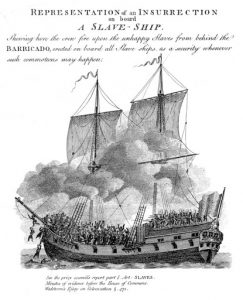
Revolt on a slave ship

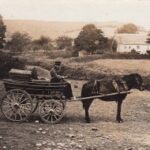
I came across a Higgler

Hannah Knight of West Milton England. A Higgler
Hannah Knight, A Higgler.

Many localised names for occupations have been lost over the years. I recently came across a man who was listed as a ‘higgler’ on the 1851 census. He lived in Harlow, Essex, England. This was certainly a trade I have never come across before. It turns out a higgler was a person who travelled around country districts selling useful things like saucepans, or ribbons and patent medicines. However, the intriguing aspect to a higgler was that he would commonly accept farm produce, like rabbits, cheese chickens or ducks perhaps to sell onto others, perhaps at a market place. They were hagglers, trading using the age old barter system and the word haggler is still used today. These men and women were essentially middlemen.

According to World Wide Words. Investigating the English language across the Globe the word higgler has survived in the Caribbean islands, especially in Jamaica, where it is used to describe a market trader.

In The Surgeon’s Daughter (1827) Walter Scott wrote:

‘The labours of a higgler, who travels scores of miles to barter pins, ribbons, snuff and tobacco, against the housewife’s private stock of eggs, mort-skins [sheep skins], and tallow’

However, higglers could have a bad reputation with the authorities who were suspicious of them. Bearing in mind that the authorities themselves would manipulate prices a higgler worked outside of their control.

The Times of London reported on 10 June 1800:

‘A meeting was held at Poole, on Friday last, to take into consideration the propriety of the inhabitants in general refraining from the use of butter, till the price is reduced to One Shilling a pound; when it was unanimously resolved by all reduced, and even then, to use it in their families with great economy and moderation … and proper people are appointed to keep a constant watch on the Higglers on Market-day who are the principal cause of the great prices of many of the necessaries of life.

I am sure that higglers were not to blame, after all they could not have been the only persons selling butter in Poole! This statement was more likely to be based on local prejudice and suspicion against travelling higglers.

BRITISH BLACK HISTORY MONTH 2020: Why is it so difficult to trace Black British ancestors?

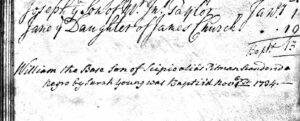
‘William the bastard son of Scipio alias Pitman Seandered(l?) a negro by Sarah Young was Baptised Nov 1st (4th?) 1724. -‘ 

Why is it so difficult to trace Black British ancestors?

Today while researching in the Bristol Archives and browsing the church records of Holy Trinity Church, Westbury on Trym, I came across an entry that highlights two of the many stigmas that our ancestors may have faced: Racism, illegitimacy, poverty, class, physical ailments and religious bigotry.

A baptism entry was deliberately singled out on a page in the church register, the baptism was of little William Seandered(l)-Young. The entry declares that William was the bastard child of Scipio, alias Pitman Seandered(l), and Sally Young. His baptism took place on November 1st or 4th, 1724. (Authors translation of script).

What do we know of his parents? Extraordinarily little. Young, being a common name, means that there were quite a few Sally Young’s residing in the region at this time who were single or married of childbearing age.

Scipio, or Pitman Seandered(l) is noted in the entry as being a negro, thereby deliberately marking him and his child as being ‘different’. There is no mention of the physical features of any of the other children in the records. Scipio was probably a Christian convert because if a servant he would have been baptised once landed in England. Yet his colour and what would have been considered his race was so important that it was deemed necessary to add to his baby’s baptism record. When plantation owners, or sea captains, purchased Black servants, they often had them baptised as adults, usually taking place upon arrival in England. However, these baptisms do not provide any information on their ancestral history. In fact the baptisms were often used purely as a tool to provide a new name and state their relationship to their master. Due to discrimination few questions would have been asked by the minister, and in many cases Black migrants simply did not know the family details of their past.

A good example is Scipio Africanus (the name of a Roman general), was given to a young African servant buried in Henbury, Bristol, in 1720. Despite the very grand gravestone erected by his master, the Earl of Suffolk and Brandon, there is no record of his burial in the church register. Could this be the answer as to why there appears to be no further mention in the records of Scipio Pitman Seandered(l)?

There are no other records of a man called Scipio Pitman Seandered(l) in the country at this time, not even a burial record.  It might be that Scipio was a servant and staying in the town briefly with his master before sailing abroad again, or perhaps he was a sailor visiting the port of Bristol, we will never know. This is all circumspection and he probably was not in attendance at the religious ceremony and perhaps neither was Sarah the mother.

Unfortunately, we must only imagine the circumstances of how the parents continued with their lives and what became of little William.  There are no further entries in the parish record book for Westbury on Trym, and therefore he and his mother did not stay in Westbury on Trym.  However, a record has since been found in the Church Register Book for Stroud, Gloucestershire of a Mary Soanderal’s baptism on 10 August 1764. Her parents are recorded as being a William Soanderel and Hannah his wife. Could this be William thirty years on in his life? Very possibly, and also an example of how the spelling of names would change, particularly if William was illiterate which was extremely common.

Continue reading “BRITISH BLACK HISTORY MONTH 2020: Why is it so difficult to trace Black British ancestors?” →


International Women’s Day! 7 March 2020 Bristol

International Women’s Day 2020 with Bristol Women’s Voice is back!

Join us at City Hall, College Green, Bristol on Saturday 7th March 2020 to celebrate with thousands of women from across Bristol. As usual, you can expect a day packed with performances, activities, discussions and workshops brought to you by many fantastic organisations. Let’s come together to celebrate, learn and inspire each other!

Bristol Radical History Group will be hosting their wonderful, diverse book stall and hopefully Rosemary will get to give a talk (yet to be confirmed).

Click here for more information !


Talk – Bristol Harbour Festival. 21 September: ‘Nautical Women and the Rum Do’

‘Nautical Women and the Rum Do’

Followed by traditional quayside selling of ethically sourced cargo and book signing.

Bristol Harbour Festival
Saturday 21st September at 3.30pm
By kind invitation of New Dawn Traders and introducing their ethical trading ship De Gallant.

Rosemary Caldicott will talk about extraordinary women sailors in history, accompanied by the Rum Do Crew, traditional sea shanty singers, to entertain and uplift us all.
Our musical and talking event will be held at:
Bristol Harbour Masters Office, Underfall Yard, Cumberland Road, Bristol, BS1 6XG
New Dawn Traders ships producers goods using the power of the wind. They also provide environmentally friendly passage for climate change, oceanographers, marine biology scientists and general seadogs to sail on a non polluting ship for their missions.
‘Nautical Women’, by Rosemary L Caldicott

Tracing our Ancestors and Heritage in small island communities in the Caribbean region.

Due to populations voluntarily, or more often than not, involuntarily, moving across vast oceans it can put some people off attempting to trace their ancestors. This is particularly true for those of us who have Caribbean roots, living in the U.K.

However, it is amazing how many original records have actually survived because colonial bureaucracy was meticulous. Of course these records are a difficult and distressing read as they detail the selling of humans in slave markets in the Caribbean, while at the same time listing the names of the plantation owners. Infantries were undertaken by plantation owners from time to time and many of these documents have survived too. The records can be sourced on line going back to 1720 in many cases and more of these records are becoming digitally available for us to view on-line. Interestingly the earlier records often also give us details of where a person originated from in Africa, making it possible to go even further back in time.
It is also possible to telephone or email the islands library service, archive office or museum on the island you suspect your ancestors may have inhabited and ask for help with your research.  However, it is sometimes necessary to actually visit the island or region in question to gain full access to the tens of thousands of records held in the archives.
It does help to know a few details of the family member you are searching for.  Even just having a last name will help immensely. Other details may include:
  • The name of the slave and the slave owner, including possible variations in spelling.
  • where they lived, including the parish if possible.
  • as much information as possible about dates of births, marriages and deaths.
Below are a few further search suggestions:
Link to: The national Archives, London
The national Archives have slave registered from 1812-1834 (the date of Caribbean abolition).
Link to: Barbados National Archives
The Barbados National Archives is a very useful source of information for persons conducting genealogical research and tracing their family tree. The Archives houses parish documents such as births, baptisms, marriages, deeds and wills.
Link to Antigua National Archives

Welcome to the Antigua and Barbuda National Archives