
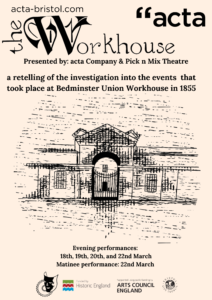
Tickets Now on Sale for a Gripping Retelling of Bedminster’s Workhouse Darkest History!

Get Your Tickets Now for a Gripping Retelling of Bedminster’s Workhouse Dark History!

Running from March 18th to 22nd, 2025

Step back in time to 1855 and experience the chilling tale of Bedminster Union Workhouse through a powerful, immersive production by two acta groups. This is more than just a play—it’s a journey into the past, where you’ll uncover the tragic death of inmate Hannah Wiltshire from Walton in Gordano, North Somerset, and the ensuing investigation that shocked Bristol and exposed the harsh realities of life in the workhouses.

As you move between locations, you’ll be immersed in the struggles, resilience, and humanity of those who lived and died within the workhouse walls. The gripping re-enactment of the investigation will leave you with a deeper understanding of this dark chapter in British history and how the voices of the oppressed continue to resonate today.

Don’t miss this unique, factual drama that sheds light on the forgotten stories of the past.

With thanks to the Bristol Radical History Group and Rosemary Caldicott for her invaluable publication, The Life and Death of Hannah Wiltshire.

Age Recommendation: 11+ (Contains descriptions of violence; not intended for children.)

Ticket Pricing:
Our open pricing structure means you choose the price that feels right for you.

  • £3 for a concession ticket
  • £5 for a full price ticket
  • £10 ticket option (includes a donation towards our £40,000 fundraising goal to celebrate acta’s 40th year)

We’re grateful for any additional support through donations to help secure acta’s future.

Important Access Information:
Please note: Front row seats for the 3pm show on Saturday, March 22nd, are already reserved. For front row seating, please choose another performance.

Get your tickets today at the link below and be part of this unforgettable experience!

Click for ticket information and booking

Purchase Rosemary L Caldicott’s pamphlet that inspired this important play HERE

Author Rosemary Caldicott writes: “During the year of 1855 rumours of murder and cover up were circulating in the small north Somerset village of Walton-in-Gordano.  An epileptic destitute country girl had died in the local institution known as the Bedminster Union Workhouse. Her death caused public outrage after letters were written to the local newspapers. The Board of Guardians were suspected of concealing the true magnitude of neglect at the workhouse, leading to accusations of medical negligence.”
The Workhouse by acta Company and Pick N Mix Theatre


Understanding Surname Changes

A material surname change refers to a significant alteration in a family’s last name, often stemming from various factors such as cultural assimilation, marriage, or legal mandates. These changes can make it challenging to trace your ancestors through historical records, as they might have gone by different surnames at various points in their lives.

Common Causes of Surname Changes

  1. Cultural and Linguistic Shifts: Immigrants arriving in a new country may anglicise or adapt their surnames to fit their new surroundings. For instance, “Schmidt” could become “Smith.”
  2. Marriage: Traditionally, women often took their husband’s surname upon marriage. This practice still exists today, though it is becoming less common.
  3. Legal Changes: Legal mandates, like name changes for citizenship or other reasons, can result in surname alterations. Individuals might change their names to avoid persecution, discrimination, or to simply start fresh.

Navigating Material Surname Changes in Your Research

  1. Record Every Variation: As you uncover historical records, keep meticulous records of all surname variations. Note any aliases, nicknames, or alternate spellings you come across. These notations will prove invaluable in your research.
  2. Document Events Surrounding Changes: Look for historical context that may explain a surname change. Marriage certificates, naturalization papers, or personal letters might provide clues.
  3. Explore Alternate Records: When you encounter a dead end with one surname, try searching for the family using other possible variations. Remember, genealogical research can be a puzzle, and you may need to piece it together from different angles. I have discovered a ‘K’ being written as n ‘R’ on the census records = think out of the box.

Conclusion

Material surname changes can at times pose challenges. However, they also offer a deeper understanding of your family’s history, reflecting the ever-evolving nature of individuals and society. By documenting variations, understanding the reasons behind these changes, and using different research strategies, you can navigate the complexities and unearth the fascinating stories hidden within your family’s name changes.

The Remarkable Lives of British Ancestors: The Agricultural Revolution

The Agricultural Revolution, the Working Classes, and the Landless Labourer.

In the annals of British history, the majority of the population can trace their lineage back to ancestors who toiled as agricultural laborers, also known on the UK census as Ag. Lab. Their existence, while seemingly simple, was a tapestry woven with intriguing stories and customs. They predominantly resided in tied cottages, homes that belonged to their employers and were rented to them. An unusual twist of fate bound them to their workplace; if they left their job, they might find themselves without a roof over their heads. It was a peculiar form of attachment where employment and housing were intimately entwined.

Life in these tied cottages unfolded through both prosperous and challenging times, anchored by the enduring traditions and timeless festivals that had been celebrated for generations. These customs served as a constant thread connecting them to their roots and heritage.

Then change arrived in the form of the Agricultural and Industrial Revolutions. These revolutions, while pivotal in shaping the modern world, often upended the lives of Agricultural workers. The transition from agrarian to industrial economies brought about profound shifts in employment, technology, and society. For many, it meant bidding farewell to the familiar rhythms of rural life and embracing a new, industrialised era.

As we delve into the history of these remarkable individuals, we uncover a rich tapestry of stories that not only illuminate the past but also provide valuable insights into the human capacity to persevere and evolve in the face of transformation. Our British Agricultural ancestors were witnesses to history.

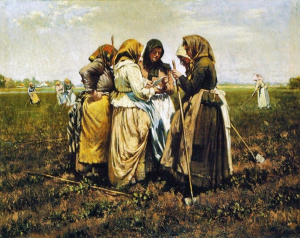
Women Turnip Hoeing
Turnip Hoeing

An examination of the radical consequences of the eighteenth century Agricultural Revolution upon the population of rural England.  Women were particularly affected by the upheavals to a static way of life in the countryside. Often forced into factories away from their traditional support networks within their communities never to return. How did women (and their children) adapt to their new environments, and did the mass migrations into our towns benefit or hold women back?

This talk is now full. If you are interested in a repeat talk please contact Heritage Found

INTERNATIONAL WOMEN’S DAY – 2023

INTERNATIONAL WOMENS’ DAY – events 11TH MARCH 2023

Rosemary Caldicott speaking at 2.30 – Cross Dressing Nautical Woman

Event Programme here
Saturday 11th March 2023 – 10:00am to 7:00pm
City Hall, College Green, Bristol, BS1 5TR

‘Nautical Women’
In Nautical Women, Rosemary Caldicott explores the stories
of women whose lives were inextricably linked to the sea.
She tells of the women of sailor towns struggling to keep
out of the workhouse; and of the courageous cross-dressing
women sailors who went to extraordinary lengths to hide
their gender.

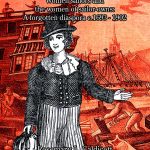
“Nautical women-women sailors and the women of sailortowns: A forgotten diaspora c 1693-1902”

BOOK HERE

Tuesday, 29 November 2022, 14:00 – 15:30. 

Portishead Library 24 Harbour Road Portishead BS20 7AL

North Somerset Libraries are excited to host a series of talks by Bristol Radical History pamphleteers. Visit www.brh.org.uk to find out more about their publications and events. The talks are informal and accessible and would appeal to adults and older teens. Some Bristol Radical History pamphlets will also be available to purchase with cash.
In our third talk, Rosemary Caldicott brings to life Pamphlet number 43 which will be of particular interest to locals.

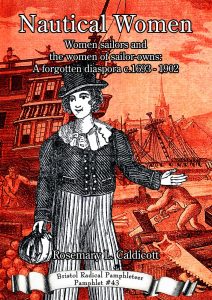
Nautical Women book cover
‘Nautical Women’, by Rosemary L Caldicott

The book explores the stories of women whose lives were inextricably linked to the sea. These include the women of sailortowns struggling to keep out of the dreaded workhouse and resisting the prowling press gangs; and of the courageous and skilful cross-dressing women sailors, some of Bristol, who went to extraordinary lengths to hide their gender. The stories of these women challenge our stereotypes of women in earlier societies and reveal the courage of those who ‘ran away to sea’ by exposing their struggles against poverty. Rosemary will discuss these women’s motivation as well as their adventures and inevitable exposure.

About the venue

Portishead Library is accessible, including a disabled toilet and baby change. The talk will be in the meeting room which will be set out in theatre style. Get in touch with us if you have additional support needs so that we can help you enjoy the event. Call us on 01934 426040 email us on portishead.library@n-somerset.gov.uk or pop in and see us Tuesday to Friday 9.30-5 and Saturday 9.30-1pm

Who can come?

Numbers are limited so we ask that you book a place via Eventbrite or by contacting Portishead Library. As we have limited spaces do let us know if your plans change. It is easy to cancel via Eventbrite.

More about the speaker

Rosemary Caldicott is a teacher of social history working in adult education, a writer of books and articles about working class women in history.

Rosemary is secretary of BRHG and has published several works for the group: The Life and Death of Hannah Wiltshire: A Case Study of Bedminster Union Workhouse and Victorian Social Attitudes on Epilepsy (2016); Lady Blackshirts: The Perils of Perception – suffragettes who became fascists (2017); Nautical Women. Women sailors and the Women of Sailortowns: A Forgotten Diaspora. c.1693 – 1902 (2019).

Talk – Thursday 24 November, 7.00-8.30pm. Life and Death in Bedminster Workhouse

BOOK HERE ON EVENTBRITE

North Somerset Libraries are excited to host a series of talks by Bristol Radical History pamphleteers. Visit www.brh.org.uk to find out more about their publications and events. The talks are informal and accessible and would appeal to adults and older teens. Some Bristol Radical History pamphlets will also be available to purchase with cash.
In our second talk, Rosemary Caldicott brings to life Pamphlet number 35 which will be of particular interest to locals.

During the year of 1855 rumours of murder and cover up were circulating in the small north Somerset

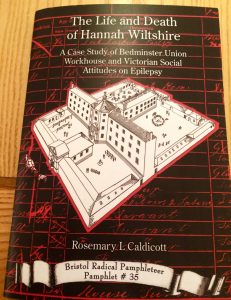
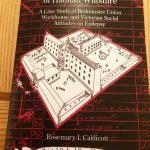
The Life and Death of Hannah Wiltshire
by Rosemary L Caldicott

village of Walton-in-Gordano. An epileptic destitute country girl had died in the local institution known as the Bedminster Union Workhouse. Her death caused public outrage after letters were written to the local newspapers. The Board of Guardians were suspected of concealing the true magnitude of neglect at the workhouse, leading to accusations of medical negligence. In this pamphlet, Victorian social attitudes on epilepsy are investigated within the context of how the draconian workhouse system typically caused particular hardship to people who suffered with epilepsy and other mental health issues.

The Life and Death of Hannah Wiltshire illustrates the treatment imposed upon the vulnerable poor living in rural England during the mid-nineteenth century and how a campaign for transparency, accountability and social justice was fought for by the local community.

About the venue

Pill Library and Children’s Centre is accessible, including a disabled toilet and baby change. The talk will be in the main library which will be set out in theatre style. Get in touch with us if you have additional support needs.

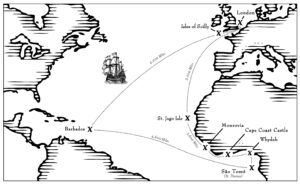
The Slave-Ship Hannibal 1693-1695. New Talk!

Black History Month Lecture 

The Slave-Ship Hannibal and all who sailed on Her. (1693-1695).

The voyage of the Hannibal slave-ship. 1693-1695. Credit Lisa Liebelt

Black History Month: Britain’s history and involvement in the Trans-Atlantic Slave Trade.

Come along and hear the tragic but enlightening story of the Brecon born slave trading captain Thomas Phillips, what happened to his crew, and the captured 700 enslaved people on his ship the Hannibal. This talk is based on my original research as discovered in the National Archives and the British Library. For the first time the human stories are revealed about all who sailed on her.


Thursday, 13 October.  2pm to 4pm by Rosemary Caldicott 

To book telephone Tel: 0117 903 8844

or Email: StokeLodge@bristol.gov.uk

 or BOOK HERE

South Bristol Festival – Bedminster Union Workhouse

SOUTH BRISTOL HISTORY FESTIVAL!

Rosemary Caldicott will be giving a talk about Bedminster Union Workhouse

Tuesday, 20 September 2022 at 2pm-3pm

To be held at Bedminster Library, 4 Bedminster Parade, Bedminster, Bristol BS3 4AQ

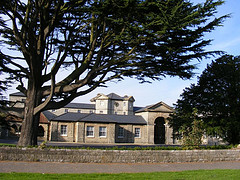
In 1855 rumours of murder and a cover up were circulating in the small north Somerset village of Walton-in-Gordano.  An epileptic destitute country girl, Hannah Wiltshire, had died in the Bedminster Union Workhouse at Flax Bourton.

This talk illustrates the treatment imposed upon the vulnerable poor living in England during the mid-nineteenth century and how a campaign for transparency, accountability and social justice was fought for by the local community. The talk will include newly discovered letters of complaint written to the Poor Law Board by Sir Arthur Elton of Clevedon.

This talk is one of a series of talks about working class history in South Bristol and has been organised by Bristol Radical History Group as part of the South Bristol History Festival. For more information and to view the full program of talks click HERE


This weekend 11/12 June Clevedon Literary Festival!

A warm welcome is waiting visitors to the Clevedon Literary Festival this year.

The Celebration of the Book is taking place on Saturday 11 June at St Andrew’s Church Centre, Old Church Road, Clevedon, BS21 7UE.

I have attached the Festival leaflet for the Celebration of the Book and here’s a link to it online:  Clevedon Literary Festival

At 12.15 Rosemary Caldicott will be talking about a local scandal that took place in 1855  – ‘The Life and Death of Hannah Wiltshire: A Case study of Bedminster Union Workhouse and Victorian Social Attitudes on Epilepsy.‘

The Board of Guardians of Bedminster Workhouse were suspected of concealing the true magnitude of neglect at the workhouse during 1855, leading to accusations of medical negligence that caused the death of a local woman from Walton in Gordano. This talk includes newly discovered letters of complaint written to the Poor Law Board in London by Sir Arthur Elton of Clevedon. Rosemary’s book covering this subject will be on sale at the book stall.

The Life and Death of Hannah Wiltshire
by Rosemary L Caldicott

There are quite a few venues and attractions in other parts of Clevedon during the day. Walking is probably the best way to get around but there will be a vintage bus (in the spirit of Doris Hatt’s ‘communist coach’) touring around the Festival venues, including St Andrew’s. The Festival also has the use of an electric car, sponsored by the Mazda garage here – you may book this (as passengers) at the Festival Desk.


Guild of One-Name Studies. Speaking at Military Seminar

Guild of One-Name Studies. This event is a military seminar with a focus on our ancestors who served in wars and in keeping the merchant fleet afloat. #GuildMilitary

23 October, 2021, delayed from last year. I am very much looking forward to giving my talk next month – IN A ROOM WITH ACTUAL PEOPLE – for the –

Nautical Women book cover
‘Nautical Women’, by Rosemary L Caldicott

‘Nearly every generation has known war. Whatever their reasons, whether press-ganged, patriotic or penniless, many of our ancestors served and their stories from Napoleonic times to the two World Wars can be revealed in the records. The search is on for further speakers to improve our strategy and strengthen our campaign!’

I will be talking about Nautical Women: Women Sailors and the Women of Sailortowns. Brave women in history who disguised themselves as men to work as merchant and navy sailors.

The talk is based on my book of the same name and can be purchased here.

Event details LINK