

The Agricultural Revolution, the Working Classes, and the Landless Labourer.
In the annals of British history, the majority of the population can trace their lineage back to ancestors who toiled as agricultural laborers, also known on the UK census as Ag. Lab. Their existence, while seemingly simple, was a tapestry woven with intriguing stories and customs. They predominantly resided in tied cottages, homes that belonged to their employers and were rented to them. An unusual twist of fate bound them to their workplace; if they left their job, they might find themselves without a roof over their heads. It was a peculiar form of attachment where employment and housing were intimately entwined.
Life in these tied cottages unfolded through both prosperous and challenging times, anchored by the enduring traditions and timeless festivals that had been celebrated for generations. These customs served as a constant thread connecting them to their roots and heritage.
Then change arrived in the form of the Agricultural and Industrial Revolutions. These revolutions, while pivotal in shaping the modern world, often upended the lives of Agricultural workers. The transition from agrarian to industrial economies brought about profound shifts in employment, technology, and society. For many, it meant bidding farewell to the familiar rhythms of rural life and embracing a new, industrialised era.
As we delve into the history of these remarkable individuals, we uncover a rich tapestry of stories that not only illuminate the past but also provide valuable insights into the human capacity to persevere and evolve in the face of transformation. Our British Agricultural ancestors were witnesses to history.
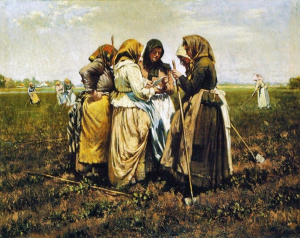
An examination of the radical consequences of the eighteenth century Agricultural Revolution upon the population of rural England. Women were particularly affected by the upheavals to a static way of life in the countryside. Often forced into factories away from their traditional support networks within their communities never to return. How did women (and their children) adapt to their new environments, and did the mass migrations into our towns benefit or hold women back?
This talk is now full. If you are interested in a repeat talk please contact Heritage Found