New Course Spring 2026 – Discovering your Family History Made Easy

Discovering your Family History Made Easy 

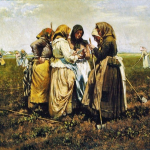
Women Turnip Hoeing
Turnip Hoeing

Gain a deeper understanding of the most used family history resources, and the use of correct research techniques. Topics covered: how to use online genealogical search websites in a professional way; how to interpret correctly census records, parish registers, birth, marriage and death certificates

Location: Stoke Lodge, Bristol (BS9 1BN)

Start Date: 14 Jan 2026 (Spring)   Times: Wed 18:30-20:30   Duration: 10 weeks

Places selling fast – only a few places left.

BOOK NOW HERE

The History of English Parish Records

Introduction to Parish Records

Parish records are documents that record events in the lives of individuals within the jurisdiction of an English parish. These records are among the oldest and most valuable sources for historians and genealogists, offering insight into the daily lives, religious practices, and social structures of past communities.

Early Origins (6th to 12th Century)
The origins of parish records date back to the establishment of the Church in England in the 6th century. However, the formal recording of events, such as baptisms, marriages, and burials, began in the late medieval period.

  • Pre-Norman Period (before 1066): Before the Norman Conquest, the recording of personal events was informal and often inconsistent. The Church played a vital role in local life, but records were not systematically kept.
  • Post-Norman Conquest (1066 onwards): Following the Conquest, William the Conqueror ordered a more structured approach to recording land ownership, and the Church began to document events related to the local population more consistently. However, these were often local and varied greatly from parish to parish.

The Church and the Role of the Parish Priest (12th to 16th Century)
By the 12th century, parishes in England became the primary administrative unit of the Church. The parish priest was responsible for maintaining records, and the Church began to keep more detailed records of the major life events within the community.

  • Baptisms, Marriages, and Burials: The three major events documented by parish priests were baptisms (births), marriages, and burials (deaths). These were often recorded in separate registers, though in some cases all events were kept together.
  • Wills and Property: In addition to the sacramental records, parish priests might also have documented wills or other legal matters. Some parishes were required to keep records of the poor, or “paupers,” and may have had to provide aid or support.

The Reformation and Standardization (16th Century)
The Reformation (16th century) marked a turning point in the history of English parish records, especially with the dissolution of the monasteries under Henry VIII and the establishment of the Church of England. During this time:

  • Acts of Uniformity (1559 and 1662): These Acts required all parishes to maintain registers for baptisms, marriages, and burials, and to keep them standardized across England. The Church of England became the sole authority for recording these events, and the use of English for records began to replace Latin.
  • The Book of Common Prayer (1549): This book outlined the liturgies and services to be followed by the Church of England, further standardizing religious practices and encouraging a more formal approach to record-keeping.

The Civil Registration Act (1837)
Before 1837, church records were the primary source for vital statistics in England. However, with the Civil Registration Act of 1837, a major shift occurred. The government introduced civil registration, requiring the registration of births, marriages, and deaths by local authorities instead of parish priests.

  • Impact of Civil Registration: Civil registration provided a more centralized and official record system, which was more reliable and accessible. While parish records were still maintained, they were no longer the only source of official records, and a distinction between civil and ecclesiastical records began to emerge.

The Decline of Parish Records (20th Century to Present)
As the state took over more administrative functions, parish records, particularly those related to births, marriages, and deaths, became less central. However, the importance of parish records for historical research remains high, as they offer unique insights into pre-1837 life.

  • Preservation Efforts: Many parish records were preserved through the efforts of local archives, libraries, and genealogical societies. The Family History Library and other organisations have digitised millions of parish records, making them accessible online.
  • Importance Today: Despite the rise of official civil registration records, parish records are still invaluable for research. They are often more detailed than civil records, containing information about family relationships, occupations, and social status.

Key Points of Interest for Researchers

  • Genealogy: Parish records are a fundamental source for family history research, particularly in the pre-civil registration period.
  • Social History: They provide evidence of population movements, local customs, and the social structure of communities.
  • Church History: They offer insight into the life and practices of the Church, as well as the impact of major religious events such as the Reformation.

Conclusion
Parish records are a rich source of historical data, essential for understanding the personal, social, and religious history of England. Despite the shift toward civil registration, these records continue to offer a unique glimpse into the past, particularly for genealogical and historical research. The preservation of these documents is crucial to maintaining our connection with the past.

Further Reading and Resources

Understanding Surname Changes

A material surname change refers to a significant alteration in a family’s last name, often stemming from various factors such as cultural assimilation, marriage, or legal mandates. These changes can make it challenging to trace your ancestors through historical records, as they might have gone by different surnames at various points in their lives.

Common Causes of Surname Changes

  1. Cultural and Linguistic Shifts: Immigrants arriving in a new country may anglicise or adapt their surnames to fit their new surroundings. For instance, “Schmidt” could become “Smith.”
  2. Marriage: Traditionally, women often took their husband’s surname upon marriage. This practice still exists today, though it is becoming less common.
  3. Legal Changes: Legal mandates, like name changes for citizenship or other reasons, can result in surname alterations. Individuals might change their names to avoid persecution, discrimination, or to simply start fresh.

Navigating Material Surname Changes in Your Research

  1. Record Every Variation: As you uncover historical records, keep meticulous records of all surname variations. Note any aliases, nicknames, or alternate spellings you come across. These notations will prove invaluable in your research.
  2. Document Events Surrounding Changes: Look for historical context that may explain a surname change. Marriage certificates, naturalization papers, or personal letters might provide clues.
  3. Explore Alternate Records: When you encounter a dead end with one surname, try searching for the family using other possible variations. Remember, genealogical research can be a puzzle, and you may need to piece it together from different angles. I have discovered a ‘K’ being written as n ‘R’ on the census records = think out of the box.

Conclusion

Material surname changes can at times pose challenges. However, they also offer a deeper understanding of your family’s history, reflecting the ever-evolving nature of individuals and society. By documenting variations, understanding the reasons behind these changes, and using different research strategies, you can navigate the complexities and unearth the fascinating stories hidden within your family’s name changes.

The Birth of Civil Registration: Unveiling the Early Years (1837-1875)

When researching family history, there is an often overlooked era that played a crucial role in shaping how we trace our roots: the period of early civil registration in England and Wales, spanning from 1837 to 1875. While these dates might seem unassuming, they mark the onset of a significant transformation in record-keeping, which eventually led to a more streamlined and accessible way of documenting vital life events, such as births, marriages, and deaths.

When you begin your journey into genealogy in England and Wales, you typically start with birth, marriage, and death certificates. These documents are your initial gateway to uncovering your family’s past. As you delve deeper into census data, parish records, and historical documents, it’s easy to get caught up in the thrill of the hunt without pausing to reflect on the origins and intricacies of the records you’re using.

In 1832, a bill proposing the registration of births was introduced but failed to pass into law. Subsequent attempts in 1834 and 1836 were met with numerous amendments. The 1836 legislation, although imperfect, managed to navigate the legislative hurdles, primarily because the alternative was to abandon the change to the system. The background to BM&D registration was to establish a secular, neutral system of registering vital events – a concept already implemented in other countries like France, thanks to Napoleon’s efficient civil registration system.

Notably, the proponents of civil registration were often non-conformists and liberals. Before civil registration, the Church of England held a de facto monopoly on vital records, granting their registers a special legal status. Even other religious groups, despite maintaining meticulous records, did not enjoy the same legal recognition. As more people from diverse religious backgrounds emerged, the Church of England’s grip began to loosen.

The Church’s resistance to civil registration was rooted in a combination of ideological beliefs and financial interests. The Church had a financial stake in the process, which included probate, poor relief, and registration. Over time, these functions shifted from religious authorities to secular institutions, resulting in the Church losing substantial revenue.

The battle over civil registration played out in politics. The House of Lords was a stronghold for the Church of England, populated by bishops and a conservative Tory majority. In contrast, the House of Commons oscillated between Whigs and Tories, which led to vigorous debates throughout the 1830s. Legislation required approval from both houses, and with many alterations, the 1836 bill finally passed, albeit with several ambiguities.

Civil registration utilised existing poor law unions established in 1834, which became registration districts, creating a seamless system. However, the lords introduced some significant changes. Originally, all marriages were to occur by certificate, regardless of religious affiliation. The lords reinstated banns for church marriages, and for civil or non-Church of England ceremonies, they mandated the reading of notices in public places.

The birth of civil registration ushered in a new era, replacing the church-based system and offering secular registration. In those early years, civil marriage ceremonies were infrequent; the primary role of civil registrars was to oversee marriages conducted in various religious denominations, from Catholic churches to Baptist congregations. Pure civil marriages were exceedingly rare in the 19th century.

The General Register Office initially focused on record-keeping and financial aspects, evolving over time to incorporate a statistical role. However, the statistics were not the primary concern in the earliest years of civil registration. The GRO was divided into departments, each with a specific function: records, accounts, and correspondence. The statistical branch emerged later, reflecting the changing priorities of the office and governance.
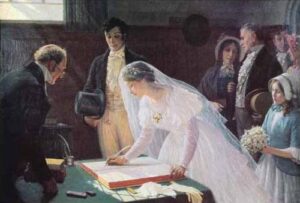
Civil registration records were used to validate existing knowledge rather than uncover new information. The certification requirement, which still prevails in England and Wales, was essential to provide official documentation of birth, marriage, or death, ensuring its legal recognition. The cost of certification reflects the rigorous security measures involved in producing certified copies, including special secure paper and meticulous record-keeping.

While the Church of England played a significant role in opposing civil registration, it was not the sole adversary with some members of the clergy resisted registration efforts.

Civil registration was not without its challenges and opposition, but it was a milestone in the quest for a secular, neutral system to record vital life events. The birth of civil registration in 1837 marked a significant shift away from church-based records and toward a more inclusive and standardised method of recording life’s most crucial events. As we explore our family history, let’s not forget the stories and struggles behind the records we so often take for granted. Civil registration’s journey is a testament to the enduring importance of preserving and accessing our family heritage.

Researched from The National Archives.

Why use a professional genealogist?

Using a professional genealogist, like Heritage Found can offer several valuable benefits for individuals seeking to research and understand their family history. Here are some reasons why someone might choose to work with a professional genealogist:

  1. Expertise and Experience: Professional genealogists have a deep understanding of research methodologies, historical records, and resources related to genealogy. They possess the knowledge and skills to navigate complex and often obscure archives, databases, and documents that may not be easily accessible to the general public.
  2. Efficiency: Genealogy research can be time-consuming and require a significant investment of effort. Professional genealogists know where to look and how to optimize their research process, potentially saving you countless hours of searching.
  3. Accurate and Reliable Information: Genealogists are trained to critically analyse sources, cross-reference information, and validate facts. This helps ensure that the information you receive is accurate and reliable, reducing the risk of propagating incorrect family histories.
  4. Access to Resources: Many professional genealogists have access to subscription-based databases, archives, and libraries that might not be accessible to the general public. These resources can provide vital information and clues to uncovering your family’s history.
  5. Brick Wall Breakthroughs: If you’ve hit a dead end or encountered a “brick wall” in your research, a professional genealogist can bring fresh perspectives and innovative approaches to overcome these challenges.
  6. Customized Research Plans: Genealogists can tailor their research strategies to your specific goals and needs. Whether you’re interested in tracing a specific ancestor, exploring a particular lineage, or discovering your ethnic heritage, a professional genealogist can focus their efforts accordingly.
  7. Organized Documentation: Genealogists are skilled at documenting and organizing their research findings in a clear and coherent manner. This documentation can be invaluable for future reference, sharing with family members, or preserving your family’s history for generations to come.
  8. Language and Regional Expertise: If your ancestry spans different countries or regions with varying languages and cultural nuances, a professional genealogist with expertise in those areas can navigate challenges associated with language barriers, changing borders, and differing record-keeping practices.
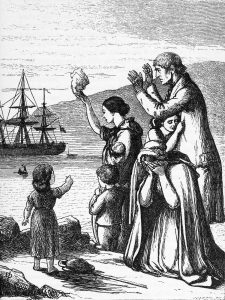
  9. Leaving Ireland, Henry Doyle 1827-1892. Mary Frances Cusack. Illustrated History of Ireland, 1968.

    Resolving Family Mysteries: If your family has long-standing mysteries, myths, or unanswered questions, a professional genealogist can help uncover the truth and shed light on hidden aspects of your family history.

  10. Educational Opportunities: Many professional genealogists offer educational services alongside their research, helping you understand the methods they use, the historical context of your family’s story, and how to continue your own research in the future.
  11. Preserving Heritage: Genealogists can assist in preserving family stories, traditions, and cultural heritage. They can uncover narratives that might have been forgotten, ensuring that your family’s history is passed down accurately..

This weekend 11/12 June Clevedon Literary Festival!

A warm welcome is waiting visitors to the Clevedon Literary Festival this year.

The Celebration of the Book is taking place on Saturday 11 June at St Andrew’s Church Centre, Old Church Road, Clevedon, BS21 7UE.

I have attached the Festival leaflet for the Celebration of the Book and here’s a link to it online:  Clevedon Literary Festival

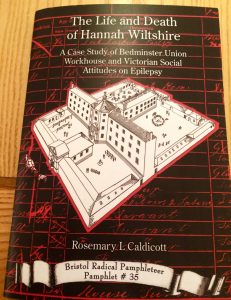
At 12.15 Rosemary Caldicott will be talking about a local scandal that took place in 1855  – ‘The Life and Death of Hannah Wiltshire: A Case study of Bedminster Union Workhouse and Victorian Social Attitudes on Epilepsy.‘

The Board of Guardians of Bedminster Workhouse were suspected of concealing the true magnitude of neglect at the workhouse during 1855, leading to accusations of medical negligence that caused the death of a local woman from Walton in Gordano. This talk includes newly discovered letters of complaint written to the Poor Law Board in London by Sir Arthur Elton of Clevedon. Rosemary’s book covering this subject will be on sale at the book stall.

The Life and Death of Hannah Wiltshire
by Rosemary L Caldicott

There are quite a few venues and attractions in other parts of Clevedon during the day. Walking is probably the best way to get around but there will be a vintage bus (in the spirit of Doris Hatt’s ‘communist coach’) touring around the Festival venues, including St Andrew’s. The Festival also has the use of an electric car, sponsored by the Mazda garage here – you may book this (as passengers) at the Festival Desk.


Reading Old Handwriting

Tips for Reading Old Handwriting

Family history is all about finding and reading documents, whether you look at scanned images on line or hunt for the originals in record offices. As you work your way back from recent certificates to older wills and parish registers, the writing on older documents becomes tricky. The words and their meanings—and even the shapes of the letters themselves—have changed over time. Understanding these documents correctly is time consuming but be the key to comprehending your ancestors’ lives.
Much of the reading relies on contextual clues because the language is outdated and will use an old-fashioned spelling and consistency of spelling prior to the introduction of compulsory schooling and advent of the modern dictionary.[i]

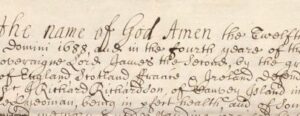
As you move into the 17th and 18th centuries, you will find far more variation. Spelling can be particularly difficult, as spellings were not standardized until compulsory education began around 1870. Surnames and place names in particular can have a wide variety of spellings, even on the same page! During this time most of the population could not write, so there was little need for a universal style.

Different styles of handwriting

The first style you will come across is Round Hand, a free-flowing, expressive way of writing is common in personal papers and letters from the 18th century. It’s not too far away from how we write today, although early examples may use different shapes for capital letters, almost interchangeable i’s and j’s, and a long s, f replaces s.

These variations are a hangover from the precursor to round hand, secretary hand. This style emerged in the 16th century and dominated in England for almost 200 years, so you will often come across it on parish registers. Secretary hand can look like nothing but scribbles at first but if you take the time to look at individual letters in turn you will often find you can decipher it.

Tips

  • Print or enlarging the image.
  • Scan or photograph original documents to zoom in.
  • Read wills in short bursts and revisit from time to time.

Tricky letters, spellings, and abbreviations

  • There were no standard spelling rules before 1755 in England and before 1828 in the United States.
  • In the past, a long form of the letter s looked like our contemporary letter f.
  • Words currently spelled with the letter i were often formerly spelled with the letter y; for example, “mine” was spelled “myne.”
  • The letters u and v were frequently interchanged; the word “ever,” for example, was often spelled “euer.”
  • The letter j was often replaced with i, so the name “James” may appear as “Iames.”
  • The word cousin often meant niece or nephew.
  • The title Mrs. could show high social status, not necessarily marital status.
  • Good brother or good sister in a document means brother- or sister-in-law.
  • The term in-law was also used to describe step-parents.

Common shorthand

The letter y often replaced the letters th; for example, “the” was often written “ye.”

The symbol @ sometimes replaced the word per, for example if you come across @week it most likely means “per week.”

Recommended

  1. Look up unfamiliar or archaic words and abbreviations online.
  2. Research the kind of document you are working with; certain documents may have specific phrases, jargon, and abbreviations. Understanding the document’s historical context can help you read the handwriting and understand its meaning.
  3. Read the document aloud; hearing it may help you to recognize unfamiliar words.
  4. Write the words yourself by placing tracing paper over a photocopy of your document and tracing each word. Creating the characters of the text may help you understand the words and the context.
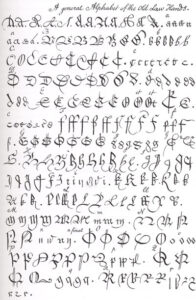
  5. Make an alphabet chart as you go. Write out the alphabet on a separate piece of paper, then copy examples from the document for each letter, both lower- and uppercase. It is usually easiest to identify letters in more obvious words like names and places, then refer to your chart to help with more difficult words.

[i] Graham Jaunay. Cracking the code of old handwriting. Unlock the past. 2011

International Women’s Day – Our Ancestors and Divorce

Occasionally we come across an old divorce petition, a legal document that will bare all.  These documents make incredibly sad reading, but at the same time offer us a fascinating insight into the lives of our ancestors. They can be a deeply private and intimate glimpse into a couple’s marriage; heart wrenching to read, with each person’s account laid bare in blunt legal descriptions, leaving us to judge which side is telling the truth.

Divorce cases were heard in public in open court during the 19th century and a legal separation or divorce was only for the very wealthy. A married woman’s property automatically became her husband’s, and upon divorce the children remained the property of their father which was of course used as a means to control women residing in unhappy marriages. Mothers who left a marriage risked being prevented from seeing their children following a divorce or separation.

Things begin change a little after the 1857 Matrimonial Causes Act, but the law was still stacked in favour of the man. Under the new law, women divorcing on the grounds of adultery not only had to prove that their husbands had been unfaithful, but also had to prove additional faults, which included cruelty, rape and incest. Men, of course, just had to prove their wives had been unfaithful and in an age before cameras, videos and smartphones, this was often a tricky task! Before 1857, divorce was mainly open only to men, and had to be granted by an Act of Parliament.

In 1858 the handling of the legal process for divorce was transferred from the ecclesiastical courts to a newly established civil court, the Court for Divorce and Matrimonial Causes. In 1873 responsibility was passed to a division of the new Supreme Court. All divorce cases took place in London, yet again restricting divorce to wealthier couples only.

Recently, while researching a family tree I came across a divorce petition document dated 1875 which is stored at the National Archives in London. The couple were a moderate middle class farming couple who had been married for 25 years and were childless. This is a surprising case not only because of the financial implications for particularly the woman involved, but also because in the 19th century, divorce was extremely rare, and generally considered unthinkable for social, financial, and religious reasons. Unhappy couples would often separate but not legally get divorced as can be seen in family history archives. The petitioner in this case was the husband. I have changed the names and addresses in the following reproduction due to the sensitive nature of some of the central claims in the original legal document.
Victorian woman in divorce courtWe begin with the wife’s petition in this divorce case, dated February 1875 and claiming that her husband:

  • ‘the she denies that she was guilty of adultery as alleged.’
  • ‘That in or about the year 1865 the petitioner beat, assaulted and otherwise illtreated her threaten to kill her and greatly terrified her and on two occasions turned his wife out the house and kept her locked out all night refusing to allow her to enter’.
  • ‘That the petitioner on the 13th day of 1872 in ……….. Road, ……… swore at and threatened the wife and took from her her watch and guard wedding ring earrings cloak fur bag umbrella and other articles and insulted and swore at her on the public road in the presence of divers [others] persons strangers.’
  • ‘That on the 13th December 1872 at the house he refused her entry and has thrice hitherto refused to allow her to reside at or enter his said house and thence hitherto has wilfully separated himself from his wife without reasonable excuse and has deserted her.’
  • That in 1873 E.B. [servant] went to reside at the house with her husband that lived and cohabited and committed adultery with the said. E.B was delivered of a male child in said house on the 18th of January 1875 and the husband was the father.’
  • The respondent therefore humbly pray that your Lordship’s will be pleased to reject the pray of the said petitioner and to decree that the said marriage between the petitioner and his respondent be dissolved and that this respondent have such further and other relief in the premises as to your Lordships may [? ].

Her husband responds.

  • ‘That I am informed and verily believe that at divers [many] times …..that the aforesaid committed adultery with Thomas G the younger a butcher.’
  • ‘That I am informed and verily believe that on the 18th of July 1871, at Bath also committed adultery with the said Thomas G the younger.’
  • ‘That I am informed and verily believe that on the 5th day of July 1871 at Reading also committed adultery with the said Thomas G the younger.’
  • ‘That I am informed and verily believe that on the 5th day of January 1873 my wife in a lane call Gypsy Lane in the county of Somerset also committed adultery with the said Thomas G the younger.’
  • ‘That I am informed and verily believe that on the 14th day of April 1873 my wife at Cadbury Hill also committed adultery with the said Thomas G the younger’.
  • ‘That I am informed and verily believe that on a Sunday in the month of May 1873 my wife in a lane leading to the said Cadbury Hill also committed adultery with the said Thomas G the younger’.
  • ‘That I am informed and verily believe that on the 25th day of August 1873 my wife in a field at Hamstead also committed adultery with Thomas G the younger’.
  • ‘That I am informed and verily believe that on the 6th day of April 1874 my wife at Cadbury Hill also committed adultery with the said Thomas G the younger’.
  • ‘that there is no collusion or connivance between me and my wife in any way whatever’.

Thomas G, the butcher swore in his statement presented to the court that he denied any involvement or adultery with the wife.

The above 1875 petition document reveals the fees paid to take this case to court was a staggering £34,000 in today’s money. Unfortunately, the outcome and settlement of this case is not shown but it is doubtful if the wife in this case at this time had any claim over the family house, lands or other effects.

Divorce did not really open up for all classes until the 1920s with the provision of some local courts. In the 1920s and 1930s, English law did not allow for divorce by mutual consent, but rather required proof of adultery, or violence by one party; misconduct by both parties could lead to the divorce being refused. A further hurdle for a couple to obtain a divorce was that the law strictly prohibited “collusion” by the parties, and this is why in the above example the couple had to swear that they had not colluded.  A private members’ bill in 1923 made it easier for women to petition for divorce for adultery – but it still had to be proved.

The Matrimonial Causes Act 1937 changed the law to make divorce easier to access, particularly for women, who until then could not get a divorce merely on the grounds of adultery because a woman needed to show more causes than adultery, such as on the grounds of incest, sodomy, drunkenness, insanity, desertion, or cruelty. The need for the reforms was illustrated in the best-selling satirical novel Holy Deadlock by A E Herbert and published in 1934 which influenced a changing attitude towards a reform to English divorce law. However, there was a bar on petitions for the first three years of the marriage. In the late 1960s divorce was taken over by the county courts and most divorces now take place at county courts.

Finally, in 1969 the Divorce Reform Act was passed, allowing couples to divorce after they had been separated for two years (or five years if only one of them wanted a divorce, however this has proved controversial for some). A marriage could be ended if it had irretrievably broken down, and neither partner no longer had to prove “fault”.

What of our unhappy couple?

The 1881 census discloses that the ex-wife was now living in a neighbouring town with a Richard Pike who was a carpenter, and she is a recorded as a general servant, a term commonly used when a man and woman who were not married co-habited together. Interestingly she also says that her condition was being as married, perhaps meaning that a divorce was not granted in this case, and that Richard Pike was a widower.

The baby born in February 1875 was baptised with the father’s full name and with the mother’s maiden name appearing in the church register because she was an unmarried mother. The couple probably planned to be married once the divorce was finalised, but very sadly the mother (E.B.) died just four months following the child’s birth. The child remained at the family home and was brought up by another woman following the mother’s tragic death. The new couple lived together for over 35 years until the father finally died in 1908. They never married.

1834 Cholera came to the village of Braunston

Following a talk I gave yesterday about the 1832 Cholera Epidemic in Bristol one the attendees very kindly sent me a fascinating link to a cholera outbreak in the village of Braunston, Northamptonshire, during the last months in 1834.

I have posted the article below, which was published on Braunston Village of the Waterways web site (https://www.braunston.org.uk/).* The article contains a primary source written by a Baptist Minister named the Reverend R Miller and published in a leaflet during 1835.

He wrote the record “for the parishioners of Braunston…to lead them to see “the hand invisible that performs works of judgement and mercy”…..

Braunston Canal image‘Cholera came to Braunston on the weekend of a Feast Day, the Feast of All Saints’tide. This was a great time in the village. There was no radio, no television, no outside entertainments to enjoy. The villagers congregated with friends and relatives, there were stalls on the Green, and the public houses were filled with folk.
The Rev Miller noted that no company was to abscene debauched, or viciously disposed to answer there purpose. He looked upon the Cholera as a divine intervention upon the evil ways of the villagers.’

In 1834, Cholera came to Braunston. It would seem likely that it had come from London by canal. It has been noted how the East End of London was badly infected by Cholera. Three suspicious cases were noted at Rotherhithe on the south bank of the Thames opposite Limehouse. The Regents Canal commences at the Regent Canal Dock in Limehouse. The canal proceeds north through London’s East End, then westward to reach the Grand Junction Canal at Brentford, from where the canal goes north to Braunston.

‘Our source for a description of the outbreak is in a leaflet printed by J Castell of High Street Daventry in 1835. It had been written by “A Looker-on”. We know that the” Looker-on” was the Baptist Minister at the time; the Rev R Miller. He wrote the record “for the parishioners of Braunston…to lead them to see “the hand invisible that performs works of judgement and mercy”

Cholera came to Braunston on the weekend of a Feast Day, the Feast of All Saints’tide. This was a great time in the village. There was no radio, no television, no outside entertainments to enjoy. The villagers congregated with friends and relatives, there were stalls on the Green, and the public houses were filled with folk.

The Rev Miller noted that no company was to abscene debauched, or viciously disposed to answer there purpose. He looked upon the Cholera as a divine intervention upon the evil ways of the villagers.

The first case occurred on 7th October 1834 from an infected boat. A bed from the boat was left with a Mrs L, for the bed to be washed. Mrs L caught Cholera and died.

About 2nd November, a legger named Patmore, who lived in Cross Lane in Braunston, died , but Cholera was not concidered to be the cause.

Then on 16th November, a Feast Sunday, a child of Patmore died, and another boatman named T Fall also died in Cross Lane. Fall had come from Derbyshire, and after feeling unwell, had left his boat at Crick Wharf a few days before.

The following Monday 17th November, the day of the Celebration of the Feast, there were stalls on the Green, side shows on the road and private parties in the houses with dancing and drinking. The public houses were full of people.

Continue reading “1834 Cholera came to the village of Braunston” →

The Bills of Mortality and The Great Plague of London

The London death toll during the great plagues of the seventeenth century.

“Bring out your Dead”

Today we listen to the media or check Twitter to discover the latest death and infection rates for the Covid pandemic and it often makes for grim news. We check our apps to find out the infection rate in our local area, scan ourselves into cafes, libraries, pubs, and schools so we can be aware for our own safety and that of others. Government and private sector developed apps to provide test track and trace interventions. We have the advantage because we understand how coronaviruses spread from human to human, and we also know that we have modern medical science on our side. But in the past people had little to no understanding of how plague was rapidly spreading from house to house, killing as many as 100,000 people in the City of London during the years 1665-66, about one quarter of the population of London.[1] The Great Plague of London, lasting from 1665 to 1666, was the last major epidemic of the bubonic plague to occur in England. It happened within the centuries-long Second Pandemic.

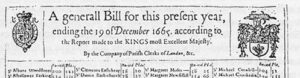
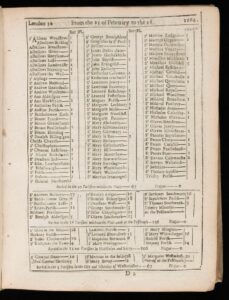
People would eagerly read, or as was more likely were read, the weekly Bill of Mortality double sided sheets informing citizens of the weekly death toll in all of the 130 parishes in London.

“the Bill of Mortality is of very great use…it giveth a general notice of the Plague, and a particular Accompt of the places which are therewith infected, to the end such places may be shunned and avoided.” [2]

Those that died from known illness would be recorded and in which parish they were buried. But for those who died of plague they were to become a disheartening numerical statistic at the bottom of the printed Bills, offering an early example of local public health initiative in an attempt to try and track the progress of the disease.

The Bills were particularly produced by the parishes of the City of London during outbreaks of plague. The first Bill is believed to date from November 1532 [3] and published on 21 December 1592 continuing until 18 December 1595. The practice was abandoned and then revived on 21 December 1603 when plague once again was in town. In 1611 the duty to produce weekly Bills each Thursday, was obligatory and the responsibility of the members of the Worshipful Company of Parish Clerks by a charter granted by James I. Annual returns were also printed each year on 21 December (the feast of St Thomas). New charters were granted by Charles I in 1636 and 1639. As London grew the Bills eventually covered 129 parishes at the granting of the 1639 charter. By 1570 the Bills included baptisms and in 1629 the cause of death was given. The Bills were published by the Worshipful Company of Parish Clerks in London, on a single double sided sheet of paper.

In the last week of July 1665, the London Bill of Mortality showed 3,014 deaths, of which 2,020 had died from the plague.

Corpses were buried quickly, often after being dropped out of upstairs windows or forcibly collected from their boarded-up houses, then to be placed unceremoniously into a mass grave pit such as the one hastily dug at Aldgate near the churchyard being 50 feet long and 20 feet wide. It is recorded that while labourers were still digging at one end dead-carts were tipping corpses in at the other end. When finally covered over 1,114 people were interned at this one site alone.

Such was the mental distress being caused to the people that it was ordered for dead-carts to only collect the bodies after dark. But eventually there were just too many victims and too few drivers that bodies were being stacked up along the sides of the very narrow streets. Daytime collection was resumed with the collector’s famously calling out around the city’s narrow streets “bring out your dead”.[4]

Usually there would be no member of the clergy to pray for the dead and oversee the burials; the clergy, along with the wealthy, had mostly fled to the countryside. Dignity in death for victims of the plague had all but vanished.

Continue reading “The Bills of Mortality and The Great Plague of London” →