New course week 2: Birth, Marriage and Death

This week my class investigated searching for birth, marriage and death registrations. As our research progresses it is very rewarding to send off for copy certificates. I have sent off for a further two death certificates of ancestors or mine today. During the 19th century, and with couples usually having large families, it is sadly only too common to discover that several children had died during childhood within one household.  I personally find it fascinating to find out what had caused these children’s early demise. Unfortunately I discovered one child had drowned in a pond, but many others died of contagious infections which we no longer fear, such as whopping cough.

These tragedies would have affected the family very deeply, and this was perhaps one reason why people tended not to talk about their grief – because of the fear that life was very precarious for their children.

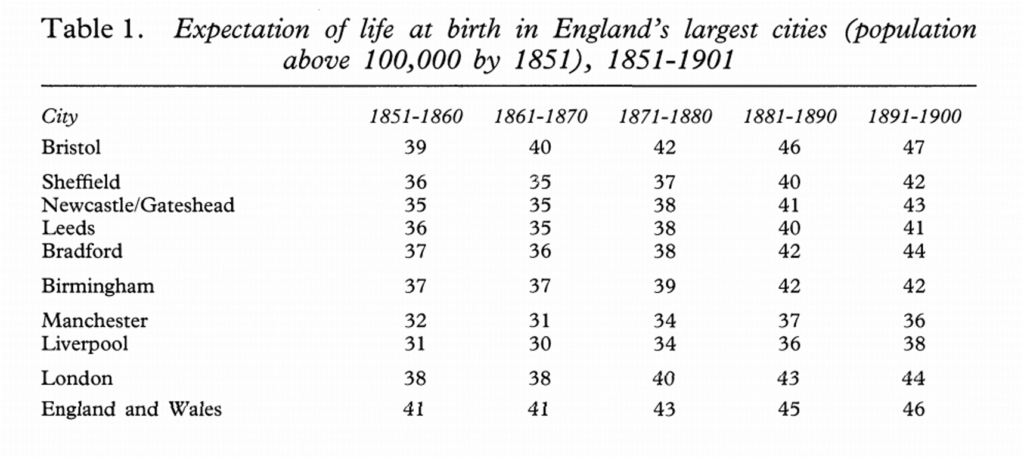
Life expectancy was low compared to today. One of the reasons was the death of infants and children from disease. However, poor housing, pollution, and lack of sanitation also resulted in causing early deaths in all ages.

To send off for a copy certificate is easy. As use the GRO web site as they are the cheapest option and the quickest. Send off HERE

Talk! Bristol in the Time of Cholera

I am pleased to announce that as part of the M Shed’s 10th anniversary programme, and representing Bristol Radical History Group I have been invited to give a talk.

The talk is being giving on 21 June at 2-3pm

Cholera reached Bristol on the 11 July 1832.

The London Quarterly Review described the new disease sweeping the world in November 1831:

‘It has mastered every variety of climate, surmounted every natural barrier, conquered every people.’

The disease caused severe diarrhoea, dehydration, collapse and often death. However, on 12 July 1832, the newspapers reported that they had no reason to fear that cholera had arrived in earnest. Medical and political intervention was variable and inadequate.

What was the impact of cholera in Bristol? In this talk we will explore the consequences for public health in the city and the role the Floating Harbour played in the spread of the disease.

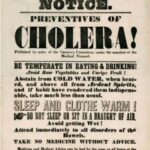
Poster warning of Cholera

How to take part

Bookable through M Shed HERE

This free, online talk will be held over Zoom. Please book your place below. Details of how to join the session will be in your registration email. Please check your spam folder if the email does not arrive. Bookings close at 11am on Monday 21 June.

Although this talk is free, the M Shed would be grateful if you could consider making a donation.

Please visit the Zoom website for guidance on joining a webinar. Please allow extra time before the talk begins to make sure everything is working correctly. It’s up to you whether you turn on your video but all guests will be muted once the talk begins. You are welcome to ask questions in the chat box throughout the talk.

1834 Cholera came to the village of Braunston

Following a talk I gave yesterday about the 1832 Cholera Epidemic in Bristol one the attendees very kindly sent me a fascinating link to a cholera outbreak in the village of Braunston, Northamptonshire, during the last months in 1834.

I have posted the article below, which was published on Braunston Village of the Waterways web site (https://www.braunston.org.uk/).* The article contains a primary source written by a Baptist Minister named the Reverend R Miller and published in a leaflet during 1835.

He wrote the record “for the parishioners of Braunston…to lead them to see “the hand invisible that performs works of judgement and mercy”…..
Braunston Canal image‘Cholera came to Braunston on the weekend of a Feast Day, the Feast of All Saints’tide. This was a great time in the village. There was no radio, no television, no outside entertainments to enjoy. The villagers congregated with friends and relatives, there were stalls on the Green, and the public houses were filled with folk.

The Rev Miller noted that no company was to abscene debauched, or viciously disposed to answer there purpose. He looked upon the Cholera as a divine intervention upon the evil ways of the villagers.’

In 1834, Cholera came to Braunston. It would seem likely that it had come from London by canal. It has been noted how the East End of London was badly infected by Cholera. Three suspicious cases were noted at Rotherhithe on the south bank of the Thames opposite Limehouse. The Regents Canal commences at the Regent Canal Dock in Limehouse. The canal proceeds north through London’s East End, then westward to reach the Grand Junction Canal at Brentford, from where the canal goes north to Braunston.

‘Our source for a description of the outbreak is in a leaflet printed by J Castell of High Street Daventry in 1835. It had been written by “A Looker-on”. We know that the” Looker-on” was the Baptist Minister at the time; the Rev R Miller. He wrote the record “for the parishioners of Braunston…to lead them to see “the hand invisible that performs works of judgement and mercy”

Cholera came to Braunston on the weekend of a Feast Day, the Feast of All Saints’tide. This was a great time in the village. There was no radio, no television, no outside entertainments to enjoy. The villagers congregated with friends and relatives, there were stalls on the Green, and the public houses were filled with folk.

The Rev Miller noted that no company was to abscene debauched, or viciously disposed to answer there purpose. He looked upon the Cholera as a divine intervention upon the evil ways of the villagers.

The first case occurred on 7th October 1834 from an infected boat. A bed from the boat was left with a Mrs L, for the bed to be washed. Mrs L caught Cholera and died.

About 2nd November, a legger named Patmore, who lived in Cross Lane in Braunston, died , but Cholera was not concidered to be the cause.

Then on 16th November, a Feast Sunday, a child of Patmore died, and another boatman named T Fall also died in Cross Lane. Fall had come from Derbyshire, and after feeling unwell, had left his boat at Crick Wharf a few days before.

The following Monday 17th November, the day of the Celebration of the Feast, there were stalls on the Green, side shows on the road and private parties in the houses with dancing and drinking. The public houses were full of people.

Continue reading “1834 Cholera came to the village of Braunston” →

The Bristol Cholera Epidemic of 1832: Have we learnt any lessons?

New Eventbrite talk 7th February at 7pm! (To book see below)

Cholera reached Bristol on July 11, 1832. The following day, the papers reported that they had reason to fear that cholera had arrived in earnest in the city. There had been four reported cases and three deaths. A notice to this effect had been posted on the Custom House. It was from T. Morris and John Brickdale (MP) and read as follows:

‘Notice is hereby given that the secretary to the board of health established in this port has signified to the Collector and Comptroller that three cases of malignant cholera appeared yesterday in the city, that two deaths have ensued, and the other patient not expected to live’.

Poster warning of CholeraThe following week the newspapers were reporting on further cholera deaths and the use of chloride of lime to fumigate and sanitise infected buildings. There was also the report of six cases in the Gaol. The Bristol Mirror reported a special General Committee of the Corporation of the Poor at St. Peter’s Hospital had been established in order to deal with communications from the Board of Health. The committee also voted for the foundation of a cholera hospital (never built).

How did Bristol’s merchants, doctors and population respond to the disease arriving in the city and were senior physicians’ reports to the authorities acted upon?

To learn the full story join me at Eventbrite on 7th February 2021 & 7pm. To book click HERE