New course week 2: Birth, Marriage and Death

This week my class investigated searching for birth, marriage and death registrations. As our research progresses it is very rewarding to send off for copy certificates. I have sent off for a further two death certificates of ancestors or mine today. During the 19th century, and with couples usually having large families, it is sadly only too common to discover that several children had died during childhood within one household.  I personally find it fascinating to find out what had caused these children’s early demise. Unfortunately I discovered one child had drowned in a pond, but many others died of contagious infections which we no longer fear, such as whopping cough.

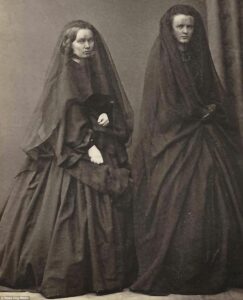
These tragedies would have affected the family very deeply, and this was perhaps one reason why people tended not to talk about their grief – because of the fear that life was very precarious for their children.

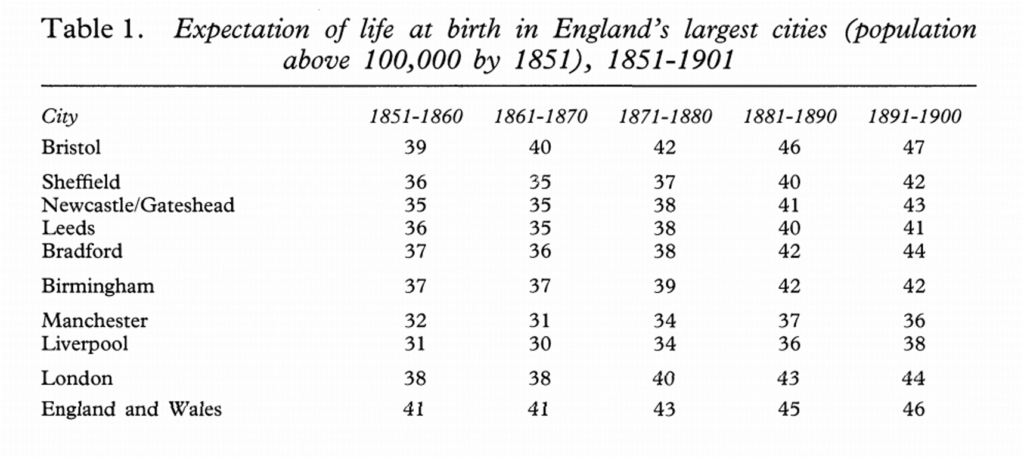
Life expectancy was low compared to today. One of the reasons was the death of infants and children from disease. However, poor housing, pollution, and lack of sanitation also resulted in causing early deaths in all ages.

To send off for a copy certificate is easy. As use the GRO web site as they are the cheapest option and the quickest. Send off HERE

The U.K. 1921 Census will be released on 6 January 2022

What is the 1921 Census of England and Wales?

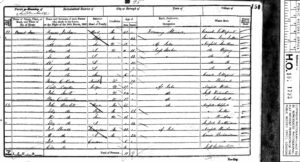
The 1921 Census gives us the names, ages, occupations and addresses of 38 million people living in the U.K. and are available online from 6 January 2022

The 1921 Census is very important due to the fact that the 1931 Census was destroyed in a fire. Then, the 1941 Census was cancelled due to the Second World War. Therefore the 1921 Census is the only record to become available for the next 30 years other than the 1939 registration war time mini-census.

It’s also the most documented record set up to that time because it was the first census to recognise divorce. For the first time we have documents that will reveal family secrets and surprises that this interwar census brings. These documents will also sadly reveal the many widows and children now living without husbands and fathers due to WWI.

The 1921 Census can be viewed at  findmypast.co.uk from 6 January 2022. The National Archives, Kew have worked with Find my Past to digitalise the documents.

For help to discover you family history contact Heritage Found!

International Women’s Day – Our Ancestors and Divorce

Occasionally we come across an old divorce petition, a legal document that will bare all.  These documents make incredibly sad reading, but at the same time offer us a fascinating insight into the lives of our ancestors. They can be a deeply private and intimate glimpse into a couple’s marriage; heart wrenching to read, with each person’s account laid bare in blunt legal descriptions, leaving us to judge which side is telling the truth.

Divorce cases were heard in public in open court during the 19th century and a legal separation or divorce was only for the very wealthy. A married woman’s property automatically became her husband’s, and upon divorce the children remained the property of their father which was of course used as a means to control women residing in unhappy marriages. Mothers who left a marriage risked being prevented from seeing their children following a divorce or separation.

Things begin change a little after the 1857 Matrimonial Causes Act, but the law was still stacked in favour of the man. Under the new law, women divorcing on the grounds of adultery not only had to prove that their husbands had been unfaithful, but also had to prove additional faults, which included cruelty, rape and incest. Men, of course, just had to prove their wives had been unfaithful and in an age before cameras, videos and smartphones, this was often a tricky task! Before 1857, divorce was mainly open only to men, and had to be granted by an Act of Parliament.

In 1858 the handling of the legal process for divorce was transferred from the ecclesiastical courts to a newly established civil court, the Court for Divorce and Matrimonial Causes. In 1873 responsibility was passed to a division of the new Supreme Court. All divorce cases took place in London, yet again restricting divorce to wealthier couples only.
Recently, while researching a family tree I came across a divorce petition document dated 1875 which is stored at the National Archives in London. The couple were a moderate middle class farming couple who had been married for 25 years and were childless. This is a surprising case not only because of the financial implications for particularly the woman involved, but also because in the 19th century, divorce was extremely rare, and generally considered unthinkable for social, financial, and religious reasons. Unhappy couples would often separate but not legally get divorced as can be seen in family history archives. The petitioner in this case was the husband. I have changed the names and addresses in the following reproduction due to the sensitive nature of some of the central claims in the original legal document.
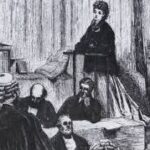
Victorian woman in divorce courtWe begin with the wife’s petition in this divorce case, dated February 1875 and claiming that her husband:

  • ‘the she denies that she was guilty of adultery as alleged.’
  • ‘That in or about the year 1865 the petitioner beat, assaulted and otherwise illtreated her threaten to kill her and greatly terrified her and on two occasions turned his wife out the house and kept her locked out all night refusing to allow her to enter’.
  • ‘That the petitioner on the 13th day of 1872 in ……….. Road, ……… swore at and threatened the wife and took from her her watch and guard wedding ring earrings cloak fur bag umbrella and other articles and insulted and swore at her on the public road in the presence of divers [others] persons strangers.’
  • ‘That on the 13th December 1872 at the house he refused her entry and has thrice hitherto refused to allow her to reside at or enter his said house and thence hitherto has wilfully separated himself from his wife without reasonable excuse and has deserted her.’
  • That in 1873 E.B. [servant] went to reside at the house with her husband that lived and cohabited and committed adultery with the said. E.B was delivered of a male child in said house on the 18th of January 1875 and the husband was the father.’
  • The respondent therefore humbly pray that your Lordship’s will be pleased to reject the pray of the said petitioner and to decree that the said marriage between the petitioner and his respondent be dissolved and that this respondent have such further and other relief in the premises as to your Lordships may [? ].

Her husband responds.

  • ‘That I am informed and verily believe that at divers [many] times …..that the aforesaid committed adultery with Thomas G the younger a butcher.’
  • ‘That I am informed and verily believe that on the 18th of July 1871, at Bath also committed adultery with the said Thomas G the younger.’
  • ‘That I am informed and verily believe that on the 5th day of July 1871 at Reading also committed adultery with the said Thomas G the younger.’
  • ‘That I am informed and verily believe that on the 5th day of January 1873 my wife in a lane call Gypsy Lane in the county of Somerset also committed adultery with the said Thomas G the younger.’
  • ‘That I am informed and verily believe that on the 14th day of April 1873 my wife at Cadbury Hill also committed adultery with the said Thomas G the younger’.
  • ‘That I am informed and verily believe that on a Sunday in the month of May 1873 my wife in a lane leading to the said Cadbury Hill also committed adultery with the said Thomas G the younger’.
  • ‘That I am informed and verily believe that on the 25th day of August 1873 my wife in a field at Hamstead also committed adultery with Thomas G the younger’.
  • ‘That I am informed and verily believe that on the 6th day of April 1874 my wife at Cadbury Hill also committed adultery with the said Thomas G the younger’.
  • ‘that there is no collusion or connivance between me and my wife in any way whatever’.

Thomas G, the butcher swore in his statement presented to the court that he denied any involvement or adultery with the wife.

The above 1875 petition document reveals the fees paid to take this case to court was a staggering £34,000 in today’s money. Unfortunately, the outcome and settlement of this case is not shown but it is doubtful if the wife in this case at this time had any claim over the family house, lands or other effects.

Divorce did not really open up for all classes until the 1920s with the provision of some local courts. In the 1920s and 1930s, English law did not allow for divorce by mutual consent, but rather required proof of adultery, or violence by one party; misconduct by both parties could lead to the divorce being refused. A further hurdle for a couple to obtain a divorce was that the law strictly prohibited “collusion” by the parties, and this is why in the above example the couple had to swear that they had not colluded.  A private members’ bill in 1923 made it easier for women to petition for divorce for adultery – but it still had to be proved.

The Matrimonial Causes Act 1937 changed the law to make divorce easier to access, particularly for women, who until then could not get a divorce merely on the grounds of adultery because a woman needed to show more causes than adultery, such as on the grounds of incest, sodomy, drunkenness, insanity, desertion, or cruelty. The need for the reforms was illustrated in the best-selling satirical novel Holy Deadlock by A E Herbert and published in 1934 which influenced a changing attitude towards a reform to English divorce law. However, there was a bar on petitions for the first three years of the marriage. In the late 1960s divorce was taken over by the county courts and most divorces now take place at county courts.

Finally, in 1969 the Divorce Reform Act was passed, allowing couples to divorce after they had been separated for two years (or five years if only one of them wanted a divorce, however this has proved controversial for some). A marriage could be ended if it had irretrievably broken down, and neither partner no longer had to prove “fault”.

What of our unhappy couple?

The 1881 census discloses that the ex-wife was now living in a neighbouring town with a Richard Pike who was a carpenter, and she is a recorded as a general servant, a term commonly used when a man and woman who were not married co-habited together. Interestingly she also says that her condition was being as married, perhaps meaning that a divorce was not granted in this case, and that Richard Pike was a widower.

The baby born in February 1875 was baptised with the father’s full name and with the mother’s maiden name appearing in the church register because she was an unmarried mother. The couple probably planned to be married once the divorce was finalised, but very sadly the mother (E.B.) died just four months following the child’s birth. The child remained at the family home and was brought up by another woman following the mother’s tragic death. The new couple lived together for over 35 years until the father finally died in 1908. They never married.


A handy list of census abbreviations

The census undertaken in the past in the U,K. included the use of abbreviations to describe professions. Here are some examples of the more common abbreviations that you will come across.

Ag. Lab – Agricultural labourer

Ap. – Apprentice

Army – Member of HM land forces of whatever rank

Cl. – Clerk

FS. – Female servant

H.P. – Members of HM armed forces on half-pay

Ind. – Independent – people living on their own means

J. – Journeyman

M. – Manufacturer

m. – Maker e.g. Boot m.

MS. – Male servant

Navy – Member of HM naval forces of whatever rank including marines

N.S. – Not Stated

P. – Pensioners of HM armed forces

Sh. – Shop man

1851
1851 census. England and Wales

I came across a Higgler

Hannah Knight of West Milton England. A Higgler
Hannah Knight, A Higgler.

Many localised names for occupations have been lost over the years. I recently came across a man who was listed as a ‘higgler’ on the 1851 census. He lived in Harlow, Essex, England. This was certainly a trade I have never come across before. It turns out a higgler was a person who travelled around country districts selling useful things like saucepans, or ribbons and patent medicines. However, the intriguing aspect to a higgler was that he would commonly accept farm produce, like rabbits, cheese chickens or ducks perhaps to sell onto others, perhaps at a market place. They were hagglers, trading using the age old barter system and the word haggler is still used today. These men and women were essentially middlemen.

According to World Wide Words. Investigating the English language across the Globe the word higgler has survived in the Caribbean islands, especially in Jamaica, where it is used to describe a market trader.

In The Surgeon’s Daughter (1827) Walter Scott wrote:

‘The labours of a higgler, who travels scores of miles to barter pins, ribbons, snuff and tobacco, against the housewife’s private stock of eggs, mort-skins [sheep skins], and tallow’

However, higglers could have a bad reputation with the authorities who were suspicious of them. Bearing in mind that the authorities themselves would manipulate prices a higgler worked outside of their control.

The Times of London reported on 10 June 1800:

‘A meeting was held at Poole, on Friday last, to take into consideration the propriety of the inhabitants in general refraining from the use of butter, till the price is reduced to One Shilling a pound; when it was unanimously resolved by all reduced, and even then, to use it in their families with great economy and moderation … and proper people are appointed to keep a constant watch on the Higglers on Market-day who are the principal cause of the great prices of many of the necessaries of life.

I am sure that higglers were not to blame, after all they could not have been the only persons selling butter in Poole! This statement was more likely to be based on local prejudice and suspicion against travelling higglers.

English and Welsh Death Certificates – a valuable resource often overlooked.

Death certificates are a very under valued family research source.

On the one hand they do give less information than a birth and marriage certificate, but death certificates offer us an understanding of the end of a life.  They also give us links with wills, burial, newspaper reports, workhouse infirmary reports and an deeper connection with people.

A death certificate will give you the full name of the deceased, their sex, age (post 1866), occupation, cause of death, where the person died, address of the informant, the date of registration and finally the signature of the registrar.

Be aware when searching though the vital indexes (required to send off for a copy death certificate) that before 1866 the persons date of birth and age was not included. This means that, especially with common names, that it can be difficult to track down the correct person.

Unbelievably it was only from April 1969 that the deceased date and place of birth are given, and the maiden name of married and widowed women.

As you go back in time, especially before mass vaccination being introduced in the early 1940s, it is shocking to see how many children were lost to contagious diseases. One family living in London I researched sadly lost four young children, one each year between 1865 to 1870 to whooping cough. Also, you will discover many people dying from infections easily treatable today with antibiotics. Certainly a stark glimpse into our ancestors precarious lives.

Second Life Marketplace - CLEARANCE - 90% OFF! Montagne Noire ...

Last day for my learners

Today was the last day of my Stage 2 Family History Course that I run at Stoke Lodge Bristol. 

Some of the learners gave fabulous presentations of their family history research and very interesting their research proved to be!  We all learned a lot from how they undertook their research, and I was impressed at the hard work and many hours that had been undertaken.
Thank you to the whole class for making this course very interesting for all of us.  I hope you continue to to pursue your wonderful research and that my course has inspired you to overcome the inevitable obstacles that will pop up from time to time.

Happy Christmas Everyone! 

Thank you to my learners – great work

Just finished my latest family history course.  The learners were very enthusiastic and managed to trace their family heritage back to the 1841 census.  This was the goal for the Stage 1 course.

Some found that family stories helped to validate the records they discovered.  While some discovered that the records only disproved what they had been told!   This is often the case.  Over time family memories and stories are re-told and often vital facts are forgotten, names forgotten, or dates are simply made up.  It is only by sourcing the records accurately, which can be very time consuming, can we prove, or disprove our family history.

This takes great discipline, concentration and good record keeping.  The learners found the time and space in their weekly class, and afterwards felt they had a better understanding of the process. I hope they all felt they had made really good progress and will continue with their research.

Well done everyone!

Genealogy discoveries and mysteries still to be solved – The lost marriage

Lost, First Marriage

Over the summer I have been busy with solving a couple of genealogy mysteries on behalf of clients. The one, below, involves a lost first marriage.  Let me explain:

The first involved a lady who believed her mother may have been married before her mother and father met and married.  When this lady was a child an elderly aunt had once told her that her mother had been married before, and that she, this lady had a brother.  The revelation remained a secret and was never spoken of again.  Her mother died in her fifties and now this lady wanted to know if she did in fact have a half brother.

I was able to help her by searching her genealogy through the marriage records and birth records. Unfortunately her mother had a common name, and came from a city.  This meant cross referencing with over 40 possible matches with the mothers names.  I had to check for deaths of some of these 40 women and birth records around the correct time.  But in the end I found her mothers first marriage, which took place in a different city.  This is probably why her family did not know of her first marriage or birth of her first son, who was born just 3 months after the marriage.

The story turned out to be true and the lady is now hoping to contact her half brother.  However, I did not find a divorce record for her mother, so we believe her father did not know of the previous marriage or child.  I hope very much that this lady finds her half brother and gets to hear all about his life story.

(The client granted her permission for me to blog her story).

Sign up for one of my courses and you could discover your family history Courses

Second story to follow soon…..

Pauper death and burial in Eastville, Bristol

On 12 July a fascinating public walk and lecture about the history behind the unmarked pauper graves of Rosemary Green, situated on the outskirts of what was once Eastville Union Workhouse, Fishponds Road, Bristol.

After the 1834 Poor Law Act a paupers funeral was considered to be an extravagance that the parish should no longer pay for.  Before the 1834 Act, pauper funerals were paid for by the parish, with local persons attending to the traditional funeral rituals and necessities. In other words a person with no or little money who had died was treated with respect in death and buried as a human being as would be expected, albeit simple, within the cultural rituals of the time.

But after the Act was enforced the Poor Law Unions, in order to save money, and ‘demonstrate disgrace in death of those who had surrendered to poverty‘.  Death and burial practices were changed to become a disgraceful new attitude that resulted in approximately 4,000 men, women and children simply being wrapped in a shroud and dumped in unmarked graves in a small piece of land that sloped into a small river.   The pauper graveyard is located at Rosemary Green just opposite Greenbank Cemetery where there is also an older pauper grave yard.

Extensive research into Eastville workhouse has been undertaken by Bristol Radical History Group and published in 100 Fishponds Road.  (Book available from BRHG). Click here.

Many people have now contacted the BRHG as they suspect that their ancestors may have be buried at Rosemary Green. (Records of names still exist).  If you think that you may have an ancestor who might have died in a workhouse you can contact Heritage Found, free of change, to try to find out more.

At Rosemary Green there is now a touching monument to all those souls once buried beneath.

Made of slate it reads:

Rosemary Green Burial Ground

1851-1895

On this site over 4,000 men women and children

who died in Eastville Workhouse,

known as 100 Fishponds Road,

were buried in unmarked graves.

A further 118 were given to the medical school.

This memorial stands in recognition of all

who lived and died in the workhouse.

Not Forgotten

Please click here to discover more and see fascinating photographs of Eastville Workhouse.