

Back to Basics – What is a UK Birth Certificate? and What can it tell us about our Ancestors?

What is a UK Birth Certificate?

A UK birth certificate is an official document issued by the General Register Office (GRO) or a local registration office. It records essential information about an individual’s birth, including their full name, date and place of birth, parents’ names, and registration details. It is considered a primary source of evidence for establishing identity and citizenship in the UK.

  1. Information Included on a UK Birth Certificate

a. Child’s Details:

  • Full name of the child: This is the name given to the child at birth and appears as the first entry on the certificate.
  • Date of birth: The exact date when the child was born.
  • Place of birth: The city or town and the country where the birth occurred.

b. Parents’ Details:

  • Full names of both parents: The names of the biological parents, including the mother’s maiden name.
  • Occupation of parents: This section may include the parents’ occupations at the time of the child’s birth but often the mothers occupation if she was married was not recorded..
  • Date of parents’ marriage/civil partnership: If applicable, the date of marriage or civil partnership between the child’s parents.

c. Registration Details:

  • Registration district and sub-district: The geographical area where the birth was registered.
  • Registration date: The date when the birth was officially registered.
  1. Types of UK Birth Certificates

There are two main types of UK birth certificates:

a. Short/Abbreviated Certificate:

  • This type of certificate includes only the child’s details (name, date, and place of birth) and the registration details.
  • The short certificate does not include the parents’ information, making it unsuitable for legal and official purposes.

b. Full/Long Certificate:

  • The full certificate contains all the information present on the short certificate, along with the names and details of both parents.
  • This certificate is required for various legal purposes, such as obtaining a passport, opening a bank account, and applying for certain benefits.
  1. Obtaining a UK Birth Certificate

If you need a copy of a UK birth certificate, there are several ways to obtain one:

a. Online Application: The General Register Office offers an online service where you can order a copy of a birth certificate for a fee.

b. In-Person: You can visit the local registration office where the birth was registered and request a copy in person.

c. Do not apply via ‘tracing your ancestors web-sites’ as they will charge you a lot more than the GRO and Heritage Found!

d. Contact Heritage_Found@yahoo.co.uk and we will take care of your orders for only a modest fee.

Conclusion

A UK birth certificate is an indispensable document that provides vital information about an individual’s birth and parentage. Understanding its contents and types can be crucial for various life events, official procedures and confirmation that you have found the right person to confirm your research is correct.
New course week 2: Birth, Marriage and Death

This week my class investigated searching for birth, marriage and death registrations. As our research progresses it is very rewarding to send off for copy certificates. I have sent off for a further two death certificates of ancestors or mine today. During the 19th century, and with couples usually having large families, it is sadly only too common to discover that several children had died during childhood within one household.  I personally find it fascinating to find out what had caused these children’s early demise. Unfortunately I discovered one child had drowned in a pond, but many others died of contagious infections which we no longer fear, such as whopping cough.

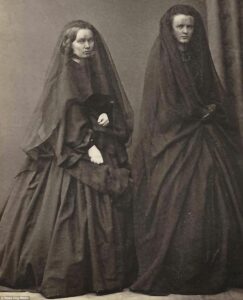
These tragedies would have affected the family very deeply, and this was perhaps one reason why people tended not to talk about their grief – because of the fear that life was very precarious for their children.

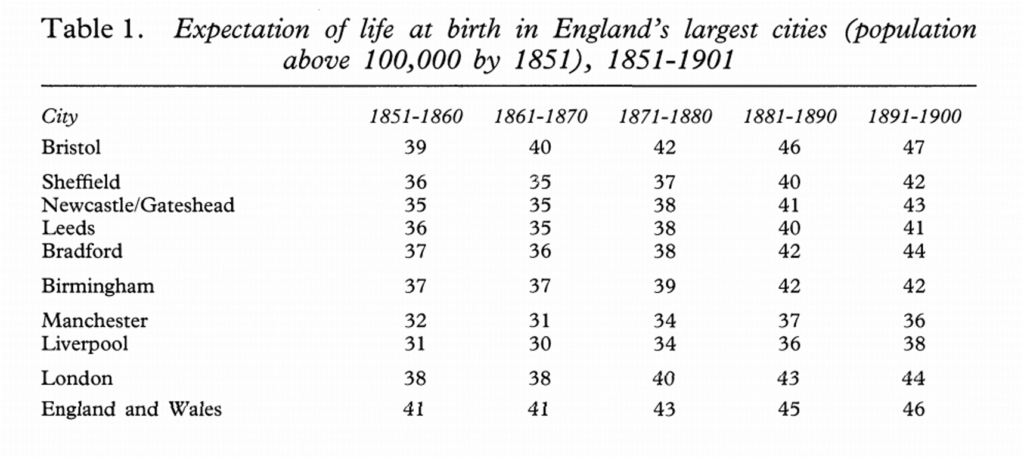
Life expectancy was low compared to today. One of the reasons was the death of infants and children from disease. However, poor housing, pollution, and lack of sanitation also resulted in causing early deaths in all ages.

To send off for a copy certificate is easy. As use the GRO web site as they are the cheapest option and the quickest. Send off HERE

Free Talk online 22.1.21- Introduction to Researching your Family History

Do not miss my FREE short talk on Friday 22nd January 2021 in the evening at 7pm hosted on Eventbrite.

Introduction to Researching your Family History Correctly. 

The short talk will include easy to follow examples on how to fully understand the UK census returns, how to send off for birth, marriage and death certificates and many time saving tips shared!

To sign up copy and paste the link below which will take you to my free ticket page.

https://www.eventbrite.co.uk/x/introduction-to-researching-your-family-history-correctly-the-uk-census-tickets-141056139711

I look forward to seeing you!

Why ordering copy certificates is important and when you might need to go down this road

Once you have gone back 4 generations life for the family history researcher often becomes more difficult.  One reason is because with common names it can be quite difficult to determine from the registration evidence which person is the correct one.  A clear way forward is to order copy certificates to clarify the evidence that will be listed on the certificate at the time of issue.

For example, John Smith born Birmingham in 1888. We discover online that there were in fact 4 John Smith’s having a birth registration during that year in Birmingham.  By ordering either the one you suspect could be yours, or even several you will discover the names of the parents and, also importantly, the occupation of the father. When cross checked with other pieces of information you have about the family it is relatively easy to decipher which is your John Smith.  If you know that your John Smith from the 1911 census worked as a labourer a cotton factory but on the certificate it states his father was a lawyer then it is very probable that you can eliminate this person because it was very rare for a person at this time to have class and economic mobility.

To order certificates in the U.K. and just go the the GRO website. For Scotland its Scotlands People and for other countries search online to find out which government department holds vital records for order.

Why search and send off for a copy marriage certificate?

As we start to go back in time, through a few generations, it is easy to not be quite sure that we have the right individuals who we feel may be that missing great grandparent for example.  It can often be that we find 10 or even hundreds  of couples who married around the time our couple may have married, and in the same vicinity.  The only sure way to find out is to send off for a copy marriage certificate, which in the U.K. you can find records recorded on and after 1837, when formal civil registration became the law.

Firstly, you should try and find out the volume number and page number where the marriage is recorded, known as the Indexes. This information can be found out by doing a simple search on one of the on-line genealogy sites or on the GRO web site for free. You can now go onto the GRO (General Register Office) web site.  This is the site where you order your certificates and is the cheapest method.  You will find a couple of simple forms to fill out and currently a charge of £11.00 at time of writing.  If for some reason the certificate cannot be found your payment is refunded.  Currently it is taking about 10 days to receive the ordered copy certificate.  It is exciting when the envelope arrives. I can help you do this by filling out the contact form here.

The GRO now offer a PDF copy as a faster alternative for a fee of £7. The PDF contains the key information and is email to you in a few days after receiving your order.

A marriage certificate will give you a lot of information and very importantly the maiden name of the bride, and of the couples fathers and their occupation.  The occupation of the bride and groom is also recorded which is a useful tool for cross referencing our couple on the census returns.   This can be a wonderful resource to help us to go back a further generation and be confident that we have the right people added to our line before we attempted to go back further.

The GRO service is also available for copy birth and death certificates.

The history of British marriage certificates

Civil registration in England and Wales commenced on 1 July 1837, and relates to the birth, marriage and death of an individual. In Scotland records began in 1855 and in Ireland in 1864, with Irish non-Catholic marriages recorded from 1845.

In England and Wales, up to that time, the government had relied on the church to register the population but this was was not a complete record, not a full listing of the population. Also, mass printing of government administration forms was now possible due to advances in printing technology.  A single tier registration system was introduced, based on the administrative poor law unions, which had been set up in 1834, and previously the administrative hundreds. These became the registration districts. Births, not baptisms, and deaths, not burials, were recorded as well as marriages.  Parish and nonconformist baptism & burial registers were still completed at the same time that the new civil registration system began.  The Act also permitted marriages to be performed in Register Offices and outside the confines of the Anglican Church. Many nonconformist chapels were authorised to perform marriages. Since 1837 there has been much fine tuning of the system and various new regulations and legislation have been introduced.

It can be very rewarding to send off for a copy of our ancestor’s marriage certificate.

And below are are some pointers to understanding what you may read.

No exact age may be shown and ages may be recorded that the bride or groom were “of full age”, an age in excess of 21 years. Although this statement may have been false to avoid a minor having to obtain parental consent.  Where an actual age is given, it is usually reasonably accurate but it may also have been altered for a variety of reasons and remember not everybody actually knew their exact age!

The same address for both parties may show and  this was common to avoid paying two sets of banns fees if one or other party resided in a different parish.  Marriages traditionally took place in the parish of the bride.

The absence of a father’s name and occupation usually meant he was unknown.  But, also a made-up name, or a male name with in the family, could have been used with (deceased).  I have seen several suspected examples of this on certificates.  Also this is a clue of illegitimacy.  If the father was in fact dead the name was usually filled in and the word deceased written alongside it.  The inclusion of the name of the father without the word deceased did not automatically mean that he was alive at the time of the marriage! Remember the certificate was being hand written with details often being given by the bride and groom who could not always read and write, and vital information may not of been asked for.