

When researching family history, there is an often overlooked era that played a crucial role in shaping how we trace our roots: the period of early civil registration in England and Wales, spanning from 1837 to 1875. While these dates might seem unassuming, they mark the onset of a significant transformation in record-keeping, which eventually led to a more streamlined and accessible way of documenting vital life events, such as births, marriages, and deaths.
When you begin your journey into genealogy in England and Wales, you typically start with birth, marriage, and death certificates. These documents are your initial gateway to uncovering your family’s past. As you delve deeper into census data, parish records, and historical documents, it’s easy to get caught up in the thrill of the hunt without pausing to reflect on the origins and intricacies of the records you’re using.
In 1832, a bill proposing the registration of births was introduced but failed to pass into law. Subsequent attempts in 1834 and 1836 were met with numerous amendments. The 1836 legislation, although imperfect, managed to navigate the legislative hurdles, primarily because the alternative was to abandon the change to the system. The background to BM&D registration was to establish a secular, neutral system of registering vital events – a concept already implemented in other countries like France, thanks to Napoleon’s efficient civil registration system.
Notably, the proponents of civil registration were often non-conformists and liberals. Before civil registration, the Church of England held a de facto monopoly on vital records, granting their registers a special legal status. Even other religious groups, despite maintaining meticulous records, did not enjoy the same legal recognition. As more people from diverse religious backgrounds emerged, the Church of England’s grip began to loosen.
The Church’s resistance to civil registration was rooted in a combination of ideological beliefs and financial interests. The Church had a financial stake in the process, which included probate, poor relief, and registration. Over time, these functions shifted from religious authorities to secular institutions, resulting in the Church losing substantial revenue.
The battle over civil registration played out in politics. The House of Lords was a stronghold for the Church of England, populated by bishops and a conservative Tory majority. In contrast, the House of Commons oscillated between Whigs and Tories, which led to vigorous debates throughout the 1830s. Legislation required approval from both houses, and with many alterations, the 1836 bill finally passed, albeit with several ambiguities.
Civil registration utilised existing poor law unions established in 1834, which became registration districts, creating a seamless system. However, the lords introduced some significant changes. Originally, all marriages were to occur by certificate, regardless of religious affiliation. The lords reinstated banns for church marriages, and for civil or non-Church of England ceremonies, they mandated the reading of notices in public places.
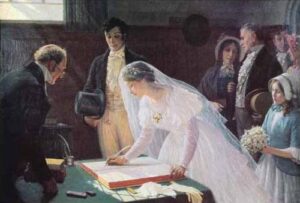
The birth of civil registration ushered in a new era, replacing the church-based system and offering secular registration. In those early years, civil marriage ceremonies were infrequent; the primary role of civil registrars was to oversee marriages conducted in various religious denominations, from Catholic churches to Baptist congregations. Pure civil marriages were exceedingly rare in the 19th century.
The General Register Office initially focused on record-keeping and financial aspects, evolving over time to incorporate a statistical role. However, the statistics were not the primary concern in the earliest years of civil registration. The GRO was divided into departments, each with a specific function: records, accounts, and correspondence. The statistical branch emerged later, reflecting the changing priorities of the office and governance.
 Civil registration records were used to validate existing knowledge rather than uncover new information. The certification requirement, which still prevails in England and Wales, was essential to provide official documentation of birth, marriage, or death, ensuring its legal recognition. The cost of certification reflects the rigorous security measures involved in producing certified copies, including special secure paper and meticulous record-keeping.
While the Church of England played a significant role in opposing civil registration, it was not the sole adversary with some members of the clergy resisted registration efforts.
Civil registration was not without its challenges and opposition, but it was a milestone in the quest for a secular, neutral system to record vital life events. The birth of civil registration in 1837 marked a significant shift away from church-based records and toward a more inclusive and standardised method of recording life’s most crucial events. As we explore our family history, let’s not forget the stories and struggles behind the records we so often take for granted. Civil registration’s journey is a testament to the enduring importance of preserving and accessing our family heritage.
Researched from The National Archives.

 In England and Wales, up to that time, the government had relied on the church to register the population but this was was not a complete record, not a full listing of the population. Also, mass printing of government administration forms was now possible due to advances in printing technology. A single tier registration system was introduced, based on the administrative poor law unions, which had been set up in 1834, and previously the administrative hundreds. These became the registration districts. Births, not baptisms, and deaths, not burials, were recorded as well as marriages. Parish and nonconformist baptism & burial registers were still completed at the same time that the new civil registration system began. The Act also permitted marriages to be performed in Register Offices and outside the confines of the Anglican Church. Many nonconformist chapels were authorised to perform marriages. Since 1837 there has been much fine tuning of the system and various new regulations and legislation have been introduced.