New Review – Voyage of Despair. The Hannibal, its captain and all who sailed her, 1693-1695

Voyage of Despair is a remarkable achievement, tackling challenging material with skill and presenting it in a way that is both accessible and deeply engaging. The narrative takes readers on the harrowing journey of the Hannibal slave ship, a voyage that is as compelling as it is sobering. To say I “enjoyed” the journey feels like the wrong word, given the subject matter, but the book captivates in a way that few historical accounts manage.

What stands out is the careful pacing of the narrative. Questions naturally arise as you read—What happened to John Browne when left behind? Why does an image feature a tiger in a cage during events in Africa?—but rather than leaving readers in the dark, the author skilfully answers these queries in later chapters. This structure encourages thoughtful engagement and reflection throughout.

Beyond its readability, the book is academically rigorous, offering thorough references that firmly establish its place as an important contribution to the field. It balances scholarly depth with a compelling narrative style, a rare feat in historical writing.

The author’s voice is confident and assured, guiding the reader with the expertise of someone deeply immersed in the subject. There are moments where the passion and anger are palpable—particularly in the vivid descriptions of the ships’ appalling conditions by the time they reached Barbados. These passages are powerful and unforgettable.

Voyage of Despair is a masterful work—both a gripping read and a significant academic contribution. For anyone interested in the complexities of history and the human stories within, this book is not to be missed.

Mr Alan Canty (FRCS DDS)

Available to order HERE

Talk! Rosemary Caldicott on her book Voyage of Despair for Newport Rising 2024 | Rosemary Caldicott yn trafod ei llyfr Voyage of Despair ar gyfer Gŵyl Gwrthryfel Casnewydd 2024

NEW TALK!

Rosemary Caldicott, Voyage of Despair | Hanes yn y Hwb | History at the Hub

Rosemary Caldicott on her book Voyage of Despair for Newport Rising 2024 | Rosemary Caldicott yn trafod ei llyfr Voyage of Despair ar gyfer Gŵyl Gwrthryfel Casnewydd 2024

Time & Location

Tuesday 29th October 2024   18:30 – 20:30

Newport Rising Hub, 170 Commercial St, Newport NP NP20 1JN

Rosemary Caldicott is recognized for her commitment to revealing untold narratives from history. Through her original research, she offers a new insight into the history of Captain Thomas Phillips and the Slave Ship Hannibal, delving into the intricacies and difficulties associated with the Phillips legacy in Brecon and all who sailed in her.

Question and answer time with the presenter.

This event is part of Newport Rising 2024 and available on a Pay-What-You Want basis. All funds raised support Newport Rising Festival and related educational activities for registered charity Our Chartist Heritage (Charity number: 1176673)

For more information and to pre-book donation tickets click here.

NEW BOOK OUT NOW! 

“VOYAGE OF DESPAIR: The Hannibal, its captain and all who sailed in her, 1693-1695” LINK HERE

New review – Voyage of Despair. The Hannibal, its captain and all who sailed in her. 1693-1695

New review from Liz Millman: Learning Links international (Black History Wales) 

In this amazing book Rosemary Caldicott shares the complex layers of the challenges faces in 2020 in Brecon, and then takes us back to around 1694 to gain some appreciation of the complexities of the trading done by sea captains with their funders, the Royal Africa Company and others, and with the local West African rulers and merchants.

Rosemary also uncovers stories about the victims, those African subjected to unimaginable abuse and terror not only by the God fearing European traders and sailors, but the treatment inflicted by their African captors.

But yet is a very readable book, a book for the times we are in, it is also extraordinarily complex, but Rosemary shares and explains the commonplace and everyday activities occurring more than 330 years ago, while remembering that we are reading this initially in 2024, and it records a story of the Black Lives Matter times.

At only £12, plus P&P this is a must read, really very timely and accessible, and although not perhaps your first choice of holiday reading, it’s worth having a copy to dip into as you start to face the grim realities of the times back then, or just to reflect and increase your understanding.

Order Here

New Book: “Voyage of Despair”

Voyage  of  Despair

The Hannibal, its captain and all who sailed in her, 1693-1695

by

Rosemary L. Caldicott


Explore the harrowing depths of the slave trade in this poignant microstudy centred on the Hannibal slave ship. Delve into the heart-wrenching realities of this brutal chapter in history.

Journey back to 1693, when Captain Thomas Phillips of Brecon, Wales, set sail from London to Guinea, tasked with procuring 700 enslaved Africans for the Royal African Company of England. Fast forward three centuries to 2010, when the decision of the Brecon Town Council to commemorate Captain Phillips with a plaque causes controversy. Explore this captivating narrative as Rosemary unravels the grim realities of the triangular trade, exposing the brutalities endured by its victims through forgotten stories and meticulous analysis of day-to-day life during this dark chapter in history.

Bristol Post review: “Brecon Town Council honoured a slave ship captain with a memorial plaque in 2010! Rosemary L. Caldicott’s book Voyage of Despair looks both at Phillips journal and other sources to reveal the absolute horrors of the trade in general and the Hannibal’s journey in particular. It also examines the campaign and arguments around the plagues removal. It’s an issue that Caldicott makes clear…the business of enslaving people, and the profits made on the back of it, reach deep into the U.K”

ISBN: 978-1-911522-63-8
Number of pages: 250

ORDER HERE


Title: “The Journal of Captain Thomas Phillips of Brecon, the Slave Ship Hannibal, and all who Sailed on Her” – Unveiling a Forgotten Voyage

Journey into History – A reflection from a friend who read my shortly to be published book.

Prepare to be transported to the heart of a pivotal era with this upcoming new book. This compelling narrative uncovers the untold stories of the slave ship “Hannibal” its enslaved passengers and crew. It goes on to shed a much need new light into a dark chapter in human history with links to Brecon, Wales. Set against the backdrop of the transatlantic slave trade, the book brings the 17th century to life from Brecon, to the west coast of Africa and onto Barbados. Delve into the ship’s harrowing journey, from bustling ports, the exploitive mercantile capitalism of the Royal African Company, battles at sea, to the unimaginable suffering endured by the enslaved individuals who sailed upon her. Through meticulous research, personal accounts, and archival materials, the book resurrects the voices of those who history often forget. A harrowing and intriguing read which brings the world of a slave trading captain to life.

The life of a slave trading captain stands as a grim testament to the depths of human cruelty and the moral complexities of their era. These captains were both the architects and enforcers of a brutal system that traded in human lives, perpetuating untold suffering for profit. Born into a world where economic interests often trumped ethical considerations, these captains often grew up in societies where the practice of slavery was deeply ingrained. They were groomed from a young age to see enslaved individuals as mere commodities, stripped of their humanity and subjected to unspeakable horrors in the pursuit of monetary gain.

As they embarked on their voyages, these captains navigated treacherous waters both literally and morally. They faced the challenges of uncertain weather, navigational hazards, and hostile ships, all while being weighed down by the weight of their human ‘cargo’. The conditions on board the slave ships were deplorable, with enslaved people crammed into tight spaces, subjected to disease, malnutrition, and unimaginable suffering.

In their role as captains, they held authority and power over those unfortunate souls trapped in the hold of their ships. They had the capacity to demonstrate some semblance of kindness or, more commonly, to wield their power with brutality and violence. The choices they made had life-and-death consequences for those under their control.

The story of this slave trading captain, Captain Thomas Phillips of Brecon, serves as a haunting reminder of the darkest chapters of human history. It underscores the need for acknowledging the past, understanding the factors that led to such atrocities, and striving to ensure that such inhumane practices are never repeated. Through a broader historical lens, we’re reminded of the crucial importance of progress, empathy, and justice in shaping a more humane world for all.

Compelling excerpts from the book can be found in these articles posted HERE

“Hannibal” leaves an indelible mark, compelling us to confront the legacy of the transatlantic slave trade. By reflecting on the past, we’re empowered to address the ongoing injustices that shape our world, creating a more just and equitable future.

Soon to be available from Bristol Radical History Group


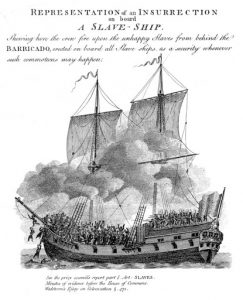
Revolt on a slave ship

The Slave-Ship Hannibal 1693-1695. New Talk!

Black History Month Lecture 

The Slave-Ship Hannibal and all who sailed on Her. (1693-1695).

The voyage of the Hannibal slave-ship. 1693-1695. Credit Lisa Liebelt

Black History Month: Britain’s history and involvement in the Trans-Atlantic Slave Trade.

Come along and hear the tragic but enlightening story of the Brecon born slave trading captain Thomas Phillips, what happened to his crew, and the captured 700 enslaved people on his ship the Hannibal. This talk is based on my original research as discovered in the National Archives and the British Library. For the first time the human stories are revealed about all who sailed on her.


Thursday, 13 October.  2pm to 4pm by Rosemary Caldicott 

To book telephone Tel: 0117 903 8844

or Email: StokeLodge@bristol.gov.uk

 or BOOK HERE

Congratulations to the Republic of Barbados!

On Tuesday 30 November 2021, marking the 55th anniversary of independence from Britain, Barbados proudly became a republic.

Barbados has a long and painful history with Britain which dates back to the era of the forced transportation of enslaved Africans to work on British owned plantations.

For the full article and to learn more about about the saga of the slave-ship Hannibal click here

The voyage of the Hannibal slave-ship. 1693-1695. Credit Lisa Liebelt

The Hannibal Slave Ship

After 18 months of research and many trips to visit the archives and libraries of London my new book is nearly ready to be published. I truly felt the end was nearly here when I was told at my local library yesterday that they will be putting in an order the minute it is published.  My first advance order!

My new book is about a slave trading captain, his ship the Hannibal, and the 803 people who sailed on her, with most of these people being forced to board as slaves in order to grow the profits for the Royal African Company of England and the plantocracy classes of Barbados.

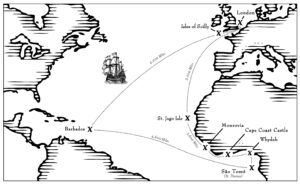
This epic and tragic true story takes place during the years 1693 to 1695 as the ship sailed between three continents, also known as the Triangular Trade. The map below from my book clearly charts the triangular route of the Hannibal. While at sea the ship was badly damaged by a French man-of-war, and the crew suffered considerable hardships under her captain. But worst of all was the horrific suffering inflicted upon the captured African people onboard the ship.

With thorough searching and detailed investigations undertaken in London’s archives, and now reproducing the evidence that has survived, it has been possible to piece together the tragic events that unfolded both onboard at sea and on the land. This is a true story that has laid dormant for over 300 years and now it is almost ready to be told for the first time.

The voyage of the Hannibal slave-ship. 1693-1695. Credit Lisa Liebelt

The National Archives are open again!

Revolt on a slave ship

At last Kew has re-opened,

and I am hot-footing it down there on Thursday. My research into the story of the slave ship Hannibal has been held up over the last year due to the prolonged closure of the N.A. It is crucial that I read the original Royal African Company documents and Admiralty records to complete the book: A tragic story about a huge 450 ton slave ship, and the captain’s disastrous voyage for both the 700 Africans and 70 crew onboard.

The captains’ will, dated 1713, has luckily survived, and discloses quite a lot about his wealth and family connections. The will was a valuable document in helping me understand his family position and connections within the Royal African Company and he owners of the salve ship Hannibal.


BRITISH BLACK HISTORY MONTH 2020: Why is it so difficult to trace Black British ancestors?

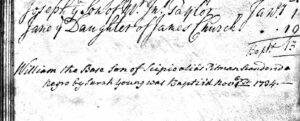
‘William the bastard son of Scipio alias Pitman Seandered(l?) a negro by Sarah Young was Baptised Nov 1st (4th?) 1724. -‘ 

Why is it so difficult to trace Black British ancestors?

Today while researching in the Bristol Archives and browsing the church records of Holy Trinity Church, Westbury on Trym, I came across an entry that highlights two of the many stigmas that our ancestors may have faced: Racism, illegitimacy, poverty, class, physical ailments and religious bigotry.

A baptism entry was deliberately singled out on a page in the church register, the baptism was of little William Seandered(l)-Young. The entry declares that William was the bastard child of Scipio, alias Pitman Seandered(l), and Sally Young. His baptism took place on November 1st or 4th, 1724. (Authors translation of script).

What do we know of his parents? Extraordinarily little. Young, being a common name, means that there were quite a few Sally Young’s residing in the region at this time who were single or married of childbearing age.

Scipio, or Pitman Seandered(l) is noted in the entry as being a negro, thereby deliberately marking him and his child as being ‘different’. There is no mention of the physical features of any of the other children in the records. Scipio was probably a Christian convert because if a servant he would have been baptised once landed in England. Yet his colour and what would have been considered his race was so important that it was deemed necessary to add to his baby’s baptism record. When plantation owners, or sea captains, purchased Black servants, they often had them baptised as adults, usually taking place upon arrival in England. However, these baptisms do not provide any information on their ancestral history. In fact the baptisms were often used purely as a tool to provide a new name and state their relationship to their master. Due to discrimination few questions would have been asked by the minister, and in many cases Black migrants simply did not know the family details of their past.

A good example is Scipio Africanus (the name of a Roman general), was given to a young African servant buried in Henbury, Bristol, in 1720. Despite the very grand gravestone erected by his master, the Earl of Suffolk and Brandon, there is no record of his burial in the church register. Could this be the answer as to why there appears to be no further mention in the records of Scipio Pitman Seandered(l)?

There are no other records of a man called Scipio Pitman Seandered(l) in the country at this time, not even a burial record.  It might be that Scipio was a servant and staying in the town briefly with his master before sailing abroad again, or perhaps he was a sailor visiting the port of Bristol, we will never know. This is all circumspection and he probably was not in attendance at the religious ceremony and perhaps neither was Sarah the mother.

Unfortunately, we must only imagine the circumstances of how the parents continued with their lives and what became of little William.  There are no further entries in the parish record book for Westbury on Trym, and therefore he and his mother did not stay in Westbury on Trym.  However, a record has since been found in the Church Register Book for Stroud, Gloucestershire of a Mary Soanderal’s baptism on 10 August 1764. Her parents are recorded as being a William Soanderel and Hannah his wife. Could this be William thirty years on in his life? Very possibly, and also an example of how the spelling of names would change, particularly if William was illiterate which was extremely common.

Continue reading “BRITISH BLACK HISTORY MONTH 2020: Why is it so difficult to trace Black British ancestors?” →