
Blog

2020 Autumn Courses: online from 9.30am Thursday 27 August!

2020 Programme

All autumn term courses will be available to book from 9.30am on Thursday 27 August.

We encourage those of you who can, to book online (some hints and tips below).
direct link to online booking

Our friendly staff will be in the office to take phone bookings from 9.30 on Thursday and Friday.
Please bear with us, we expect phone lines to be busy.

Tel: 0117 903 8844 Bristol City Council – Adult Learning

Thank you for your patience and support in this challenging time.

Top tips for booking online:

  • Set up an account and keep your password somewhere safe.
  • If you have enrolled before and given us your email but never enrolled online, you will have an existing account and will need to request a password reset to sign in on our booking page.
  • Accounts are individual – so if you and your partner usually book together make sure you both have an account (you will each need a separate email address). You can’t book 2 places with one account.
  • When you get to the online booking page log in and this will allow you to enrol and put courses in your basket.
  • When you pay for your courses you should receive 2 email confirmations. One confirming your payment has been taken and a second (and most important!) confirming your place on the course and course details.
New lecture: The Consequences of the African Slave Trade on Women

Black History Lecture

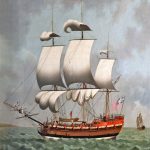
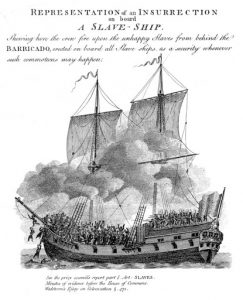
Revolt on a slave ship


‘The Consequences of the African Slave Trade on Women’:

The story of the disastrous voyage of the slave ship Hannibal.

The true story of the slaver ship the Hannibal as told in the diary of its Captain, Thomas Phillips of Brecon and retold in my recently published book Nautical Woman. (To order the book click here link).

John Brown was a black woman found to be a sailor employed by the Royal African Company. As the events of her discovery unfold far more is disclosed about the 700 other people on board the ship.

Enrol online here.

The talk will be delivered via zoom, with a discussion at the end.

Wednesday 18 November 2020 @ 2 pm


New course dates and talks online now!

Hello everyone

The dates for my talks and courses are now listed. Please view under the header Courses and Talks. I have changed the days of the week and times for my talks, for those of you who were unable to attend on my usual days.  A few of my talks will be held in the evening due to requests to offer talks in the evenings.

All my courses and talks are bookable via Stoke Lodge, Bristol Adult Learning.  However, I also offer a personalise serviced to help you research your family history. Please fill in the contact form below to find out more and read the Services page.

I will be continuing to teach via zoom during the autumn term.

I am look forward to seeing you all!

Rosemary

    Nautical Women available for purchase

    My illustrated book Nautical Women, which includes the chapter ‘A few Known Black Women Sailors and the Slave Trade: (The Consequences of the African Slave Trade on Women).

    ‘Nautical Women’, by Rosemary L Caldicott

    Can be purchased by emailing here Price £6 plus £2.00 p@p.

    sample: On board the slave ship Hannibal in 1693, under Commander Thomas Phillips, a soldier-sailor called John Brown was discovered to be a woman. Phillips was a part owner of the Hannibal, having a £10,000 investment in the Royal African Company ship. During the voyage the ship carried 684-700 stolen African people of which 328 people perished while on-board. John Brown escaped the ship when it docked on the West Coast of Africa never to know the fate of the people that followed.
    The book considers the fate of African women who were forced onto the vessels to be traded and sold as slaves and the life of Captain Phillips.
    Pub:Bristol Radical History Group. Pamphlet #43. 2019.     108 pages with illustrations.
    ISBN 978-1-911522-46-1
    Merseyside Maritime Museum; Supplied by The Public Catalogue Foundation

    English and Welsh Death Certificates – a valuable resource often overlooked.

    Death certificates are a very under valued family research source.

    On the one hand they do give less information than a birth and marriage certificate, but death certificates offer us an understanding of the end of a life.  They also give us links with wills, burial, newspaper reports, workhouse infirmary reports and an deeper connection with people.

    A death certificate will give you the full name of the deceased, their sex, age (post 1866), occupation, cause of death, where the person died, address of the informant, the date of registration and finally the signature of the registrar.

    Be aware when searching though the vital indexes (required to send off for a copy death certificate) that before 1866 the persons date of birth and age was not included. This means that, especially with common names, that it can be difficult to track down the correct person.

    Unbelievably it was only from April 1969 that the deceased date and place of birth are given, and the maiden name of married and widowed women.

    As you go back in time, especially before mass vaccination being introduced in the early 1940s, it is shocking to see how many children were lost to contagious diseases. One family living in London I researched sadly lost four young children, one each year between 1865 to 1870 to whooping cough. Also, you will discover many people dying from infections easily treatable today with antibiotics. Certainly a stark glimpse into our ancestors precarious lives.

    Second Life Marketplace - CLEARANCE - 90% OFF! Montagne Noire ...

    Intensive Family History research day – Saturday 16th May

    Intensiv

    e research day running from 10.30 a.m. to 3.30. p.m.

    The day is designed to run via zoom to advance your ancestral research development.  There will be a mixture of talks, guidance, several breaks with time to undertake your own research the assistance of an expert genealogist tutor to hand.

    • 1 session only this summer term on 16 May

    To book or for more information just telephone 0117 903 884 or book on line here Book

    New Family History course starts on-line Thursday 23 April 2020

    Dear Bristol Learners

    Thank you for your support whilst we have been converting our courses to a virtual format. 

    My courses will run on zoom, with lecture notes, lectures, Q&A time and discussion.

    To book my Family History courses just visit the Bristol Adult Learning page here 

    Family History Stage One begins on Thursday 23 April at 1.30 pm.  

    We will create an invigorating and supportive e-teaching space. This is a great way to pass the time, and discover your amazing family history.

    Life in the Times of the Black Death in Bristol

    Age of Adversity: Life in the Times of the Black Death in the City of Bristol, England. 1348-1349, and Beyond

    By Rosemary L Caldicott

     ‘Alas when our relatives and neighbours came to welcome us, whole we were embracing them and in the midst of our kisses, we, who carried the arrows of death were constrained to give them the poison, so that when they returned home, soon whole families were infected and in less than three days succumbed to the attacks’.[1]

    Although there appears to be very few primary sources recounting the consequences and changes inflicted upon the population of Bristol during the era of the Black Death[2] a few rare manuscripts of the time have survived. I am drawing particularly on the work of C. E. Boucher The Black Death in Bristol, written in 1938 due to his extensive research and insight into rare manuscripts relating to Bristol. I am writing this during university library closures, one of the many impacts of the coronavirus disease pandemic of 2020,[3] thereby solely relying on e-sources. However, despite this limitation I still think it is worth a review of how the Black Death pandemic of 1348-49 caused far reaching socioeconomic and political change for the people of Bristol and the surrounding area.

    Up until 2020, in the developed world, phrases such as plague, pestilence and famine are words that appear in a far distant, often romanticised past even though new pandemics over the last twenty years have given rise to near misses in Europe. Even once common diseases such as diphtheria, cholera and smallpox seem an age away now. This has come about purely because of the introduction of mass immunisation in 1942. Tuberculosis, an illness of crowding and poverty is now extremely rare as most humans are immunised against this killer disease.  Yet today as I write, in March 2020, in Europe and across the world, we find ourselves and our governments once again facing up to the far-reaching realities of the sheer speed and disruption, both economic, and social, that Covid-19 is spreading through our societies.

    Our distant ancestors who lived during the fourteenth century knew only too well about self-isolation, food shortages, no cure or immunisation, and how quickly a highly contagious disease had the potential to stagnate an economy already in crisis due to climate change and consequently failed harvests.[4] Continue reading “Life in the Times of the Black Death in Bristol” →

    A message to my learners – Online support tutoring

    Hello everyone

    As you will have heard Stoke Lodge was closed today due to the ongoing health crisis.  This decision was a very sad one for all of us at Stoke Lodge, but we will reopen as soon as we are able.

    In the meantime I will be publishing online support via this website each weekend.  I will also be offering a once a week phone call to each of you so you can ask me questions concerning your family history research projects.  There will be articles appearing on these pages that we would have covered over the next few weeks in class.  As well as this I will be adding  links to online resources that will support your learning.

    If you would like to take advantage of weekly phone-in support, to be set at time to suit us both, over the next few weeks, please send me your email address to:

    heritage_found@yahoo.co.uk

    Your email address will be deleted at the end of the normal term time.

    This is a good time to pull together your ongoing research.  Having projects such as these, while we are stuck at home, helps to take our minds off the current crisis and will relieve boredom.

    In the meantime I leave you with a thought provoking quote from Daniel Defoe:

    “All the plays and interludes which had been set up, and began to increase among us, were forbid to act: the gaming-tables, public dancing-rooms, and music-houses, which multiplied and began to debauch the manners of the people, were shut up and suppressed; and the jack-puddings, merry-andrews, puppet-shows, rope-dancers, and such-like doings, which had bewitched the poor common people, shut up their shops, finding indeed no trade; for the minds of the people were agitated with other things” (Daniel Defoe, A Journal of the Plague Year, 1722).