Blog

The Hannibal Slave Ship

After 18 months of research and many trips to visit the archives and libraries of London my new book is nearly ready to be published. I truly felt the end was nearly here when I was told at my local library yesterday that they will be putting in an order the minute it is published.  My first advance order!

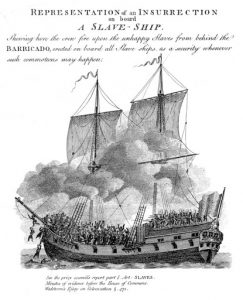
My new book is about a slave trading captain, his ship the Hannibal, and the 803 people who sailed on her, with most of these people being forced to board as slaves in order to grow the profits for the Royal African Company of England and the plantocracy classes of Barbados.

This epic and tragic true story takes place during the years 1693 to 1695 as the ship sailed between three continents, also known as the Triangular Trade. The map below from my book clearly charts the triangular route of the Hannibal. While at sea the ship was badly damaged by a French man-of-war, and the crew suffered considerable hardships under her captain. But worst of all was the horrific suffering inflicted upon the captured African people onboard the ship.

With thorough searching and detailed investigations undertaken in London’s archives, and now reproducing the evidence that has survived, it has been possible to piece together the tragic events that unfolded both onboard at sea and on the land. This is a true story that has laid dormant for over 300 years and now it is almost ready to be told for the first time.

The voyage of the Hannibal slave-ship. 1693-1695. Credit Lisa Liebelt

Guild of One-Name Studies. Speaking at Military Seminar

Guild of One-Name Studies. This event is a military seminar with a focus on our ancestors who served in wars and in keeping the merchant fleet afloat. #GuildMilitary

23 October, 2021, delayed from last year. I am very much looking forward to giving my talk next month – IN A ROOM WITH ACTUAL PEOPLE – for the –

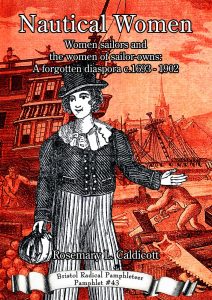
Nautical Women book cover
‘Nautical Women’, by Rosemary L Caldicott

‘Nearly every generation has known war. Whatever their reasons, whether press-ganged, patriotic or penniless, many of our ancestors served and their stories from Napoleonic times to the two World Wars can be revealed in the records. The search is on for further speakers to improve our strategy and strengthen our campaign!’

I will be talking about Nautical Women: Women Sailors and the Women of Sailortowns. Brave women in history who disguised themselves as men to work as merchant and navy sailors.

The talk is based on my book of the same name and can be purchased here.

Event details LINK

NEW COURSES FOR THE AUTUMN TERM!

Discover your Family History –  Introduction to Researching your Family History

Part One       

A practical stepped learning technique to begin learning family history research with confidence. A fun approach, in a safe, inclusive environment with other learners. 

Correct interpretation of vital records and how to understand simple research techniques.  This course will be delivered at Stoke Lodge but will move online if necessary using ZOOM 

5 weeks. Begins Thursday 23 September 2pm to 4pm   With award winning tutor Rosemary Caldicott

(This course is sold out, but you can go on a wait list)

BOOK HERE

Part 2 – Discover your Family History and so much more!

Places still available.

A further exploration of Family History. This course will be delivered at Stoke Lodge but will move online if necessary using ZOOM.Heritage Found black and white image of family

Course code FHR2B.  Begins Thursday 11 November 2021 for 5 weeks. 14:00-16:00

A practical easy learning technique to begin learning family history research with confidence. A fun approach, in a safe, inclusive environment with other learners. Correct interpretation of vital records and how to understand simple research techniques. Be able to produce at least a 4-generation family tree by week 5. Practical learning for those who have already undertaken some family history research. A fun approach, in a safe, inclusive environment with other learners. Parish records, wills and social history explored. A mixture of lectures and practical work.

Join award winning tutor Rosemary Caldicott to better understand how to discover your ancestors.

FOR MORE INFORMATION ON ENROLMENT AND TO BOOK HERE

They are back! My ever popular Family History Research Talks!

A new series of talks that are designed to meet the needs of family history researchers whatever your level of experience. A chance to share your knowledge with other passionate researchers!  Tutor led direction that will enhance learners’ knowledge.

The first talk is :-

1. Understanding the UK Census   

Do you find census records confusing? Then this is a talk for you! The census records offer us a lot more information than is often realised.Heritage Found Family History Research short course This special session will be a detailed look at the census records. A comprehensive examination of the errors in the records and how to improve our searches.

Also, how to cross reference the years through a deeper understand of the census records.
Where to find lost census records. Keeping records.

This is a one off talk about reading a census document correctly. This course will be delivered online  using ZOOM 

Wednesday 6.30pm to 8.30pm. Rosemary Caldicott 

1 session on 20 October  

FOR MORE INFORMATION ON ENROLMENT AND TO BOOK HERE

2. Understanding the value of birth, marriage and death certificates to enhance your research. 

Often over-looked, but invaluable to further your research.  A detailed talk on how to order and interpret birth, marriage and death certificates. This course will be delivered online  using ZOOM 

We will take a look at birth, marriage and death (BMD) certificates are an invaluable resource for the family history researcher. These records offer us a lot more information than is often realised.  You will learn how to order copies, how to examine the documents correctly, how to cross-reference the information and how to record your evidence.

1 session to be held on Wednesday, 10 November 6.30pm to 8.30pm.

FOR MORE INFORMATION ON ENROLMENT AND TO BOOK HERE

Talk! Bristol in the Time of Cholera

I am pleased to announce that as part of the M Shed’s 10th anniversary programme, and representing Bristol Radical History Group I have been invited to give a talk.

The talk is being giving on 21 June at 2-3pm

Cholera reached Bristol on the 11 July 1832.

The London Quarterly Review described the new disease sweeping the world in November 1831:

‘It has mastered every variety of climate, surmounted every natural barrier, conquered every people.’

The disease caused severe diarrhoea, dehydration, collapse and often death. However, on 12 July 1832, the newspapers reported that they had no reason to fear that cholera had arrived in earnest. Medical and political intervention was variable and inadequate.

What was the impact of cholera in Bristol? In this talk we will explore the consequences for public health in the city and the role the Floating Harbour played in the spread of the disease.

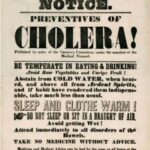
Poster warning of Cholera

How to take part

Bookable through M Shed HERE

This free, online talk will be held over Zoom. Please book your place below. Details of how to join the session will be in your registration email. Please check your spam folder if the email does not arrive. Bookings close at 11am on Monday 21 June.

Although this talk is free, the M Shed would be grateful if you could consider making a donation.

Please visit the Zoom website for guidance on joining a webinar. Please allow extra time before the talk begins to make sure everything is working correctly. It’s up to you whether you turn on your video but all guests will be muted once the talk begins. You are welcome to ask questions in the chat box throughout the talk.

The National Archives are open again!

Revolt on a slave ship

At last Kew has re-opened,

and I am hot-footing it down there on Thursday. My research into the story of the slave ship Hannibal has been held up over the last year due to the prolonged closure of the N.A. It is crucial that I read the original Royal African Company documents and Admiralty records to complete the book: A tragic story about a huge 450 ton slave ship, and the captain’s disastrous voyage for both the 700 Africans and 70 crew onboard.

The captains’ will, dated 1713, has luckily survived, and discloses quite a lot about his wealth and family connections. The will was a valuable document in helping me understand his family position and connections within the Royal African Company and he owners of the salve ship Hannibal.


New summer courses!

Hello!

Easter is behind us and now we are all looking forward to a warm summer, and hopefully more freedoms to be allowed to us. My courses are still available on line so you can participate safely from home, in fact from anywhere in the world. We have quite a story to tell our descendants: How we survived the great pandemic.

I am in the happy position to now be able to list my family history courses that will be running during this summer. For now all learning remains on line, which has proved a surprising success (see my feed back here).

If you are interested in researching your family history just click HERE for more information or go to the Courses & Talks page.

Best wishes

Rosemary

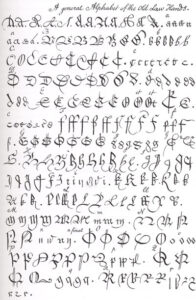
Reading Old Handwriting

Tips for Reading Old Handwriting

Family history is all about finding and reading documents, whether you look at scanned images on line or hunt for the originals in record offices. As you work your way back from recent certificates to older wills and parish registers, the writing on older documents becomes tricky. The words and their meanings—and even the shapes of the letters themselves—have changed over time. Understanding these documents correctly is time consuming but be the key to comprehending your ancestors’ lives.

Much of the reading relies on contextual clues because the language is outdated and will use an old-fashioned spelling and consistency of spelling prior to the introduction of compulsory schooling and advent of the modern dictionary.[i]

As you move into the 17th and 18th centuries, you will find far more variation. Spelling can be particularly difficult, as spellings were not standardized until compulsory education began around 1870. Surnames and place names in particular can have a wide variety of spellings, even on the same page! During this time most of the population could not write, so there was little need for a universal style.

Different styles of handwriting

The first style you will come across is Round Hand, a free-flowing, expressive way of writing is common in personal papers and letters from the 18th century. It’s not too far away from how we write today, although early examples may use different shapes for capital letters, almost interchangeable i’s and j’s, and a long s, f replaces s.

These variations are a hangover from the precursor to round hand, secretary hand. This style emerged in the 16th century and dominated in England for almost 200 years, so you will often come across it on parish registers. Secretary hand can look like nothing but scribbles at first but if you take the time to look at individual letters in turn you will often find you can decipher it.

Tips

  • Print or enlarging the image.
  • Scan or photograph original documents to zoom in.
  • Read wills in short bursts and revisit from time to time.

Tricky letters, spellings, and abbreviations

  • There were no standard spelling rules before 1755 in England and before 1828 in the United States.
  • In the past, a long form of the letter s looked like our contemporary letter f.
  • Words currently spelled with the letter i were often formerly spelled with the letter y; for example, “mine” was spelled “myne.”
  • The letters u and v were frequently interchanged; the word “ever,” for example, was often spelled “euer.”
  • The letter j was often replaced with i, so the name “James” may appear as “Iames.”
  • The word cousin often meant niece or nephew.
  • The title Mrs. could show high social status, not necessarily marital status.
  • Good brother or good sister in a document means brother- or sister-in-law.
  • The term in-law was also used to describe step-parents.

Common shorthand

The letter y often replaced the letters th; for example, “the” was often written “ye.”

The symbol @ sometimes replaced the word per, for example if you come across @week it most likely means “per week.”

Recommended

  1. Look up unfamiliar or archaic words and abbreviations online.
  2. Research the kind of document you are working with; certain documents may have specific phrases, jargon, and abbreviations. Understanding the document’s historical context can help you read the handwriting and understand its meaning.
  3. Read the document aloud; hearing it may help you to recognize unfamiliar words.
  4. Write the words yourself by placing tracing paper over a photocopy of your document and tracing each word. Creating the characters of the text may help you understand the words and the context.
  5. Make an alphabet chart as you go. Write out the alphabet on a separate piece of paper, then copy examples from the document for each letter, both lower- and uppercase. It is usually easiest to identify letters in more obvious words like names and places, then refer to your chart to help with more difficult words.

[i] Graham Jaunay. Cracking the code of old handwriting. Unlock the past. 2011

Thank you to Bristol Women’s Voice

Hello, Thank you so much for being involved in the Bristol Women’s Voice International Women’s Day 2021 programme – we have had some great feedback on the breadth of the programme and individual sessions and we couldn’t have done it without you!

It is always so nice to have positive feedback. I am so glad the attendees enjoyed by talk on Nautical Women. Great audience and some interesting questions at the end too.

I attended some of the other talks and events that BWV laid on, which I really enjoyed. Thank you for inviting me as a guest speaker BWV, and looking forward to another interesting program for next year.

You can purchase my book Nautical Women. Women sailors and the women of sailor towns: A forgotten diaspora c.1693-1902. HERE

International Women’s Day – Our Ancestors and Divorce

Occasionally we come across an old divorce petition, a legal document that will bare all.  These documents make incredibly sad reading, but at the same time offer us a fascinating insight into the lives of our ancestors. They can be a deeply private and intimate glimpse into a couple’s marriage; heart wrenching to read, with each person’s account laid bare in blunt legal descriptions, leaving us to judge which side is telling the truth.

Divorce cases were heard in public in open court during the 19th century and a legal separation or divorce was only for the very wealthy. A married woman’s property automatically became her husband’s, and upon divorce the children remained the property of their father which was of course used as a means to control women residing in unhappy marriages. Mothers who left a marriage risked being prevented from seeing their children following a divorce or separation.

Things begin change a little after the 1857 Matrimonial Causes Act, but the law was still stacked in favour of the man. Under the new law, women divorcing on the grounds of adultery not only had to prove that their husbands had been unfaithful, but also had to prove additional faults, which included cruelty, rape and incest. Men, of course, just had to prove their wives had been unfaithful and in an age before cameras, videos and smartphones, this was often a tricky task! Before 1857, divorce was mainly open only to men, and had to be granted by an Act of Parliament.

In 1858 the handling of the legal process for divorce was transferred from the ecclesiastical courts to a newly established civil court, the Court for Divorce and Matrimonial Causes. In 1873 responsibility was passed to a division of the new Supreme Court. All divorce cases took place in London, yet again restricting divorce to wealthier couples only.
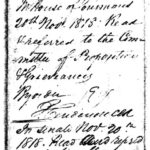
Recently, while researching a family tree I came across a divorce petition document dated 1875 which is stored at the National Archives in London. The couple were a moderate middle class farming couple who had been married for 25 years and were childless. This is a surprising case not only because of the financial implications for particularly the woman involved, but also because in the 19th century, divorce was extremely rare, and generally considered unthinkable for social, financial, and religious reasons. Unhappy couples would often separate but not legally get divorced as can be seen in family history archives. The petitioner in this case was the husband. I have changed the names and addresses in the following reproduction due to the sensitive nature of some of the central claims in the original legal document.
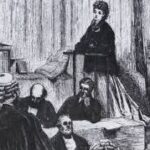
Victorian woman in divorce courtWe begin with the wife’s petition in this divorce case, dated February 1875 and claiming that her husband:

  • ‘the she denies that she was guilty of adultery as alleged.’
  • ‘That in or about the year 1865 the petitioner beat, assaulted and otherwise illtreated her threaten to kill her and greatly terrified her and on two occasions turned his wife out the house and kept her locked out all night refusing to allow her to enter’.
  • ‘That the petitioner on the 13th day of 1872 in ……….. Road, ……… swore at and threatened the wife and took from her her watch and guard wedding ring earrings cloak fur bag umbrella and other articles and insulted and swore at her on the public road in the presence of divers [others] persons strangers.’
  • ‘That on the 13th December 1872 at the house he refused her entry and has thrice hitherto refused to allow her to reside at or enter his said house and thence hitherto has wilfully separated himself from his wife without reasonable excuse and has deserted her.’
  • That in 1873 E.B. [servant] went to reside at the house with her husband that lived and cohabited and committed adultery with the said. E.B was delivered of a male child in said house on the 18th of January 1875 and the husband was the father.’
  • The respondent therefore humbly pray that your Lordship’s will be pleased to reject the pray of the said petitioner and to decree that the said marriage between the petitioner and his respondent be dissolved and that this respondent have such further and other relief in the premises as to your Lordships may [? ].

Her husband responds.

  • ‘That I am informed and verily believe that at divers [many] times …..that the aforesaid committed adultery with Thomas G the younger a butcher.’
  • ‘That I am informed and verily believe that on the 18th of July 1871, at Bath also committed adultery with the said Thomas G the younger.’
  • ‘That I am informed and verily believe that on the 5th day of July 1871 at Reading also committed adultery with the said Thomas G the younger.’
  • ‘That I am informed and verily believe that on the 5th day of January 1873 my wife in a lane call Gypsy Lane in the county of Somerset also committed adultery with the said Thomas G the younger.’
  • ‘That I am informed and verily believe that on the 14th day of April 1873 my wife at Cadbury Hill also committed adultery with the said Thomas G the younger’.
  • ‘That I am informed and verily believe that on a Sunday in the month of May 1873 my wife in a lane leading to the said Cadbury Hill also committed adultery with the said Thomas G the younger’.
  • ‘That I am informed and verily believe that on the 25th day of August 1873 my wife in a field at Hamstead also committed adultery with Thomas G the younger’.
  • ‘That I am informed and verily believe that on the 6th day of April 1874 my wife at Cadbury Hill also committed adultery with the said Thomas G the younger’.
  • ‘that there is no collusion or connivance between me and my wife in any way whatever’.

Thomas G, the butcher swore in his statement presented to the court that he denied any involvement or adultery with the wife.

The above 1875 petition document reveals the fees paid to take this case to court was a staggering £34,000 in today’s money. Unfortunately, the outcome and settlement of this case is not shown but it is doubtful if the wife in this case at this time had any claim over the family house, lands or other effects.

Divorce did not really open up for all classes until the 1920s with the provision of some local courts. In the 1920s and 1930s, English law did not allow for divorce by mutual consent, but rather required proof of adultery, or violence by one party; misconduct by both parties could lead to the divorce being refused. A further hurdle for a couple to obtain a divorce was that the law strictly prohibited “collusion” by the parties, and this is why in the above example the couple had to swear that they had not colluded.  A private members’ bill in 1923 made it easier for women to petition for divorce for adultery – but it still had to be proved.

The Matrimonial Causes Act 1937 changed the law to make divorce easier to access, particularly for women, who until then could not get a divorce merely on the grounds of adultery because a woman needed to show more causes than adultery, such as on the grounds of incest, sodomy, drunkenness, insanity, desertion, or cruelty. The need for the reforms was illustrated in the best-selling satirical novel Holy Deadlock by A E Herbert and published in 1934 which influenced a changing attitude towards a reform to English divorce law. However, there was a bar on petitions for the first three years of the marriage. In the late 1960s divorce was taken over by the county courts and most divorces now take place at county courts.

Finally, in 1969 the Divorce Reform Act was passed, allowing couples to divorce after they had been separated for two years (or five years if only one of them wanted a divorce, however this has proved controversial for some). A marriage could be ended if it had irretrievably broken down, and neither partner no longer had to prove “fault”.

What of our unhappy couple?

The 1881 census discloses that the ex-wife was now living in a neighbouring town with a Richard Pike who was a carpenter, and she is a recorded as a general servant, a term commonly used when a man and woman who were not married co-habited together. Interestingly she also says that her condition was being as married, perhaps meaning that a divorce was not granted in this case, and that Richard Pike was a widower.

The baby born in February 1875 was baptised with the father’s full name and with the mother’s maiden name appearing in the church register because she was an unmarried mother. The couple probably planned to be married once the divorce was finalised, but very sadly the mother (E.B.) died just four months following the child’s birth. The child remained at the family home and was brought up by another woman following the mother’s tragic death. The new couple lived together for over 35 years until the father finally died in 1908. They never married.


International Women’s Day – Authors Talk

Celebrate International Women’s Day 2021 with Bristol Women’s Voice!

Monday, March 8th – Sunday, March 14th

Bristol Women’s Voice present a week of celebrations for International Women’s Day 2021

Authors talk ‘Nautical Women’ by Rosemary Caldicott

Friday March 12th at 5-6pm – online and free

Book for Free HERE

This year’s international theme is #ChooseToChallenge and we have programmed a week of online and remote activities from Monday, March 8th to Sunday, March 14th with a couple of activities each day and two full days of events on the weekend, as well as activities that are available all week and some interactive elements that people can join in with at home.

International Women's Day 2021 BWV Logo

Bristol Women’s Voice are holding online Bristol International Women’s Day events. We have created an exciting and vibrant programme that enables people to stay safe but still connect to celebrate women and girls around this important day – which perhaps is needed now more than ever! This International Women’s Day are unable to bring you our usual event at City Hall due to the pandemic, so have taken this opportunity to organise a week-long programme of online events. An eclectic mix of workshops, talks, films and panel discussions, playlists and more.

Nautical Women book cover
‘Nautical Women’, R L Caldicott.


In her talk Rosemary Caldicott will explore the stories of women whose lives were inextricably linked to the sea. These include women of sailortowns struggling to keep out of the dreaded workhouse and resisting the prowling press gangs; and of the courageous and skilful cross-dressing women sailors who went to extraordinary lengths to hide their gender. Rosemary will discuss the women’s motivation as well as their adventures and inevitable exposure. The stories of these women challenge our stereotypes of women in earlier societies by exposing their struggles against poverty and forced-labour and revealing the courage of those who ‘ran away to sea’.

Speaker:

Rosemary Caldicott is a teacher of social history working in adult education, a writer of books and articles about working class women in history and runs a small genealogy business. Rosemary is secretary of BRHG and has published several works for the group: The Life and Death of Hannah Wiltshire: A Case Study of Bedminster Union Workhouse and Victorian Social Attitudes on Epilepsy (2016) ; Lady Blackshirts: The Perils of Perception – suffragettes who became fascists (2017); Nautical Women. Women sailors and the Women of Sailortowns: A Forgotten Diaspora. c.1693 – 1902 (2019).

#IWD2021  #ChooseToChallenge  #IWD2021BWV  #WeAreBristol