
“Nautical women-women sailors and the women of sailortowns: A forgotten diaspora c 1693-1902”

BOOK HERE

Tuesday, 29 November 2022, 14:00 – 15:30. 

Portishead Library 24 Harbour Road Portishead BS20 7AL

North Somerset Libraries are excited to host a series of talks by Bristol Radical History pamphleteers. Visit www.brh.org.uk to find out more about their publications and events. The talks are informal and accessible and would appeal to adults and older teens. Some Bristol Radical History pamphlets will also be available to purchase with cash.

In our third talk, Rosemary Caldicott brings to life Pamphlet number 43 which will be of particular interest to locals.
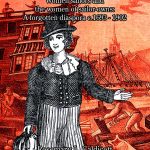
Nautical Women book cover
‘Nautical Women’, by Rosemary L Caldicott

The book explores the stories of women whose lives were inextricably linked to the sea. These include the women of sailortowns struggling to keep out of the dreaded workhouse and resisting the prowling press gangs; and of the courageous and skilful cross-dressing women sailors, some of Bristol, who went to extraordinary lengths to hide their gender. The stories of these women challenge our stereotypes of women in earlier societies and reveal the courage of those who ‘ran away to sea’ by exposing their struggles against poverty. Rosemary will discuss these women’s motivation as well as their adventures and inevitable exposure.

About the venue

Portishead Library is accessible, including a disabled toilet and baby change. The talk will be in the meeting room which will be set out in theatre style. Get in touch with us if you have additional support needs so that we can help you enjoy the event. Call us on 01934 426040 email us on portishead.library@n-somerset.gov.uk or pop in and see us Tuesday to Friday 9.30-5 and Saturday 9.30-1pm

Who can come?

Numbers are limited so we ask that you book a place via Eventbrite or by contacting Portishead Library. As we have limited spaces do let us know if your plans change. It is easy to cancel via Eventbrite.

More about the speaker

Rosemary Caldicott is a teacher of social history working in adult education, a writer of books and articles about working class women in history.

Rosemary is secretary of BRHG and has published several works for the group: The Life and Death of Hannah Wiltshire: A Case Study of Bedminster Union Workhouse and Victorian Social Attitudes on Epilepsy (2016); Lady Blackshirts: The Perils of Perception – suffragettes who became fascists (2017); Nautical Women. Women sailors and the Women of Sailortowns: A Forgotten Diaspora. c.1693 – 1902 (2019).
Talk – Thursday 24 November, 7.00-8.30pm. Life and Death in Bedminster Workhouse

BOOK HERE ON EVENTBRITE

North Somerset Libraries are excited to host a series of talks by Bristol Radical History pamphleteers. Visit www.brh.org.uk to find out more about their publications and events. The talks are informal and accessible and would appeal to adults and older teens. Some Bristol Radical History pamphlets will also be available to purchase with cash.
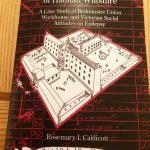
In our second talk, Rosemary Caldicott brings to life Pamphlet number 35 which will be of particular interest to locals.

During the year of 1855 rumours of murder and cover up were circulating in the small north Somerset

The Life and Death of Hannah Wiltshire
by Rosemary L Caldicott

village of Walton-in-Gordano. An epileptic destitute country girl had died in the local institution known as the Bedminster Union Workhouse. Her death caused public outrage after letters were written to the local newspapers. The Board of Guardians were suspected of concealing the true magnitude of neglect at the workhouse, leading to accusations of medical negligence. In this pamphlet, Victorian social attitudes on epilepsy are investigated within the context of how the draconian workhouse system typically caused particular hardship to people who suffered with epilepsy and other mental health issues.

The Life and Death of Hannah Wiltshire illustrates the treatment imposed upon the vulnerable poor living in rural England during the mid-nineteenth century and how a campaign for transparency, accountability and social justice was fought for by the local community.

About the venue

Pill Library and Children’s Centre is accessible, including a disabled toilet and baby change. The talk will be in the main library which will be set out in theatre style. Get in touch with us if you have additional support needs.

Facing up to the Fascists – An Exhibition for October

Facing up to the Fascists

Bristol Radical History Group presents an innovative exhibition of extraordinary resistance.

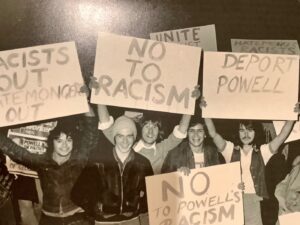
On show are a collection of rare contemporary posters, badges, pamphlets, photographs, and film. This visually powerful exhibition considers the role that Bristolians played in standing up to and confronting the racist National Front  and far-right during the 1970s.

A refreshed perspective of Bristol’s history.

Bristol Central Reference Library, First Floor, College Green, Bristol, BS1 5TL

3-31 October. Free!

More information here ….

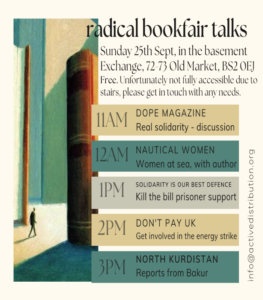
Nautical Women – a talk

A talk about the brave Nautical Women who ran away to sea to escape abuse and poverty. Come a long to this exciting book fair and discover the many aspects of our extraordinary working class history.

Rosemary Caldicott representing Bristol Radical History Group

12 noon at The Exchange, Old Market, Bristol BS2 0EK 

Sunday, 25 September 

Organised by Bristol Active Distribution Publishers

www.activedistributionshop.org

South Bristol Festival – Bedminster Union Workhouse

SOUTH BRISTOL HISTORY FESTIVAL!

Rosemary Caldicott will be giving a talk about Bedminster Union Workhouse

Tuesday, 20 September 2022 at 2pm-3pm

To be held at Bedminster Library, 4 Bedminster Parade, Bedminster, Bristol BS3 4AQ

In 1855 rumours of murder and a cover up were circulating in the small north Somerset village of Walton-in-Gordano.  An epileptic destitute country girl, Hannah Wiltshire, had died in the Bedminster Union Workhouse at Flax Bourton.

This talk illustrates the treatment imposed upon the vulnerable poor living in England during the mid-nineteenth century and how a campaign for transparency, accountability and social justice was fought for by the local community. The talk will include newly discovered letters of complaint written to the Poor Law Board by Sir Arthur Elton of Clevedon.

This talk is one of a series of talks about working class history in South Bristol and has been organised by Bristol Radical History Group as part of the South Bristol History Festival. For more information and to view the full program of talks click HERE


Spring/Summer Family History Courses

Thursday 28 April 2022 and 16 June – spaces available on these 5 week Family History Courses that will boost your research and social history knowledge! 

New courses Family History Course for this Spring 2022 at Stoke Lodge Bristol now ready to book online. (Please note courses may move on line if government regulations change).

Details HERE

New course week 2: Birth, Marriage and Death

This week my class investigated searching for birth, marriage and death registrations. As our research progresses it is very rewarding to send off for copy certificates. I have sent off for a further two death certificates of ancestors or mine today. During the 19th century, and with couples usually having large families, it is sadly only too common to discover that several children had died during childhood within one household.  I personally find it fascinating to find out what had caused these children’s early demise. Unfortunately I discovered one child had drowned in a pond, but many others died of contagious infections which we no longer fear, such as whopping cough.

These tragedies would have affected the family very deeply, and this was perhaps one reason why people tended not to talk about their grief – because of the fear that life was very precarious for their children.

Life expectancy was low compared to today. One of the reasons was the death of infants and children from disease. However, poor housing, pollution, and lack of sanitation also resulted in causing early deaths in all ages.

To send off for a copy certificate is easy. As use the GRO web site as they are the cheapest option and the quickest. Send off HERE

NEW COURSES FOR THE AUTUMN TERM!

Discover your Family History –  Introduction to Researching your Family History

Part One       

A practical stepped learning technique to begin learning family history research with confidence. A fun approach, in a safe, inclusive environment with other learners. 

Correct interpretation of vital records and how to understand simple research techniques.  This course will be delivered at Stoke Lodge but will move online if necessary using ZOOM 

5 weeks. Begins Thursday 23 September 2pm to 4pm   With award winning tutor Rosemary Caldicott

(This course is sold out, but you can go on a wait list)

BOOK HERE

Part 2 – Discover your Family History and so much more!

Places still available.

A further exploration of Family History. This course will be delivered at Stoke Lodge but will move online if necessary using ZOOM.Heritage Found black and white image of family

Course code FHR2B.  Begins Thursday 11 November 2021 for 5 weeks. 14:00-16:00

A practical easy learning technique to begin learning family history research with confidence. A fun approach, in a safe, inclusive environment with other learners. Correct interpretation of vital records and how to understand simple research techniques. Be able to produce at least a 4-generation family tree by week 5. Practical learning for those who have already undertaken some family history research. A fun approach, in a safe, inclusive environment with other learners. Parish records, wills and social history explored. A mixture of lectures and practical work.

Join award winning tutor Rosemary Caldicott to better understand how to discover your ancestors.

FOR MORE INFORMATION ON ENROLMENT AND TO BOOK HERE

They are back! My ever popular Family History Research Talks!

A new series of talks that are designed to meet the needs of family history researchers whatever your level of experience. A chance to share your knowledge with other passionate researchers!  Tutor led direction that will enhance learners’ knowledge.

The first talk is :-

1. Understanding the UK Census   

Do you find census records confusing? Then this is a talk for you! The census records offer us a lot more information than is often realised.Heritage Found Family History Research short course This special session will be a detailed look at the census records. A comprehensive examination of the errors in the records and how to improve our searches.

Also, how to cross reference the years through a deeper understand of the census records.
Where to find lost census records. Keeping records.

This is a one off talk about reading a census document correctly. This course will be delivered online  using ZOOM 

Wednesday 6.30pm to 8.30pm. Rosemary Caldicott 

1 session on 20 October  

FOR MORE INFORMATION ON ENROLMENT AND TO BOOK HERE

2. Understanding the value of birth, marriage and death certificates to enhance your research. 

Often over-looked, but invaluable to further your research.  A detailed talk on how to order and interpret birth, marriage and death certificates. This course will be delivered online  using ZOOM 

We will take a look at birth, marriage and death (BMD) certificates are an invaluable resource for the family history researcher. These records offer us a lot more information than is often realised.  You will learn how to order copies, how to examine the documents correctly, how to cross-reference the information and how to record your evidence.
1 session to be held on Wednesday, 10 November 6.30pm to 8.30pm.

FOR MORE INFORMATION ON ENROLMENT AND TO BOOK HERE

Talk! Bristol in the Time of Cholera

I am pleased to announce that as part of the M Shed’s 10th anniversary programme, and representing Bristol Radical History Group I have been invited to give a talk.

The talk is being giving on 21 June at 2-3pm

Cholera reached Bristol on the 11 July 1832.

The London Quarterly Review described the new disease sweeping the world in November 1831:

‘It has mastered every variety of climate, surmounted every natural barrier, conquered every people.’

The disease caused severe diarrhoea, dehydration, collapse and often death. However, on 12 July 1832, the newspapers reported that they had no reason to fear that cholera had arrived in earnest. Medical and political intervention was variable and inadequate.

What was the impact of cholera in Bristol? In this talk we will explore the consequences for public health in the city and the role the Floating Harbour played in the spread of the disease.

Poster warning of Cholera

How to take part

Bookable through M Shed HERE

This free, online talk will be held over Zoom. Please book your place below. Details of how to join the session will be in your registration email. Please check your spam folder if the email does not arrive. Bookings close at 11am on Monday 21 June.

Although this talk is free, the M Shed would be grateful if you could consider making a donation.

Please visit the Zoom website for guidance on joining a webinar. Please allow extra time before the talk begins to make sure everything is working correctly. It’s up to you whether you turn on your video but all guests will be muted once the talk begins. You are welcome to ask questions in the chat box throughout the talk.

Thank you to Bristol Women’s Voice

Hello, Thank you so much for being involved in the Bristol Women’s Voice International Women’s Day 2021 programme – we have had some great feedback on the breadth of the programme and individual sessions and we couldn’t have done it without you!

It is always so nice to have positive feedback. I am so glad the attendees enjoyed by talk on Nautical Women. Great audience and some interesting questions at the end too.

I attended some of the other talks and events that BWV laid on, which I really enjoyed. Thank you for inviting me as a guest speaker BWV, and looking forward to another interesting program for next year.

You can purchase my book Nautical Women. Women sailors and the women of sailor towns: A forgotten diaspora c.1693-1902. HERE