New lecture: The Consequences of the African Slave Trade on Women

Black History Lecture

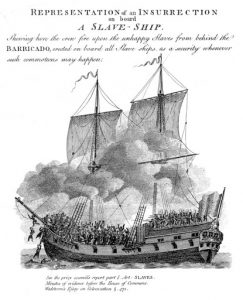
Revolt on a slave ship


‘The Consequences of the African Slave Trade on Women’:

The story of the disastrous voyage of the slave ship Hannibal.

The true story of the slaver ship the Hannibal as told in the diary of its Captain, Thomas Phillips of Brecon and retold in my recently published book Nautical Woman. (To order the book click here link).

John Brown was a black woman found to be a sailor employed by the Royal African Company. As the events of her discovery unfold far more is disclosed about the 700 other people on board the ship.

Enrol online here.

The talk will be delivered via zoom, with a discussion at the end.

Wednesday 18 November 2020 @ 2 pm


Intensive Family History research day – Saturday 16th May

Intensiv

e research day running from 10.30 a.m. to 3.30. p.m.

The day is designed to run via zoom to advance your ancestral research development.  There will be a mixture of talks, guidance, several breaks with time to undertake your own research the assistance of an expert genealogist tutor to hand.

  • 1 session only this summer term on 16 May

To book or for more information just telephone 0117 903 884 or book on line here Book

New class starts this week

Family History and ancestry classes, Bristol

I am very much looking forward to meeting my new learners on Thursday at Stoke Lodge.

Its that time of year again and a new year begins with family history and ancestry classes in Bristol.  I wonder what intrigues await the learners this year? They will uncover their ancestors lives and learn the correct methodology to undertake their research successfully. Correct interpretation is key to stay focused on their sources. The step by step course will go through each basic area of family history research with plenty of time to do lots of online searches.

Welcome everyone!


New course: Working Class History from Below

The Women who challenged Society in Bristol and further afield.

A new series of lectures that aim to present a different perspective of our collective history, the history of working class people, and in particular working class women. Topics covered amongst others will be Women in Port Cities, Women surviving a Bristol workhouse, and Pioneering Bristol Women in the Trades Union Movement

Enrol online here.

Course Dates 2019 – 2020

These courses take place at Stoke Lodge, Bristol

Tuesday 1pm – 3 pm Rosemary Caldicott

  • 4 sessions 12 November
  • 4 sessions 14 January
  • 4 sessions 3 March
  • 4 sessions 28 April

Pauper death and burial in Eastville, Bristol

On 12 July a fascinating public walk and lecture about the history behind the unmarked pauper graves of Rosemary Green, situated on the outskirts of what was once Eastville Union Workhouse, Fishponds Road, Bristol.

After the 1834 Poor Law Act a paupers funeral was considered to be an extravagance that the parish should no longer pay for.  Before the 1834 Act, pauper funerals were paid for by the parish, with local persons attending to the traditional funeral rituals and necessities. In other words a person with no or little money who had died was treated with respect in death and buried as a human being as would be expected, albeit simple, within the cultural rituals of the time.

But after the Act was enforced the Poor Law Unions, in order to save money, and ‘demonstrate disgrace in death of those who had surrendered to poverty‘.  Death and burial practices were changed to become a disgraceful new attitude that resulted in approximately 4,000 men, women and children simply being wrapped in a shroud and dumped in unmarked graves in a small piece of land that sloped into a small river.   The pauper graveyard is located at Rosemary Green just opposite Greenbank Cemetery where there is also an older pauper grave yard.

Extensive research into Eastville workhouse has been undertaken by Bristol Radical History Group and published in 100 Fishponds Road.  (Book available from BRHG). Click here.

Many people have now contacted the BRHG as they suspect that their ancestors may have be buried at Rosemary Green. (Records of names still exist).  If you think that you may have an ancestor who might have died in a workhouse you can contact Heritage Found, free of change, to try to find out more.

At Rosemary Green there is now a touching monument to all those souls once buried beneath.

Made of slate it reads:

Rosemary Green Burial Ground

1851-1895

On this site over 4,000 men women and children

who died in Eastville Workhouse,

known as 100 Fishponds Road,

were buried in unmarked graves.

A further 118 were given to the medical school.

This memorial stands in recognition of all

who lived and died in the workhouse.

Not Forgotten

Please click here to discover more and see fascinating photographs of Eastville Workhouse.

Why search and send off for a copy marriage certificate?

As we start to go back in time, through a few generations, it is easy to not be quite sure that we have the right individuals who we feel may be that missing great grandparent for example.  It can often be that we find 10 or even hundreds  of couples who married around the time our couple may have married, and in the same vicinity.  The only sure way to find out is to send off for a copy marriage certificate, which in the U.K. you can find records recorded on and after 1837, when formal civil registration became the law.

Firstly, you should try and find out the volume number and page number where the marriage is recorded, known as the Indexes. This information can be found out by doing a simple search on one of the on-line genealogy sites or on the GRO web site for free. You can now go onto the GRO (General Register Office) web site.  This is the site where you order your certificates and is the cheapest method.  You will find a couple of simple forms to fill out and currently a charge of £11.00 at time of writing.  If for some reason the certificate cannot be found your payment is refunded.  Currently it is taking about 10 days to receive the ordered copy certificate.  It is exciting when the envelope arrives. I can help you do this by filling out the contact form here.

The GRO now offer a PDF copy as a faster alternative for a fee of £7. The PDF contains the key information and is email to you in a few days after receiving your order.

A marriage certificate will give you a lot of information and very importantly the maiden name of the bride, and of the couples fathers and their occupation.  The occupation of the bride and groom is also recorded which is a useful tool for cross referencing our couple on the census returns.   This can be a wonderful resource to help us to go back a further generation and be confident that we have the right people added to our line before we attempted to go back further.

The GRO service is also available for copy birth and death certificates.

The history of British marriage certificates

Civil registration in England and Wales commenced on 1 July 1837, and relates to the birth, marriage and death of an individual. In Scotland records began in 1855 and in Ireland in 1864, with Irish non-Catholic marriages recorded from 1845.

In England and Wales, up to that time, the government had relied on the church to register the population but this was was not a complete record, not a full listing of the population. Also, mass printing of government administration forms was now possible due to advances in printing technology.  A single tier registration system was introduced, based on the administrative poor law unions, which had been set up in 1834, and previously the administrative hundreds. These became the registration districts. Births, not baptisms, and deaths, not burials, were recorded as well as marriages.  Parish and nonconformist baptism & burial registers were still completed at the same time that the new civil registration system began.  The Act also permitted marriages to be performed in Register Offices and outside the confines of the Anglican Church. Many nonconformist chapels were authorised to perform marriages. Since 1837 there has been much fine tuning of the system and various new regulations and legislation have been introduced.

It can be very rewarding to send off for a copy of our ancestor’s marriage certificate.

And below are are some pointers to understanding what you may read.

No exact age may be shown and ages may be recorded that the bride or groom were “of full age”, an age in excess of 21 years. Although this statement may have been false to avoid a minor having to obtain parental consent.  Where an actual age is given, it is usually reasonably accurate but it may also have been altered for a variety of reasons and remember not everybody actually knew their exact age!

The same address for both parties may show and  this was common to avoid paying two sets of banns fees if one or other party resided in a different parish.  Marriages traditionally took place in the parish of the bride.

The absence of a father’s name and occupation usually meant he was unknown.  But, also a made-up name, or a male name with in the family, could have been used with (deceased).  I have seen several suspected examples of this on certificates.  Also this is a clue of illegitimacy.  If the father was in fact dead the name was usually filled in and the word deceased written alongside it.  The inclusion of the name of the father without the word deceased did not automatically mean that he was alive at the time of the marriage! Remember the certificate was being hand written with details often being given by the bride and groom who could not always read and write, and vital information may not of been asked for.