
Blog

Back to Basics – What is a UK Birth Certificate? and What can it tell us about our Ancestors?

What is a UK Birth Certificate?

A UK birth certificate is an official document issued by the General Register Office (GRO) or a local registration office. It records essential information about an individual’s birth, including their full name, date and place of birth, parents’ names, and registration details. It is considered a primary source of evidence for establishing identity and citizenship in the UK.

  1. Information Included on a UK Birth Certificate

a. Child’s Details:

  • Full name of the child: This is the name given to the child at birth and appears as the first entry on the certificate.
  • Date of birth: The exact date when the child was born.
  • Place of birth: The city or town and the country where the birth occurred.

b. Parents’ Details:

  • Full names of both parents: The names of the biological parents, including the mother’s maiden name.
  • Occupation of parents: This section may include the parents’ occupations at the time of the child’s birth but often the mothers occupation if she was married was not recorded..
  • Date of parents’ marriage/civil partnership: If applicable, the date of marriage or civil partnership between the child’s parents.

c. Registration Details:

  • Registration district and sub-district: The geographical area where the birth was registered.
  • Registration date: The date when the birth was officially registered.
  1. Types of UK Birth Certificates

There are two main types of UK birth certificates:

a. Short/Abbreviated Certificate:

  • This type of certificate includes only the child’s details (name, date, and place of birth) and the registration details.
  • The short certificate does not include the parents’ information, making it unsuitable for legal and official purposes.

b. Full/Long Certificate:

  • The full certificate contains all the information present on the short certificate, along with the names and details of both parents.
  • This certificate is required for various legal purposes, such as obtaining a passport, opening a bank account, and applying for certain benefits.
  1. Obtaining a UK Birth Certificate

If you need a copy of a UK birth certificate, there are several ways to obtain one:

a. Online Application: The General Register Office offers an online service where you can order a copy of a birth certificate for a fee.

b. In-Person: You can visit the local registration office where the birth was registered and request a copy in person.

c. Do not apply via ‘tracing your ancestors web-sites’ as they will charge you a lot more than the GRO and Heritage Found!

d. Contact Heritage_Found@yahoo.co.uk and we will take care of your orders for only a modest fee.

Conclusion

A UK birth certificate is an indispensable document that provides vital information about an individual’s birth and parentage. Understanding its contents and types can be crucial for various life events, official procedures and confirmation that you have found the right person to confirm your research is correct.

New Family History Course beginning September in Bristol

Discover your Family History –

Discovering your Family History made easy: For complete beginners and the amateur Genealogist.                                                                                       

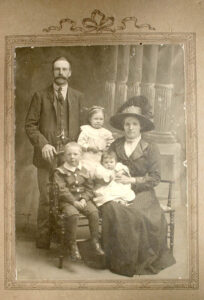
Heritage Found black and white image of family

Delve into the fascinating world of ancestral exploration and gain valuable skills to trace your roots. Discover how to harness the power of online genealogical search websites, master UK and other countries census records and parish registers, and decipher birth, marriage, and death certificates with ease. Create a stunning family tree that showcases your heritage and avoid the pitfalls that often trap amateur genealogists. Embark on a thrilling journey of self-discovery and connect with your ancestors in ways you never thought possible. Enrol now and unearth the hidden treasures of your family history!                 

(I could take one more)


Wednesdays 6.30pm-8.30pm                                                           

10 sessions from 27th September at Stoke Lodge, Bristol

To enquire or book please click HERE

Colonialism and Memory in Bristol

Rosemary Caldicott and Mark Steeds will be speaking at the Colonialism and Memory in Bristol as part of Mnemoscapes of the South West SWWDTP Memory Studies Research Cluster.

Join us for a public workshop on colonialism and memory in Bristol. Moving between the museum, the city, and space for discussion and reflection, we’ll be asking what decolonisation means, what it might look like in practice, as well as the challenges facing these efforts.

Join us at the M Shed in Bristol on 1st July,

The workshop is free and refreshments and lunch will be provided, but space is limited to 30 places.

10:45-12:45  – A city walking tour by Mark Steeds (Bristol Radical History Group) including the Colston plinth.

15:30-16:30  – BRHG members Mark Steeds and Rosemary Caldicott will be speaking.

Mark Steeds will talk about Stevenson’s story from San Francisco, where he undertook his voyage of the South Seas, travels to Hawaii and then on ultimately to Samoa. He became an activist, witnesses the king of Hawaii being usurped by the Americans, the Anglican attack on Father Damien and his Leper colony, and the first Samoan ‘Civil War’. His wife Fanny stayed on and witnessed the second Samoan civil war that led to western domination (British, American and German).  Marks research is in support of the Long John Silver Trust and our European Cultural Route: -“In the Footsteps of Robert Louis Stevenson”.

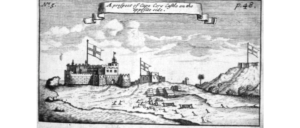
          Cape Coast Castle 1705


Rosemary Caldicott will be speaking about the maintenance and subsequent implications of the Royal African Company forts in West Africa. Her research is based upon her forthcoming book about the RAC Hannibal Slave-ship (1693-1695) and her previous publication Nautical Women – Women sailors & the Women of Sailortowns: A Forgotten  Diaspora c.1693–1902.

For further information about this event and the full program please link here

Event held on Saturday 1st July 10.00-1730

at M Shed Wapping Road Bristol BS1 4RN

INTERNATIONAL WOMEN’S DAY – 2023

INTERNATIONAL WOMENS’ DAY – events 11TH MARCH 2023

Rosemary Caldicott speaking at 2.30 – Cross Dressing Nautical Woman

Event Programme here
Saturday 11th March 2023 – 10:00am to 7:00pm
City Hall, College Green, Bristol, BS1 5TR

‘Nautical Women’
In Nautical Women, Rosemary Caldicott explores the stories
of women whose lives were inextricably linked to the sea.
She tells of the women of sailor towns struggling to keep
out of the workhouse; and of the courageous cross-dressing
women sailors who went to extraordinary lengths to hide
their gender.

New family history course for the spring

Discover your Family History –

Discovering your Family History made easy: For complete beginners and the amateur Genealogist.                                                                                       

Heritage Found black and white image of familyIn this course, learners will gain a deeper understanding of the most commonly used family history resources, and research techniques. Topics covered include: how to use the online genealogical search websites in a professional way; search and read the UK census records and parish registers, birth, marriage and death certificates; create a basic family tree, and avoid common errors of amateur genealogists.                                                                   

Wednesdays 6.30pm-8.30pm                                                           

10 sessions from 18 January at Stoke Lodge, Bristol

To enquire or book please click HERE

“Nautical women-women sailors and the women of sailortowns: A forgotten diaspora c 1693-1902”

BOOK HERE

Tuesday, 29 November 2022, 14:00 – 15:30. 

Portishead Library 24 Harbour Road Portishead BS20 7AL

North Somerset Libraries are excited to host a series of talks by Bristol Radical History pamphleteers. Visit www.brh.org.uk to find out more about their publications and events. The talks are informal and accessible and would appeal to adults and older teens. Some Bristol Radical History pamphlets will also be available to purchase with cash.
In our third talk, Rosemary Caldicott brings to life Pamphlet number 43 which will be of particular interest to locals.

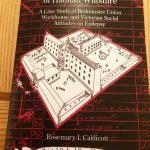
Nautical Women book cover
‘Nautical Women’, by Rosemary L Caldicott

The book explores the stories of women whose lives were inextricably linked to the sea. These include the women of sailortowns struggling to keep out of the dreaded workhouse and resisting the prowling press gangs; and of the courageous and skilful cross-dressing women sailors, some of Bristol, who went to extraordinary lengths to hide their gender. The stories of these women challenge our stereotypes of women in earlier societies and reveal the courage of those who ‘ran away to sea’ by exposing their struggles against poverty. Rosemary will discuss these women’s motivation as well as their adventures and inevitable exposure.

About the venue

Portishead Library is accessible, including a disabled toilet and baby change. The talk will be in the meeting room which will be set out in theatre style. Get in touch with us if you have additional support needs so that we can help you enjoy the event. Call us on 01934 426040 email us on portishead.library@n-somerset.gov.uk or pop in and see us Tuesday to Friday 9.30-5 and Saturday 9.30-1pm

Who can come?

Numbers are limited so we ask that you book a place via Eventbrite or by contacting Portishead Library. As we have limited spaces do let us know if your plans change. It is easy to cancel via Eventbrite.

More about the speaker

Rosemary Caldicott is a teacher of social history working in adult education, a writer of books and articles about working class women in history.

Rosemary is secretary of BRHG and has published several works for the group: The Life and Death of Hannah Wiltshire: A Case Study of Bedminster Union Workhouse and Victorian Social Attitudes on Epilepsy (2016); Lady Blackshirts: The Perils of Perception – suffragettes who became fascists (2017); Nautical Women. Women sailors and the Women of Sailortowns: A Forgotten Diaspora. c.1693 – 1902 (2019).

Talk – Thursday 24 November, 7.00-8.30pm. Life and Death in Bedminster Workhouse

BOOK HERE ON EVENTBRITE

North Somerset Libraries are excited to host a series of talks by Bristol Radical History pamphleteers. Visit www.brh.org.uk to find out more about their publications and events. The talks are informal and accessible and would appeal to adults and older teens. Some Bristol Radical History pamphlets will also be available to purchase with cash.
In our second talk, Rosemary Caldicott brings to life Pamphlet number 35 which will be of particular interest to locals.

During the year of 1855 rumours of murder and cover up were circulating in the small north Somerset

The Life and Death of Hannah Wiltshire
by Rosemary L Caldicott

village of Walton-in-Gordano. An epileptic destitute country girl had died in the local institution known as the Bedminster Union Workhouse. Her death caused public outrage after letters were written to the local newspapers. The Board of Guardians were suspected of concealing the true magnitude of neglect at the workhouse, leading to accusations of medical negligence. In this pamphlet, Victorian social attitudes on epilepsy are investigated within the context of how the draconian workhouse system typically caused particular hardship to people who suffered with epilepsy and other mental health issues.

The Life and Death of Hannah Wiltshire illustrates the treatment imposed upon the vulnerable poor living in rural England during the mid-nineteenth century and how a campaign for transparency, accountability and social justice was fought for by the local community.

About the venue

Pill Library and Children’s Centre is accessible, including a disabled toilet and baby change. The talk will be in the main library which will be set out in theatre style. Get in touch with us if you have additional support needs.

The Slave-Ship Hannibal 1693-1695. New Talk!

Black History Month Lecture 

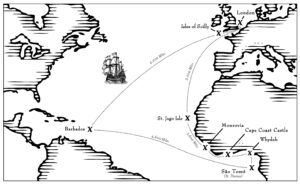
The Slave-Ship Hannibal and all who sailed on Her. (1693-1695).

The voyage of the Hannibal slave-ship. 1693-1695. Credit Lisa Liebelt

Black History Month: Britain’s history and involvement in the Trans-Atlantic Slave Trade.

Come along and hear the tragic but enlightening story of the Brecon born slave trading captain Thomas Phillips, what happened to his crew, and the captured 700 enslaved people on his ship the Hannibal. This talk is based on my original research as discovered in the National Archives and the British Library. For the first time the human stories are revealed about all who sailed on her.


Thursday, 13 October.  2pm to 4pm by Rosemary Caldicott 

To book telephone Tel: 0117 903 8844

or Email: StokeLodge@bristol.gov.uk

 or BOOK HERE

Facing up to the Fascists – An Exhibition for October

Facing up to the Fascists

Bristol Radical History Group presents an innovative exhibition of extraordinary resistance.

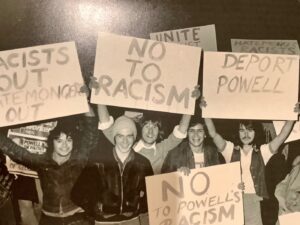
On show are a collection of rare contemporary posters, badges, pamphlets, photographs, and film. This visually powerful exhibition considers the role that Bristolians played in standing up to and confronting the racist National Front  and far-right during the 1970s.

A refreshed perspective of Bristol’s history.

Bristol Central Reference Library, First Floor, College Green, Bristol, BS1 5TL

3-31 October. Free!

More information here ….