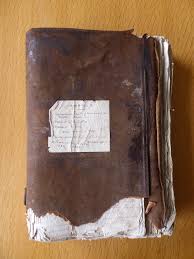
Parish Records, or the registers, were the accounts and vital records collected about the lives of local people living in parishes across the U.K. Although the records consist of tax and rate collections, leases, and even the chimney taxation returns they often have names of the people in connection to the event.
But immediately important for us it is the church record books, the registers, where our families ‘rights of passage’ are recorded. Baptisms, Marriages and Burials with dates names will be found in these books. Most are available online through various web sites, but sometimes it will still be necessary to visit the local record office to find our ancestors within these records. The digital church books are amazing to browse through. Make sure you turn the pages as you will probably find other members of the family within the same book. The further you dwell back in time unfortunately the harder the hand writing becomes to read.
It is a time consuming exercise and patience will be required so set aside a quiet time and be sure to do a thorough search. Do not be tempted to skip a page or two. If the sound of this chore bores the pants off of you perhaps your Heritage Found might be able to assist you.
Once you have gone back 4 generations life for the family history researcher often becomes more difficult. One reason is because with common names it can be quite difficult to determine from the registration evidence which person is the correct one. A clear way forward is to order copy certificates to clarify the evidence that will be listed on the certificate at the time of issue.
For example, John Smith born Birmingham in 1888. We discover online that there were in fact 4 John Smith’s having a birth registration during that year in Birmingham. By ordering either the one you suspect could be yours, or even several you will discover the names of the parents and, also importantly, the occupation of the father. When cross checked with other pieces of information you have about the family it is relatively easy to decipher which is your John Smith. If you know that your John Smith from the 1911 census worked as a labourer a cotton factory but on the certificate it states his father was a lawyer then it is very probable that you can eliminate this person because it was very rare for a person at this time to have class and economic mobility.
To order certificates in the U.K. and just go the the GRO website. For Scotland its Scotlands People and for other countries search online to find out which government department holds vital records for order.
Over the summer I have been offering my courses and talks online for the first time ever. For me this proved to be an enjoyable experience and I hope for my learners too!
Learners, who participated over the internet have been very supportive and kind, and here is a sample of feedback emails I have received. Thank you very much, your comments are very much appreciated and help me to improve delivery of courses and talks ‘In the Time of Covid’.
Many thanks Rosemary- excellent lecture as always- I’ve already signed up for the Hannah Wiltshire and Black Death lectures in the autumn so look forward to joining you again then! S.S. Aug. 2020
Thank you to or SUCH an interesting talk this afternoon. I really enjoyed it. June 2020 M.C.
Firstly, thank you very much for running the course – I found it very interesting and very helpful. When the lockdown first came in, I assumed that the course wouldn’t be running, so it was a pleasant surprise (and very good timing from the point of view of my own research) to hear that it would be. We all seem to be doing everything by Zoom nowadays, so thank you for getting to grips with the process and making it work so well. Your presentations came over fine on the screen. My only comment would be that it might be an idea to break them up a bit more, maybe pause every 20 minutes or so and do a short Q&A session or something before resuming. G.P.
Thanks so much for the Family History classes. I’ve really enjoyed them and found them very useful. I appreciate all the work you have done to put the classes online – from my supply-teaching experience I know it can’t have been easy. J.
Thanks again Rosemary for great content, entertaining delivery and incredible patience with the technology. I’m so glad you persevered and will look forward to more. J.P.
This is a very belated e mail to say thank you very much for all of the very interesting material regarding the workhouses P.D.
Many thanks for the attached. It was a very interesting talk particularly as you concentrated on the Bristol area. When I was thinking about the talk I was reminded that up until the 60’s if a girl became pregnant outside wedlock in Bristol she could be sent to the local mental home to have her baby without anyone knowing. There was a home in Stoke Bishop as well where the babies were prepared to fostering and adoption. A.E
If you are getting bored, and as the nights will be drawing in, in the northern hemisphere soon you might consider discovering your family history. Some will have already undertaken quite a lot of fabulous research but there is always so much more to explore.
With my courses you could spend the dark evenings improving your knowledge and scope. You could light some candles, warm the room and fire up your laptop with a group of like minded people. Better than a classroom?
Courses Available
(Note all times are British time)
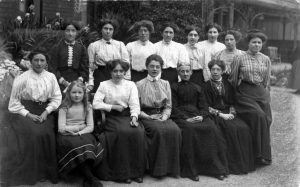
Women domestic workers
Courses Autumn 2020
Family History Course – Stage 1
Stage 1: 5 week course runs on Thursdays. Dates for autumn term 2020:
Thursdays 1.30 – 4pm Rosemary Caldicott BA MSc
Start Date: 24 September 2020
This beginners course offers a gentle introduction on how to access and navigate your family history records. An easy to follow guide on genealogy digital record searching is taught to assist you to find your ancestors. Each week has a different theme that supported by a lecture on the subject matter of that week. An understanding is explored of why and how records were taken, and also how to search and access the records you need. To book:
Thursdays 1.30 – 4pm. Tutor Rosemary Caldicott BA MSc
5 sessions 5 November 2020
An ideal course for those who have already attended Stage 1, or have some experience researching their family history. Social history is explored in more depth through a series of lectures to consider the context of how our ancestors lived. Digital searching will be comprehensively taught to expand your knowledge base and explained in-depth.
Want to find out if researching your family history is really for you?
Tuesday evening on 22 September 2020
Short introductory 2 hour course. (7-9 pm). A chance to explore your family history and to discover how to view, and most importantly, how to make sense of your online family records.
Individual lessons and courses are also available with an expert through Heritage Found
Private tuition courses are available at very reasonable fees, by the hour or a course. You will be amazed what you will discover about your ancestral heritage, it is unique and special. Inquire
Lecture – 9th December @ 2-4pm
‘From Workhouse to Welfare: Women surviving a Bristol Workhouse’
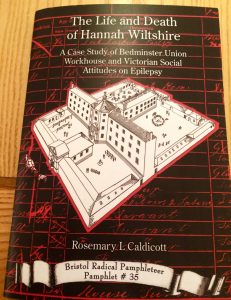
The Life and Death of Hannah Wiltshire by Rosemary L Caldicott
The 2 hour talk will focus on the draconian workhouse system that pre-dates the modern welfare state. For the vulnerable poor the workhouse often became their only means of support. Unemployment, sickness, old age, death of a parent and, for women in particular, the workhouse institution typically caused great hardship and even death in some cases. The lecture will examine the history and reality of the workhouse institution using illustrated documented examples taken from inmates’ experiences. Those who fought for change are recalled, along with examples of modern day memorialisation for the people that lived and died in our workhouses.
The 1841 census is the first census that was undertaken to cover England and Wales to include family names, street names, occupation and if born in the county or not.
A key feature to be considered when searching back through British census records is that the 1841 census rounded down adult ages to the nearest 5 years. For example, 53 becomes 50 and 28 becomes 25. This can easily throw us off course when looking for similar names in a small geographical area, a common problem my learners come across! However, matching up occupation can help us have some confidence that we have in fact found the correct people. Luckily though children’s ages up to 14 are given their exact age even down to the day of a newborn which I find rather touching.
You will not find house or flat numbers under the address column, only a street name, or less. In 1841 the state in the U.K. did not consider it necessary to know such facts. Also, it must be remembered that postage was hardly used at this time and that government were simply not interested to know precisely where each person lived. Most homes did not have a number with the feature only being developed as urbanization grew larger across the country. However, by the coming of the 1851 census dwelling numbers were beginning to be added to the census schedules.
I will be giving a one off on-line history talk about the Black Death pandemic in Bristol during the years 1348 and 1349.
In the year 1348 the Black Death pandemic arrived in Bristol resulting in catastrophic economic consequences for the elite and manufacturing classes of Bristol.
Rosemary Caldicott will discuss how the local population reacted to the seismic changes that swept through Bristol: Did the immediate years that followed become the ‘golden age’ of English peasantry? Can we draw any parallels with today?
The talk will be delivered via zoom, with discussion time at the end.
The talk will take place on Monday 2 November 2-4pm
Our friendly staff will be in the office to take phone bookings from 9.30 on Thursday and Friday.
Please bear with us, we expect phone lines to be busy.
Tel: 0117 903 8844 Bristol City Council – Adult Learning
Thank you for your patience and support in this challenging time.
Top tips for booking online:
Set up an account and keep your password somewhere safe.
If you have enrolled before and given us your email but never enrolled online, you will have an existing account and will need to request a password reset to sign in on our booking page.
Accounts are individual – so if you and your partner usually book together make sure you both have an account (you will each need a separate email address). You can’t book 2 places with one account.
When you get to the online booking page log in and this will allow you to enrol and put courses in your basket.
When you pay for your courses you should receive 2 email confirmations. One confirming your payment has been taken and a second (and most important!) confirming your place on the course and course details.
The dates for my talks and courses are now listed. Please view under the header Courses and Talks. I have changed the days of the week and times for my talks, for those of you who were unable to attend on my usual days. A few of my talks will be held in the evening due to requests to offer talks in the evenings.
All my courses and talks are bookable via Stoke Lodge, Bristol Adult Learning. However, I also offer a personalise serviced to help you research your family history. Please fill in the contact form below to find out more and read the Services page.
I will be continuing to teach via zoom during the autumn term.
My illustrated book Nautical Women, which includes the chapter ‘A few Known Black Women Sailors and the Slave Trade: (The Consequences of the African Slave Trade on Women).
‘Nautical Women’, by Rosemary L Caldicott
Can be purchased by emailing here Price £6 plus £2.00 p@p.
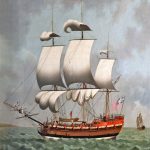
sample: On board the slave ship Hannibal in 1693, under Commander Thomas Phillips, a soldier-sailor called John Brown was discovered to be a woman. Phillips was a part owner of the Hannibal, having a £10,000 investment in the Royal African Company ship. During the voyage the ship carried 684-700 stolen African people of which 328 people perished while on-board. John Brown escaped the ship when it docked on the West Coast of Africa never to know the fate of the people that followed.
The book considers the fate of African women who were forced onto the vessels to be traded and sold as slaves and the life of Captain Phillips.
Pub:Bristol Radical History Group. Pamphlet #43. 2019. 108 pages with illustrations.
ISBN 978-1-911522-46-1
Merseyside Maritime Museum; Supplied by The Public Catalogue Foundation