

You need patience to research parish records

Parish Records, or the registers, were the accounts and vital records collected about the lives of local people living in parishes across the U.K. Although the records consist of tax and rate collections, leases, and even the chimney taxation returns they often have names of the people in connection to the event.
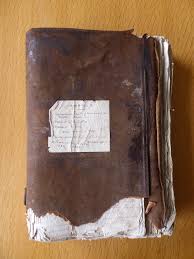
But immediately important for us it is the church record books, the registers, where our families ‘rights of passage’ are recorded. Baptisms, Marriages and Burials with dates names will be found in these books. Most are available online through various web sites, but sometimes it will still be necessary to visit the local record office to find our ancestors within these records. The digital church books are amazing to browse through. Make sure you turn the pages as you will probably find other members of the family within the same book. The further you dwell back in time unfortunately the harder the hand writing becomes to read.

It is a time consuming exercise and patience will be required so set aside a quiet time and be sure to do a thorough search. Do not be tempted to skip a page or two. If the sound of this chore bores the pants off of you perhaps your Heritage Found might be able to assist you.

A BIG thank you to my learners!

Over the summer I have been offering my courses and talks online for the first time ever.  For me this proved to be an enjoyable experience and I hope for my learners too!

Learners, who participated over the internet have been very supportive and kind, and here is a sample of feedback emails I have received.  Thank you very much, your comments are very much appreciated and help me to improve delivery of courses and talks ‘In the Time of Covid’.

         Many thanks Rosemary- excellent lecture as always- I’ve already signed up for  the Hannah Wiltshire                 and Black Death lectures in the autumn so look forward to joining you again then! S.S. Aug. 2020
        Thank you to or SUCH an interesting talk this afternoon. I really enjoyed it. June 2020 M.C.
Firstly, thank you very much for running the course – I found it very interesting and very helpful.  When the lockdown first came in, I assumed that the course wouldn’t be running, so it was a pleasant surprise (and very good timing from the point of view of my own research) to hear that it would be.  We all seem to be doing everything by Zoom nowadays, so thank you for getting to grips with the process and making it work so well. Your presentations came over fine on the screen.  My only comment would be that it might be an idea to break them up a bit more, maybe pause every 20 minutes or so and do a short Q&A session or something before resuming.  G.P.
Thanks so much for the Family History classes. I’ve really enjoyed them and found them very useful. I appreciate all the work you have done to put the classes online – from my supply-teaching experience I know it can’t have been easy. J.
Thanks again Rosemary for great content, entertaining delivery and incredible patience with the technology.  I’m so glad you persevered and will look forward to more.  J.P.
This is a very belated e mail to say thank you very much for all of the very interesting material regarding the workhouses P.D.
Many thanks for the attached. It was a very interesting talk particularly as you concentrated on the Bristol area. When I was thinking about the talk I was reminded that up until the 60’s if a girl became pregnant outside wedlock in Bristol she could be sent to the local mental home to have her baby without anyone knowing. There was a home in Stoke Bishop as well where the babies were prepared to fostering and adoption. A.E

1841 Census – pit falls

The 1841 census is the first census that was undertaken to cover England and Wales to include family names, street names, occupation and if born in the county or not.

A key feature to be considered when searching back through British census records is that the 1841 census rounded down adult ages to the nearest 5 years. For example, 53 becomes 50 and 28 becomes 25.  This can easily throw us off course when looking for similar names in a small geographical area, a common problem my learners come across!  However, matching up occupation can help us have some confidence that we have in fact found the correct people.  Luckily though children’s ages up to 14 are given their exact age even down to the day of a newborn which I find rather touching.

You will not find house or flat numbers under the address column, only a street name, or less.  In 1841 the state in the U.K. did not consider it necessary to know such facts. Also, it must be remembered that postage was hardly used at this time and that government were simply not interested to know precisely where each person lived. Most homes did not have a number with the feature only being developed as urbanization grew larger across the country. However, by the coming of the 1851 census dwelling numbers were beginning to be added to the census schedules.

Due to popular demand my virtual talk ‘Life in the Times of the Black Death Pandemic in Bristol’ running again on 17th June.

Due to popular demand my virtual talk is offered again! – 17th October and 2nd November, AD 2020
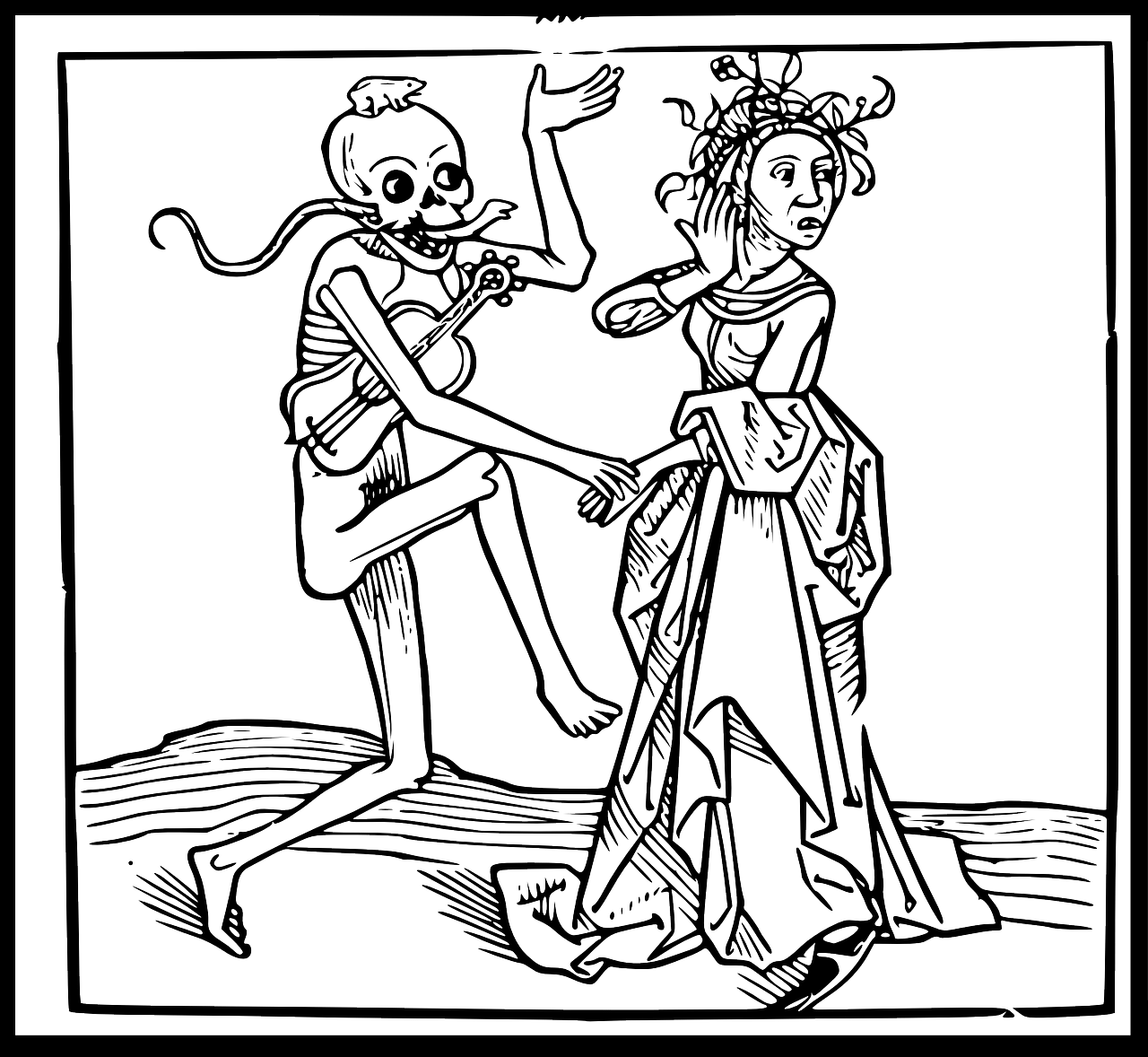
Dance of Death

Life in the Times of the Black Death Pandemic in Bristol, England 1348-1349

I will be giving a one off on-line history talk about the Black Death pandemic in Bristol during the years 1348 and 1349.

In the year 1348 the Black Death pandemic arrived in Bristol resulting in catastrophic economic consequences for the elite and manufacturing classes of Bristol.

Rosemary Caldicott will discuss how the local population reacted to the seismic changes that swept through Bristol: Did the immediate years that followed become the ‘golden age’ of English peasantry? Can we draw any parallels with today?

The talk will be delivered via zoom, with discussion time at the end.

The talk will take place on Monday 2 November 2-4pm

Enrol online or by phone HERE

Intensive Family History research day – Saturday 16th May

Intensiv

e research day running from 10.30 a.m. to 3.30. p.m.

The day is designed to run via zoom to advance your ancestral research development.  There will be a mixture of talks, guidance, several breaks with time to undertake your own research the assistance of an expert genealogist tutor to hand.

  • 1 session only this summer term on 16 May

To book or for more information just telephone 0117 903 884 or book on line here Book

New Family History course starts on-line Thursday 23 April 2020

Dear Bristol Learners

Thank you for your support whilst we have been converting our courses to a virtual format. 

My courses will run on zoom, with lecture notes, lectures, Q&A time and discussion.

To book my Family History courses just visit the Bristol Adult Learning page here 

Family History Stage One begins on Thursday 23 April at 1.30 pm.  

We will create an invigorating and supportive e-teaching space. This is a great way to pass the time, and discover your amazing family history.

Life in the Times of the Black Death in Bristol

Age of Adversity: Life in the Times of the Black Death in the City of Bristol, England. 1348-1349, and Beyond

By Rosemary L Caldicott

 ‘Alas when our relatives and neighbours came to welcome us, whole we were embracing them and in the midst of our kisses, we, who carried the arrows of death were constrained to give them the poison, so that when they returned home, soon whole families were infected and in less than three days succumbed to the attacks’.[1]

Although there appears to be very few primary sources recounting the consequences and changes inflicted upon the population of Bristol during the era of the Black Death[2] a few rare manuscripts of the time have survived. I am drawing particularly on the work of C. E. Boucher The Black Death in Bristol, written in 1938 due to his extensive research and insight into rare manuscripts relating to Bristol. I am writing this during university library closures, one of the many impacts of the coronavirus disease pandemic of 2020,[3] thereby solely relying on e-sources. However, despite this limitation I still think it is worth a review of how the Black Death pandemic of 1348-49 caused far reaching socioeconomic and political change for the people of Bristol and the surrounding area.

Up until 2020, in the developed world, phrases such as plague, pestilence and famine are words that appear in a far distant, often romanticised past even though new pandemics over the last twenty years have given rise to near misses in Europe. Even once common diseases such as diphtheria, cholera and smallpox seem an age away now. This has come about purely because of the introduction of mass immunisation in 1942. Tuberculosis, an illness of crowding and poverty is now extremely rare as most humans are immunised against this killer disease.  Yet today as I write, in March 2020, in Europe and across the world, we find ourselves and our governments once again facing up to the far-reaching realities of the sheer speed and disruption, both economic, and social, that Covid-19 is spreading through our societies.

Our distant ancestors who lived during the fourteenth century knew only too well about self-isolation, food shortages, no cure or immunisation, and how quickly a highly contagious disease had the potential to stagnate an economy already in crisis due to climate change and consequently failed harvests.[4] Continue reading “Life in the Times of the Black Death in Bristol” →

International Women’s Day! 7 March 2020 Bristol

International Women’s Day 2020 with Bristol Women’s Voice is back!

Join us at City Hall, College Green, Bristol on Saturday 7th March 2020 to celebrate with thousands of women from across Bristol. As usual, you can expect a day packed with performances, activities, discussions and workshops brought to you by many fantastic organisations. Let’s come together to celebrate, learn and inspire each other!

Bristol Radical History Group will be hosting their wonderful, diverse book stall and hopefully Rosemary will get to give a talk (yet to be confirmed).

Click here for more information !


Last day for my learners

Today was the last day of my Stage 2 Family History Course that I run at Stoke Lodge Bristol. 

Some of the learners gave fabulous presentations of their family history research and very interesting their research proved to be!  We all learned a lot from how they undertook their research, and I was impressed at the hard work and many hours that had been undertaken.
Thank you to the whole class for making this course very interesting for all of us.  I hope you continue to to pursue your wonderful research and that my course has inspired you to overcome the inevitable obstacles that will pop up from time to time.

Happy Christmas Everyone!