
1834 Cholera came to the village of Braunston

Following a talk I gave yesterday about the 1832 Cholera Epidemic in Bristol one the attendees very kindly sent me a fascinating link to a cholera outbreak in the village of Braunston, Northamptonshire, during the last months in 1834.

I have posted the article below, which was published on Braunston Village of the Waterways web site (https://www.braunston.org.uk/).* The article contains a primary source written by a Baptist Minister named the Reverend R Miller and published in a leaflet during 1835.

He wrote the record “for the parishioners of Braunston…to lead them to see “the hand invisible that performs works of judgement and mercy”…..
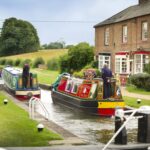
Braunston Canal image‘Cholera came to Braunston on the weekend of a Feast Day, the Feast of All Saints’tide. This was a great time in the village. There was no radio, no television, no outside entertainments to enjoy. The villagers congregated with friends and relatives, there were stalls on the Green, and the public houses were filled with folk.

The Rev Miller noted that no company was to abscene debauched, or viciously disposed to answer there purpose. He looked upon the Cholera as a divine intervention upon the evil ways of the villagers.’

In 1834, Cholera came to Braunston. It would seem likely that it had come from London by canal. It has been noted how the East End of London was badly infected by Cholera. Three suspicious cases were noted at Rotherhithe on the south bank of the Thames opposite Limehouse. The Regents Canal commences at the Regent Canal Dock in Limehouse. The canal proceeds north through London’s East End, then westward to reach the Grand Junction Canal at Brentford, from where the canal goes north to Braunston.

‘Our source for a description of the outbreak is in a leaflet printed by J Castell of High Street Daventry in 1835. It had been written by “A Looker-on”. We know that the” Looker-on” was the Baptist Minister at the time; the Rev R Miller. He wrote the record “for the parishioners of Braunston…to lead them to see “the hand invisible that performs works of judgement and mercy”

Cholera came to Braunston on the weekend of a Feast Day, the Feast of All Saints’tide. This was a great time in the village. There was no radio, no television, no outside entertainments to enjoy. The villagers congregated with friends and relatives, there were stalls on the Green, and the public houses were filled with folk.

The Rev Miller noted that no company was to abscene debauched, or viciously disposed to answer there purpose. He looked upon the Cholera as a divine intervention upon the evil ways of the villagers.

The first case occurred on 7th October 1834 from an infected boat. A bed from the boat was left with a Mrs L, for the bed to be washed. Mrs L caught Cholera and died.

About 2nd November, a legger named Patmore, who lived in Cross Lane in Braunston, died , but Cholera was not concidered to be the cause.

Then on 16th November, a Feast Sunday, a child of Patmore died, and another boatman named T Fall also died in Cross Lane. Fall had come from Derbyshire, and after feeling unwell, had left his boat at Crick Wharf a few days before.

The following Monday 17th November, the day of the Celebration of the Feast, there were stalls on the Green, side shows on the road and private parties in the houses with dancing and drinking. The public houses were full of people.

Continue reading “1834 Cholera came to the village of Braunston” →
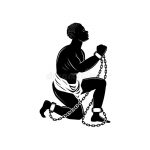
New lecture: The Consequences of the African Slave Trade on Women

Black History Lecture

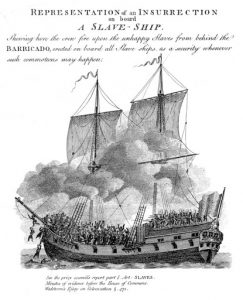
Revolt on a slave ship


‘The Consequences of the African Slave Trade on Women’:

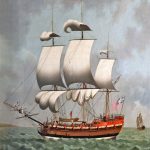
The story of the disastrous voyage of the slave ship Hannibal.

The true story of the slaver ship the Hannibal as told in the diary of its Captain, Thomas Phillips of Brecon and retold in my recently published book Nautical Woman. (To order the book click here link).

John Brown was a black woman found to be a sailor employed by the Royal African Company. As the events of her discovery unfold far more is disclosed about the 700 other people on board the ship.

Enrol online here.

The talk will be delivered via zoom, with a discussion at the end.

Wednesday 18 November 2020 @ 2 pm


Nautical Women available for purchase

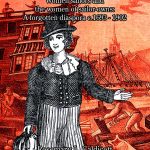
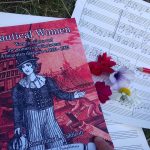
My illustrated book Nautical Women, which includes the chapter ‘A few Known Black Women Sailors and the Slave Trade: (The Consequences of the African Slave Trade on Women).

‘Nautical Women’, by Rosemary L Caldicott

Can be purchased by emailing here Price £6 plus £2.00 p@p.

sample: On board the slave ship Hannibal in 1693, under Commander Thomas Phillips, a soldier-sailor called John Brown was discovered to be a woman. Phillips was a part owner of the Hannibal, having a £10,000 investment in the Royal African Company ship. During the voyage the ship carried 684-700 stolen African people of which 328 people perished while on-board. John Brown escaped the ship when it docked on the West Coast of Africa never to know the fate of the people that followed.
The book considers the fate of African women who were forced onto the vessels to be traded and sold as slaves and the life of Captain Phillips.
Pub:Bristol Radical History Group. Pamphlet #43. 2019.     108 pages with illustrations.
ISBN 978-1-911522-46-1
Merseyside Maritime Museum; Supplied by The Public Catalogue Foundation

New talks!

By invitation of Pill Library.
Wednesday 19th February, 2 pm
‘Nautical Women. Women sailors and the women of sailor towns.’
Sad, mad and tragic

Author Rosemary Caldicott will be talking about her book in which she investigated the intriguing histories of  nautical women. These include stories of cross-dressing women who went to sea to earn a living and the mad, tragic and often funny consequences they encountered and endured. Living in Bristol, and Pill we’re all quite familiar with images of sailing ships – but the focus is usually on the men who built or worked on them. Rosemary wants to bring to life a forgotten history – women sailors and the women of sailor towns including Pill.

AND 
By invitation of Clevedon Library.
Wednesday 11th March, 2 pm
 
‘The Life and Death of Hannah Wiltshire
A Case Study of Bedminster Union Workhouse’.
 
The talk focuses on the draconian workhouse system that housed the vulnerable poor, and in particular women and children.  Rosemary will be examining the history of the workhouse by offering an illustrated talk based on evidence extracted from reports published at the time about the violent death of Hannah Wiltshire who resided in Weston in Gordano. The involvement of Sir Arthur Elton of Clevedon Hall is pivotal to this true life story.

New talks scheduled during 2020

I am excited to announce my upcoming talks in Bristol during 2020.  There were 6 scheduled up until so far this year.  The dates and venues to be confirmed during this coming week. The talks will cover both workhouse history and the history of women sailors.

Unfortunately now cancelled until further notice.  Please watch this space.

They will be announced on here and on local radio once I am able to re-schedule.

‘Stay Alert’

Pleased to announce a new talk to a local history group by Heritage Found

Woman Sailor climbing the rigging

Nautical Women

To be held at Redcliffe 6th Form College
By kind invitation of CLASS.
‘Nautical Women. Women sailors and the women of sailortowns.’
Author Rosemary Caldicott will be talking about her new book in which she investigated the intriguing histories of  nautical women. Stories of cross-dressing women who went to sea to earn a living and the mad, tragic and often funny consequences they encountered and endured. Rosemary brings to life a forgotten history – women sailors and the women of sailor towns.
10th December at 10.30am.
Dulverton House, Redcliff Hill, Bristol BS1 6RB

Talk: ‘Nautical Women. Women sailors and the women of sailortowns.’

By invitation of The Friends committee of Bishopston Library.
A talk to be given by Rosemary Caldicott
‘Nautical Women. Women sailors and the women of sailortowns.’
Sad, mad and tragic

Author Rosemary Caldicott will be talking about her new book in which she investigated the intriguing histories of  nautical women. These include stories of cross-dressing women who went to sea to earn a living and the mad, tragic and often funny consequences they encountered and endured. Living in Bristol, we’re all quite familiar with images of sailing ships – but the focus is usually on the men who built or worked on them. Rosemary wants to bring to life a forgotten history – women sailors and the women of sailor towns.

Accompanied by The Feminist Folk Singers!

7th November, at 7.30pm.

at: Bishopston Library, Gloucester Road, Bristol, BS7 8BN