‘The Dig’ the true story of a Kings burial who could be an Ancestor: A review

Last night I watched the new Netflix movie The Dig. Beautifully filmed and acted, and directed by Simon Stone. But to my huge disappointment nothing was said of who the mound was created for, or to share with the audience images of the exquisite finds, now mainly housed in the British Museum in London. The magnificent finds were and still are; incredibly beautiful, delicate gold artefacts, many encrusted with jewels, crafted in the Byzantine Empire, his swords and a shield, all acquired by the grave owner from across the known world at the time.

The site at Sutton Hoo, near to Woodbridge, Suffolk, England was first excavated by amateur archaeologist Basil Brown in 1939 who was employed by landowner and wealthy heiress Edith Pretty. When the significance of the site as a great and rare ship burial became apparent, national experts took over. During the 1960s,1980s and during 2000, the wider area was explored by archaeologists and many other individual burials were revealed. The spectacular artefacts comprise of what is considered the greatest treasure ever discovered in the UK.

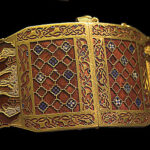
Sutton Hoo treasure arm ringThere are in fact twenty burial mounds at the site but some have been very eroded over the centuries by weather, robber human interference and agricultural activity. The mounds are located close to the river Deben estuary meaning that there would have been a harbour nearby. The burials date to the seventh-century AD. The people buried at the site left no written records that have survived, so it is impossible to know exactly who they were, but historians strongly suspect that Sutton Hoo was the cemetery for the royal dynasty of East Anglia, the Wuffingas, who claimed to be descended from the god Woden.

Most of the mounds were robbed over the centuries, apparently largely in the Tudor period, meaning that much was lost, but luckily two of the larger mounds escaped plunder – the Great Ship Burial or King’s Mound One and the Horseman’s Mound.

The movie also fails to approach the obvious question that the viewer would be asking: Who was the king buried at Sutton Hoo? All we can imaged is that he was a great trader. holder of many lands and highly revered by his subjects to have been buried in such a manner. Historians with circumstantial, but strong evidence, believe that the man was probably the Anglo-Saxon named Raedwald, who was King of East Anglia. He controlled lands south of the Humber, Norfolk and Suffolk at the beginning of the 7th century. In the 9th century tone the Anglo-Saxon Chronical he is named as Bretwalda which in old English means Britain-ruler, or wider-ruler.

Raedwald reigned from about 599 until his death in 624 but little is known about his reign. The royal records were probably destroyed by Viking raiders a two hundred years later because the monasteries stored the court records in their libraries. But coins found at the grave site have been dated to around Raedwald’s death. The acclaimed historian Max Adams states that the burial at Sutton Hoo is the legacy of Scandinavian contact in that ship burials are a memorial to Danish and Nordic culture linked with the sea and boats.

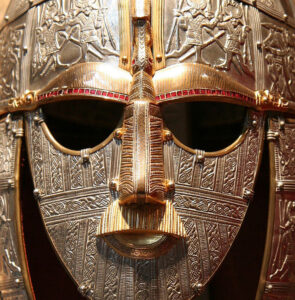
Sutton Hoo burial maskWhat we do know about this man is the evidence based on the burial goods: He was a music lover; a warrior, a seafaring commander, incredibly wealthy, and a collector of beautiful objects from around the world. He was a statesman in the high order during his era.

For millions of people with British East Anglian heritage a DNA analysis will usually reveal Saxon and or Nordic ancestry, our forbearers being invaders from the east and north east.

What the movie does inform us of is the divisions in a class conscious England at the out break of WW2 and the competitive nature of academia.

Today there is a nearby visitor centre which contains some of the original artefacts, replicas of finds, and a reconstruction of the ship burial chamber. The site is know in the care of the National Trust.

If you would like to read more about the site head to wiki here for a brief outline.

Sources:

The Dig. Director Simon Stone. N Film, Netflix. released Jan 2021

Wikipedia

Ben Macintyre. The Times. 30 Jan 2021. p35

Max Adams. Aelfred’s Britain: War and Peace in the Viking Age. Head of Zeus Ltd. 2017

@HeritageFound


BRITISH BLACK HISTORY MONTH 2020: Why is it so difficult to trace Black British ancestors?

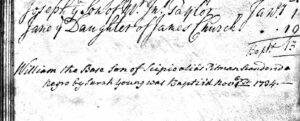
‘William the bastard son of Scipio alias Pitman Seandered(l?) a negro by Sarah Young was Baptised Nov 1st (4th?) 1724. -‘ 

Why is it so difficult to trace Black British ancestors?

Today while researching in the Bristol Archives and browsing the church records of Holy Trinity Church, Westbury on Trym, I came across an entry that highlights two of the many stigmas that our ancestors may have faced: Racism, illegitimacy, poverty, class, physical ailments and religious bigotry.

A baptism entry was deliberately singled out on a page in the church register, the baptism was of little William Seandered(l)-Young. The entry declares that William was the bastard child of Scipio, alias Pitman Seandered(l), and Sally Young. His baptism took place on November 1st or 4th, 1724. (Authors translation of script).

What do we know of his parents? Extraordinarily little. Young, being a common name, means that there were quite a few Sally Young’s residing in the region at this time who were single or married of childbearing age.

Scipio, or Pitman Seandered(l) is noted in the entry as being a negro, thereby deliberately marking him and his child as being ‘different’. There is no mention of the physical features of any of the other children in the records. Scipio was probably a Christian convert because if a servant he would have been baptised once landed in England. Yet his colour and what would have been considered his race was so important that it was deemed necessary to add to his baby’s baptism record. When plantation owners, or sea captains, purchased Black servants, they often had them baptised as adults, usually taking place upon arrival in England. However, these baptisms do not provide any information on their ancestral history. In fact the baptisms were often used purely as a tool to provide a new name and state their relationship to their master. Due to discrimination few questions would have been asked by the minister, and in many cases Black migrants simply did not know the family details of their past.

A good example is Scipio Africanus (the name of a Roman general), was given to a young African servant buried in Henbury, Bristol, in 1720. Despite the very grand gravestone erected by his master, the Earl of Suffolk and Brandon, there is no record of his burial in the church register. Could this be the answer as to why there appears to be no further mention in the records of Scipio Pitman Seandered(l)?

There are no other records of a man called Scipio Pitman Seandered(l) in the country at this time, not even a burial record.  It might be that Scipio was a servant and staying in the town briefly with his master before sailing abroad again, or perhaps he was a sailor visiting the port of Bristol, we will never know. This is all circumspection and he probably was not in attendance at the religious ceremony and perhaps neither was Sarah the mother.

Unfortunately, we must only imagine the circumstances of how the parents continued with their lives and what became of little William.  There are no further entries in the parish record book for Westbury on Trym, and therefore he and his mother did not stay in Westbury on Trym.  However, a record has since been found in the Church Register Book for Stroud, Gloucestershire of a Mary Soanderal’s baptism on 10 August 1764. Her parents are recorded as being a William Soanderel and Hannah his wife. Could this be William thirty years on in his life? Very possibly, and also an example of how the spelling of names would change, particularly if William was illiterate which was extremely common.

Continue reading “BRITISH BLACK HISTORY MONTH 2020: Why is it so difficult to trace Black British ancestors?” →

New lecture: The Consequences of the African Slave Trade on Women

Black History Lecture

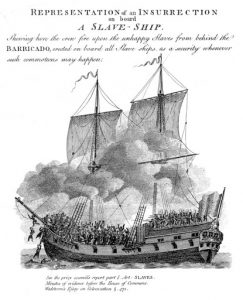
Revolt on a slave ship


‘The Consequences of the African Slave Trade on Women’:

The story of the disastrous voyage of the slave ship Hannibal.

The true story of the slaver ship the Hannibal as told in the diary of its Captain, Thomas Phillips of Brecon and retold in my recently published book Nautical Woman. (To order the book click here link).

John Brown was a black woman found to be a sailor employed by the Royal African Company. As the events of her discovery unfold far more is disclosed about the 700 other people on board the ship.

Enrol online here.

The talk will be delivered via zoom, with a discussion at the end.

Wednesday 18 November 2020 @ 2 pm


New talks scheduled during 2020

I am excited to announce my upcoming talks in Bristol during 2020.  There were 6 scheduled up until so far this year.  The dates and venues to be confirmed during this coming week. The talks will cover both workhouse history and the history of women sailors.

Unfortunately now cancelled until further notice.  Please watch this space.

They will be announced on here and on local radio once I am able to re-schedule.

‘Stay Alert’

The Effects on our Rural Ancestors during the Agricultural Revolution

The Employment of rural women in agriculture before and after the Agricultural Revolution 

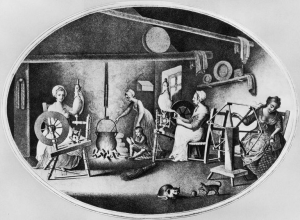
In 1750 England was still in the main an agricultural country, the greater part of which was the old type of rural organisation. This traditionally means with an open-field farming method, strip farming and most importantly these activities mainly took place on common lands. Farming was subsistence by nature and was a means of production to supply the needs of the immediate community. Women took on much of the work and often provided a surplus that could be sold on or exchanged for other goods.
Over the next 70 years huge changes took place.

The industrial world took the place of many domestic cottage industries, such as lace making, weaving, brush making, rope making for example, and many other forms of home-based manufacturing.  With enclosures the large enclosed farm was to take over, absorbing small crofters and other traditional occupations that once took place in the open village, such a meat curing, milking and threshing. The Commons, or the people reliant on the free right to graze their animals and grow limited crops – the ‘commoners’ – were to become a lifestyle of the past. 
The Industrial Revolution had many causes that deeply affected the lifestyles of the working classes, or landless poor, but one of the most important was the impact of the Agricultural Revolution.

Firstly, The Agricultural Revolution involved many innovations in farming that led to a dramatic increase in food production. For example, Charles Townshend’s idea of crop rotation allowed farmers to grow more food, while Jethro Tull’s seed drill allowed faster and more farming differencing practices.  While these were important features of the Agricultural Revolution, there was another factor that also had a big impact on the working population, namely, the growth of enclosing the land through Acts of Parliament.

Secondly, the Agricultural Revolution caused the growth and resurgence of the Enclosure Movement.  In the decades and centuries before the 1700s, British farmers planted their crops on small strips of land while allowing their animals to graze on common fields shared collectively and their rights protected by the Crown.

However, in the 1700s, parliament passed successive legislation, referred to as the Enclosure Acts, which allowed the common areas to become privately owned, that increased private ownership, both of which led to another key characteristic of the Industrial Revolution. Wealthy farmers were buying up large sections of land in order to create larger and more complex farms. Ultimately, this forced smaller farmers off of their land.  Having lost their way of life, many of these farmers, landless labourers, trudged to local towns and cities in search of work.  This was important to the overall success of the Industrial Revolution, because it helped create a system that created a large readymade workforce desperate for employment and forced to work in the new factories and mines. The mines were expanded at the rapid rate, needed to fuel the fires to generate the power for the new factories. Privatisation of the land forced traditional farm labourers and families to migrate to centralized locations.  Therefore, historians often view Enclosures as one of the main foundations that established the Industrial Revolution.

The aim of Enclosures was to consolidate the holders of land into the hands of a few, with most small farmers given no option but to now rent the land under the new system. For many the only course of action was to either leave the land entirely and to take up new occupations in the towns as many did, or to find employment as labourers on the new mechanised increasingly larger farms. Farming quickly became a capitalistic trade aiming to increase production to supply new markets in the growing industrial areas.

These economic changes had far-reaching social effects. The old village organisation was broken-up and a new social structure evolved. A new and fast growing rural middle class was evolving through the profits obtained from greater production of food. (‘A Short History of Enclosure in Britain’ by Simon Fairlie. The Land Sept. 2009).

But how did these changes affect rural women?

The wife of a small holder or tenant farmer, who had lost his land, became dependent upon her husband for income because with the loss of land went her opportunity of her contributing to the resources of the family through her own labourers, such as cheese making, weaving growing crops etc. Whereas, the mistress of a large farm, now had an active concern in the management and productive work of a large household, with low waged servants, luxuries imported from abroad all within the private sphere, and with this increase in wealth she could join the ranks of the leisured classes.

During the second half of the 18th century a speeding up of these economic changes occurred with a red line between large farms owners and the landless labourer. The new modern system, and means of production, meant that the localised subsistence farming was no longer economically possible. As I’ve mentioned women were traditionally employed in the home, meaning both in private and public spheres: with the management of stock, weaving, managing the kitchen garden and taking care of the needs of the family. Also, women were able to maintain their own economic independence to a point. But now rural women, on the whole, only had work at harvest time on the large farms, so therefore, women became dependent on the wages of their husbands.

For large farmers and landowners this was a period of great prosperity. Artisans in the towns were earning higher wages in the industrial towns, and therefore, the demand for more food of high quality was in great demand.  But for those still residing in the rural community they often became pauperised and lived in acute distress, losing any few rights they held previously and often living on a reliance of out relief.

In The Case of Labourers in Husbandry, published in 1795 by J. Davies.  He wrote:

“Some of the more fortunate cottagers were allowed to retain their gardens, or were given a small allotment of land in exchange for common rights, and these, were able to “breed a few fowls, with which they buy what sheets and blankets they wants, but in many cases the cottages were pulled down, their gardens engrossed into farms and families crowded into old farmhouses with a scrap of garden where they were seldom allow to keep a pig or a chick”. He went on to write. “An amazing number of people have been reduced from a comfortable state of independence, to precarious condition of mere hirelings, who when out of work come immediately on the parish”.

Davies wrote that widows and single women suffered the most as previously their common rights had always enabled them to provide for themselves. But now for many there was no alternative but to go on the parish. This meant to claim parish relief (charity) to subsidise low wages, or to enter the Workhouse. Some were able to earn a small wage by spinning or through domestic employments but there was just too many of them. Others earned money by becoming day labourers.

This gradually led to a new underclass of women, known as ‘women day labourers’ and their pay was very poor.

The plight of women day labours began to receive attention from the radical pamphleteers of the times and the anti-poor law league; as the lack of employment of women was regarded as one of the great and growing evils of the time.

As I said women have always assisted with the harvest, in fact our school holidays still revolve around the harvest calendar. Parish records also suggest that in some thinly occupied areas they even paid for single women traveling expenses when labour was in short supply. Men and women were hired for a month at a time when they were able to travel. In 1764 women were paid 6s a week (£30 today) – with meat, drink, washing and lodging included. Still a very low wage. We have here a new class of workers due to women traditionally working for less than men, who in were themselves paid low wages and women were able to quickly adapt to the new social and economic circumstance they found themselves in.

Women could also be employed to hoe turnips and other root crops for example, at a much cheaper rate than the men. Women, boys and girls were trained to do this work – which was actually considered a specialised job. They worked for half the rate as men. Previous to this men had travelled in gangs as specialists in turnip hoeing. 
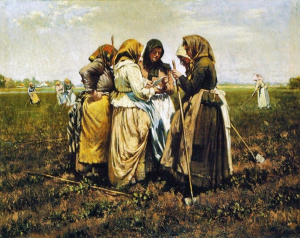
In Gloucestershire by 1807 women had almost displaced men in corn hoeing because they worked for half the rate of men. In fact women would do most of this work. They could also earn much more for digging potatoes as it was such hard, heavy work. An example of other agricultural work undertaking by the cheaper female workforce was fruit picking, sowing carrots and hop picking. They earned between 10d to 14d a day (about £2 per day) with a quart of cider thrown in during 1807. (Women Workers and the Industrial Revolution 1750-1850 by Ivy Pinchbeck, p.60.)

For over 500 years pamphleteers, politicians and historians have argued about enclosure. Those in favour insisting that it was necessary for economic development or land improvement to cope with a growing population. Those against claiming that it deprived the rural working class of their livelihoods and led to rural depopulation, vagrancy (that was and still is a criminal offence) and in many cases dependency on the brutal New Poor Law Act of 1834.

Today we have a renewed interest in this topic because we can often see through our research that our families moved from a long found rural existence into our towns and cities. However, another reason for renewed interest may be due to the the most crucial issue of our time; the management of the global commons and the conflict between the global and the local, between development and diversity – between the landed and the landless and ultimately between man and nature.

Recommending further reading ‘A Short History of Enclosure in Britain’. By Simon Fairlie. The Land. 7 September 2009 pp.16-31. Easily found online.


Pleased to announce a new talk to a local history group by Heritage Found

Woman Sailor climbing the rigging

Nautical Women

To be held at Redcliffe 6th Form College
By kind invitation of CLASS.
‘Nautical Women. Women sailors and the women of sailortowns.’
Author Rosemary Caldicott will be talking about her new book in which she investigated the intriguing histories of  nautical women. Stories of cross-dressing women who went to sea to earn a living and the mad, tragic and often funny consequences they encountered and endured. Rosemary brings to life a forgotten history – women sailors and the women of sailor towns.
10th December at 10.30am.
Dulverton House, Redcliff Hill, Bristol BS1 6RB

Talk: ‘Nautical Women. Women sailors and the women of sailortowns.’

By invitation of The Friends committee of Bishopston Library.
A talk to be given by Rosemary Caldicott
‘Nautical Women. Women sailors and the women of sailortowns.’
Sad, mad and tragic

Author Rosemary Caldicott will be talking about her new book in which she investigated the intriguing histories of  nautical women. These include stories of cross-dressing women who went to sea to earn a living and the mad, tragic and often funny consequences they encountered and endured. Living in Bristol, we’re all quite familiar with images of sailing ships – but the focus is usually on the men who built or worked on them. Rosemary wants to bring to life a forgotten history – women sailors and the women of sailor towns.

Accompanied by The Feminist Folk Singers!

7th November, at 7.30pm.

at: Bishopston Library, Gloucester Road, Bristol, BS7 8BN

Your unique family social history, and how to reveal it.

It is very rewarding to research your unique family social history and discover what, where, when and why your ancestors made certain life choices in the family’s best interest.  Although clearly there are many examples of individuals who turn out to be black sheep, or through no fault of their own made a wrong life-changing decision.  However, fascinatingly, all our ancestors have a very interesting life course story.

It is very important to try and place ourselves in their shoes in order to appreciate how society was organised in the past.  For example, class restraints were deeply ingrained in the human psyche and this resulted in a lack of social mobility.  Furthermore, our ancestors were victims of war, famine and contagious disease – all of which led to the death of children and homelessness.

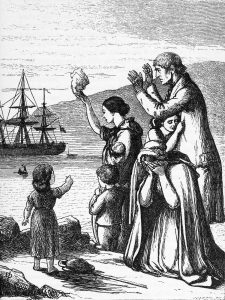
Leaving Ireland, Henry Doyle 1827-1892. Mary Frances Cusack. Illustrated History of Ireland, 1968.

It is relatively easy to discover why your ancestors migrated from the land into the new growing cities, or even further afield across vast oceans. Simply search on line to see what was going on in their local area at the time to understand the factors that caused them to make a drastic move from all they knew.

I can recommend a simple google search.  It is also very revealing to search on the British Newspaper Archives, free in our libraries and schools. You will be amazed what you might discover!


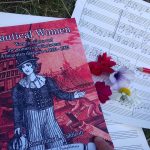
Nautical Women by Rosemary L Caldicott

In Nautical Women, Rosemary Caldicott explores the stories of women whose lives were inextricably linked to the sea. She tells of the women of sailortowns struggling to keep out of the dreaded workhouse and resisting the prowling press gangs; and of the courageous and skilful cross-dressing women sailors who went to extraordinary lengths to hide their gender. We learn about these women’s motivation as well as their adventures and inevitable exposure.

Rosemary Caldicott also considers the fate of African women who were forced onto vessels to be traded and sold as slaves; the lives of black women soldiers and sailors, disguised as men, some of whom sailed on slave-ships to and from West Africa; and, in particular, the tragic voyage of the Hannibal in 1693.

Nautical Women challenges our stereotypes of women in earlier societies by exposing their struggles against poverty and forced-labour and revealing the courage of those who ‘ran away to sea’.

Available in good independent book shops, Tangent books, Foyles Book Shop and on line at google books and Amazon on line.

Range: 
Number: 43 
By: Rosemary L Caldicott 
Edition: 2019 
ISBN: 978-1-911522-46-1 
Number of pages: 116